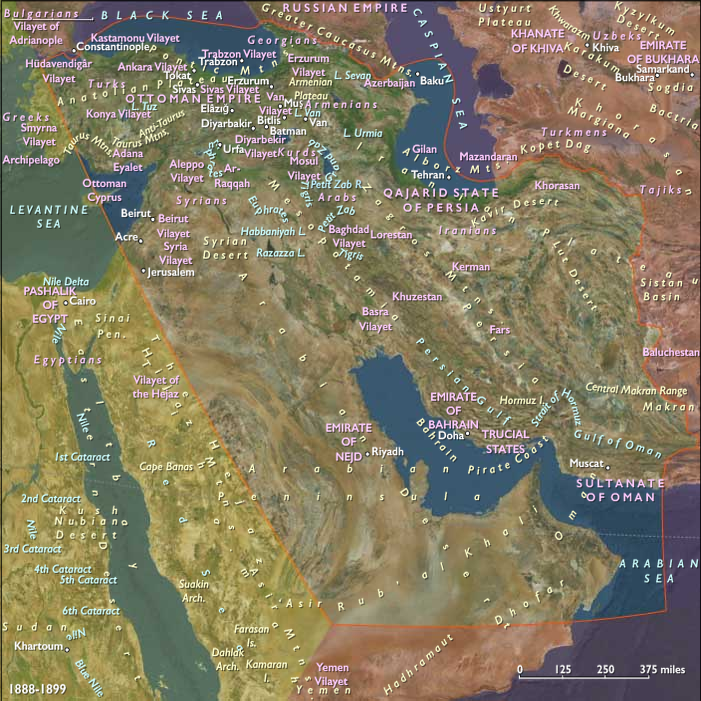
A major provision of these treaties is…
1828 CE to 1971 CE
A major provision of these treaties is the recognition of sovereignty.
The British are concerned that rulers of the weaker gulf families will yield some of their territory under pressure from more powerful groups, such as the Al Saud or the Ottomans.
Accordingly, the treaties signed between 1820 and 1916 recognize the sovereignty of these rulers within certain borders and specify that these borders cannot be changed without British consent.
Such arrangements help to put tribal alliances into more concrete terms of landowner ship.
This means that the Al Nuhayyan of Abu Dhabi, for example, not only command the respect of tribes in the hinterland but also own, as it were, the land that those tribes use—in this case, about seventy-two thousand square kilometers of Arabia.
Groups
Commodities
Subjects
Regions
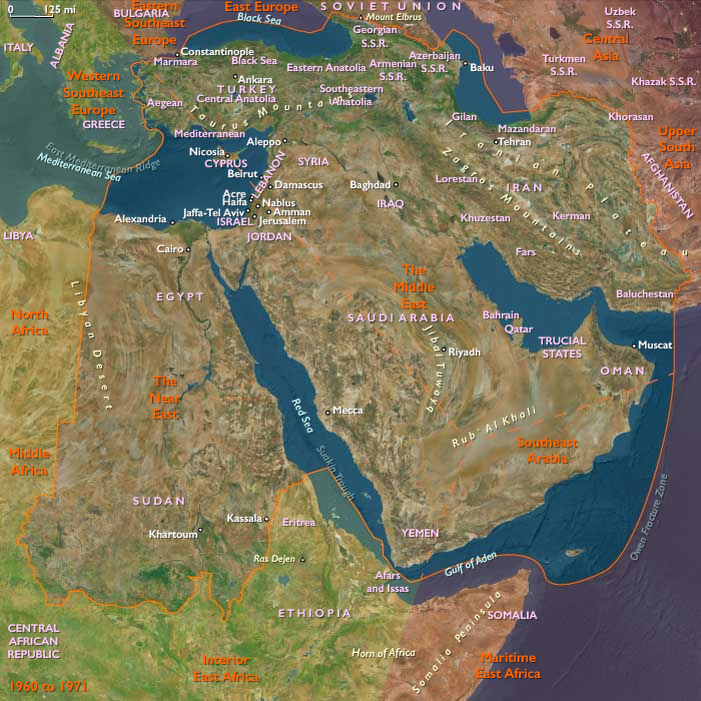
The Near and Middle East
View →Subregions