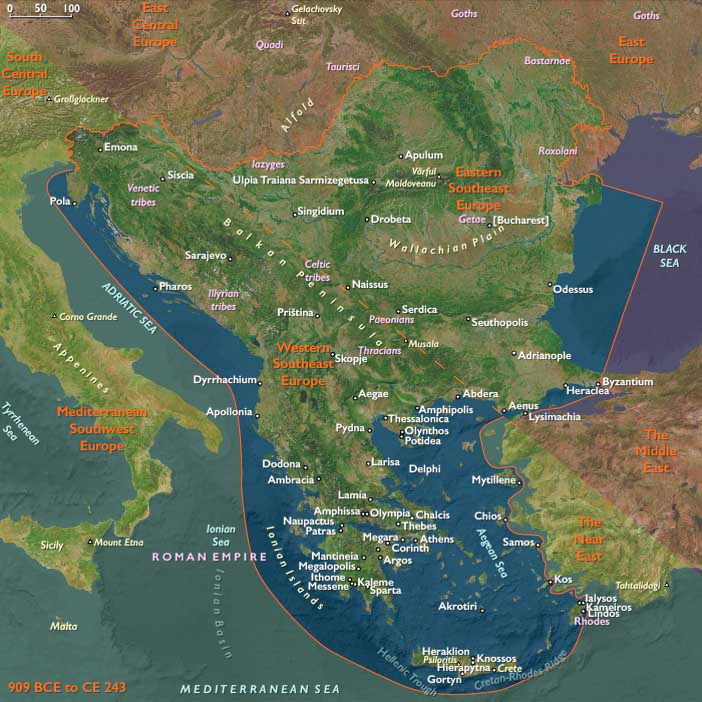
Sparta's old helot problem recurs in 399 BCE with the attempted revolt of Cinadon.
This demonstrates Sparta's insecurity even in its local dominance in Laconia and Messenia, despite the glory of Sparta's victory over the Athenian fleet at Aegospotami, duly commemorated at Delphi, and the personal prestige of Lysander, who may even receive at this time some kind of cult at Samos (though perhaps only after his death in 395 BCE).
Moreover, Sparta's former Peloponnesian and extra-Peloponnesian allies are unhappy with what they see as alarming extensions of Spartan territorial interests.
Lysander, having failed in his efforts to make the Spartan kingship an elective monarchy, supports the Eurypontid Agesilaus in his claim to the disputed throne.
Succeeding his half-brother Agis II as Agesilaus II, one of the two Spartan kings in 399 BCE, he ignores Lysander once he is safely enthroned.