Barthélemy de Lesseps
French diplomat and writer
Years: 1785 - 1788
Jean-Baptiste Barthélemy de Lesseps (27 January 1766 in Sète - 6 April/26 April 1834 in Lisbon) is a French diplomat and writer, member of the scientific expedition of Jean-François de Galaup, comte de La Pérouse (1 August 1785 - January 1788) and uncle of Ferdinand de Lesseps.
Related Events
Filter results
Showing 5 events out of 5 total
Northeast Asia (1780–1791 CE)
Expansion of Russian Influence and Maritime Commerce
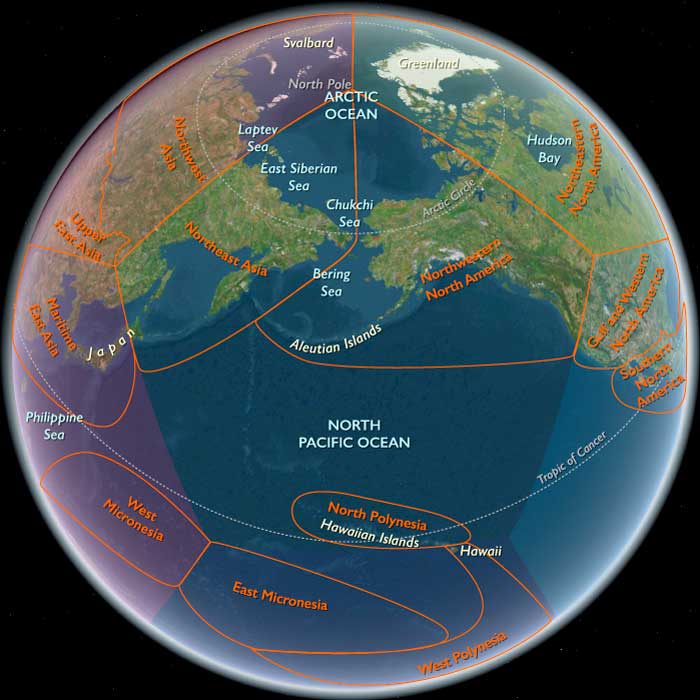
From 1780 to 1791, Russian maritime exploration and commercial activities in Northeast Asia accelerated further, consolidating Russian presence and administrative control. Fur traders and explorers expanded their voyages throughout the Aleutian Islands, reaching further into Alaskan territories, and intensifying interactions with indigenous peoples. The resulting trade networks significantly impacted local economies, often exploiting indigenous labor and resources.
The strategic port of Okhotsk continued to serve as the main logistical hub despite its inherent disadvantages, including harsh climate conditions, limited agricultural productivity, and challenging terrain. Nevertheless, it remained critical for the supply and provisioning of distant Russian settlements and fur-trading expeditions throughout the region.
Ships typically stopped at the Commander Islands during the early decades of the maritime fur trade, largely to slaughter and preserve the meat of Steller's sea cows, whose range was limited to those islands. This large sirenian mammal had been discovered in 1741 by German naturalist Georg Wilhelm Steller, who was traveling with Vitus Bering. The species, driven rapidly to extinction by overhunting, was completely wiped out by 1768, underscoring the ecological strain placed on local wildlife by European traders.
The continued exploitation of natural resources placed increasing ecological strain on local wildlife populations, particularly the prized sea otters, fur seals, and various fox species, further altering the ecological balance of the region.
This period also saw remarkable intercultural encounters. In 1787, the Japanese castaway Daikokuya Kōdayū and eight other survivors, stranded for five years in the Aleutian Islands, reached Kamchatka after sailing a driftwood craft for a month and a half. Initially disbelieved by Russian officials, their story eventually gained recognition through the writings of French diplomat Barthélemy de Lesseps.
Meanwhile, French explorer Jean François de Galaup, comte de Lapérouse, explored the Northeast Asian coast, reaching the island of Oku-Yeso (modern-day Sakhalin Island), where the indigenous Ainu people provided crucial geographic information. Lapérouse then sailed through what became known as La Pérouse Strait (between Sakhalin and Hokkaidō), further charting the area and interacting with additional Ainu communities in the Kuril Islands. He reached Petropavlovsk on the Kamchatka Peninsula in September 1787, where he enjoyed Russian hospitality. Lapérouse's expedition would later dispatch Barthélemy de Lesseps on a significant overland journey across Siberia and Russia to carry expedition records back to France.
Russian officials during this period began to emphasize a more structured administrative presence, establishing fortified outposts and trading posts to reinforce control over fur-rich territories. These outposts became key nodes in Russia’s expanding Pacific trade, with furs transported inland to be exchanged primarily at the Chinese border trading town of Kyakhta, maintaining a steady flow of luxury goods and profits.
This era laid a significant foundation for the sustained Russian presence in Northeast Asia and set the stage for deeper engagement and eventual settlement efforts in subsequent decades.

Kōdayū and the eight other surviving Japanese castaways, stranded in the Aleutian Islands for the past five years, have sailed their driftwood craft for one and a half months to arrive in Kamchatka, where Russian officials at first cannot believe the castaways had sailed from Amchitka in a "hand-made boat".
Kōdayū meets Barthélemy de Lesseps, a French diplomat, who will later write about the castaways in his Journal historique du voyage de M. de Lesseps, published in 1790.
Six of the fifteen Japanese castaways had died within three years of their arrival on Amchitka.
Kōdayū's people escape from the island by building a new ship of driftwood with sails made of otter fur.
Here they rest from their trip, and enjoy the hospitality of the Russians and Kamchatkans.
In letters received from Paris, Lapérouse is ordered to investigate the settlement the British are establishing in New South Wales, Australia.
Barthélemy de Lesseps, the French vice consul at Kronstadt, Russia, who had joined the expedition as an interpreter, disembarks in Petropavlovsk to bring the expedition's ships' logs, charts, and letters to France, which he will reach after a year-long, epic journey across Siberia and Russia.
Northeast Asia (1792–1803 CE)
Consolidation of Russian Control and Intercultural Encounters
From 1792 to 1803, Russian control over Northeast Asia continued to strengthen, bolstered by strategic settlement expansion and vigorous maritime fur-trading activities. Russian traders and settlers extended their influence deeper into Kamchatka, the Aleutian Islands, and other northern territories, increasingly integrating these remote areas into a broader imperial economic network.
Kamchatka remained vital as a regional base, with the settlement at Petropavlovsk gaining prominence due to its superior harbor compared to the older and logistically challenging port of Okhotsk. Nevertheless, Okhotsk continued to function as an essential hub for maritime logistics despite the harsh climate and persistent shortages in local agricultural productivity. In 1799, the establishment of the Russian-American Company based in Okhotsk brought increased economic activity and investment to the region.
Over one hundred private fur trading and hunting voyages had already sailed from Kamchatka to North America from 1743 up to the founding of the Russian-American Company. In total, these voyages generated revenues exceeding eight million silver rubles, highlighting the economic significance of the region's fur trade.
During this period, notable intercultural exchanges further highlighted the complex dynamics of Russian and indigenous relationships. In 1792, the Japanese castaway Daikokuya Kōdayū and his surviving companions, who had previously reached Kamchatka from the Aleutian Islands, traveled to Okhotsk, where they remained for several years. Their remarkable journey attracted attention from both Russian and international observers, further opening Russian eyes to potential interactions and diplomatic relations with Japan.
Expeditions and trading activities in the region intensified ecological pressures on marine wildlife populations, notably sea otters, fur seals, and foxes, whose pelts continued to fuel the lucrative fur trade with China via the trading town of Kyakhta. Russian authorities began implementing more systematic administrative and economic controls, including the establishment of fortified outposts along key trade routes, aimed at managing the region's vast natural resources more effectively and consolidating imperial control.
Simultaneously, diplomatic and exploratory interactions continued. French explorer and diplomat Barthélemy de Lesseps, who had previously carried records of the Lapérouse expedition to France, published extensive accounts of his Siberian journey, further illuminating European understanding of the region and contributing to international interest in Northeast Asia. Russian exploration and settlement during this period set crucial groundwork for future diplomatic initiatives and territorial consolidations.