Benito Mussolini
Prime Minister of Italy
Years: 1883 - 1945
Benito Amilcare Andrea Mussolini (July 29, 1883 – April 28, 1945) is an Italian politician and journalist who is the leader of the National Fascist Party.
He rules as the Prime Minister of Italy from the fascist coup d'état in 1922 until his deposition in 1943, and Duce ("Leader") of Italian Fascism from the establishment of the Fasci Italiani di Combattimento in 1919 to his execution in 1945 during the Italian Civil War.
As dictator of Italy and founder of fascism, Mussolini inspires far-right totalitarian rulers such as Adolf Hitler, Francisco Franco, and António de Oliveira Salazar.
Mussolini is originally a socialist politician and a journalist at the Avanti! newspaper.
In 1912, he becomes a member of the National Directorate of the Italian Socialist Party (PSI), but is expelled from the PSI for advocating military intervention in the First World War, in opposition to the party's stance on neutrality
In 1914, Mussolini founds a new journal, Il Popolo d'Italia, and serves in the Royal Italian Army during the war until he is wounded and discharged in 1917.
Mussolini denounces the PSI, his views now centering on Italian nationalism instead of socialism, and later founds the fascist movement, which comes to oppose egalitarianism and class conflict, instead advocating "revolutionary nationalism" transcending class lines.
Following the March on Rome in October 1922, Mussolini becomes the youngest Italian Prime Minister up to this time
After removing all political opposition through his secret police and outlawing labor strikes, Mussolini and his followers consolidate their power through a series of laws that transform the nation into a one-party dictatorship.
Within five years, Mussolini has established dictatorial authority by both legal and illegal means and aspires to create a totalitarian state
In 1929, Mussolini signs the Lateran Treaty with the Vatican, ending decades of struggle between the Italian state and the Papacy, and recognizes the independence of Vatican City.
Mussolini's foreign policy aima to expand the sphere of influence of Italian fascism.
In 1923, he begins the "Pacification of Libya" and orders the bombing of Corfu in retaliation for the murder of an Italian general.
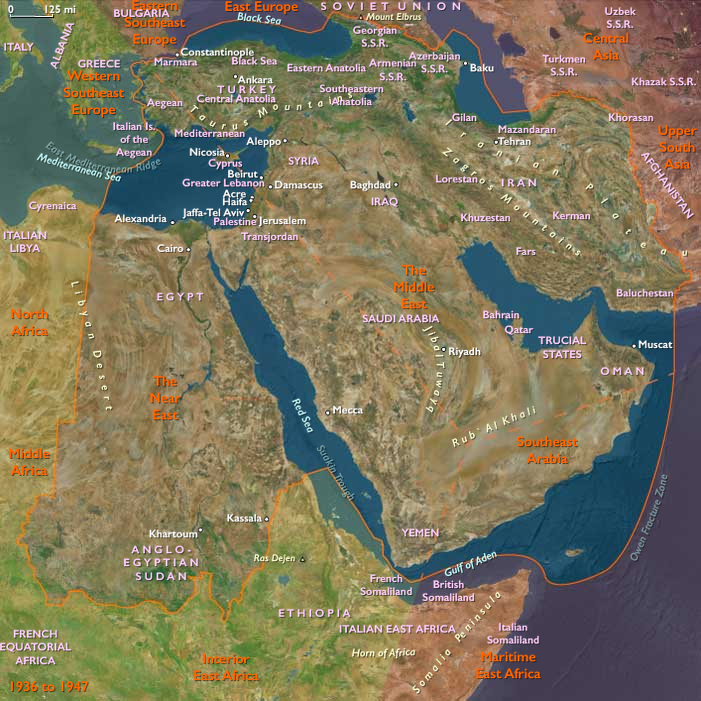
In 1936, Mussolini forms Italian East Africa (AOI) by merging Eritrea, Somalia and Ethiopia following the Abyssinian crisis and the Second Italo–Ethiopian War.
In 1939, Italian forces occupy Albania.
1936 and 1939, Mussolini orders the successful Italian military intervention in Spain in favor of Francisco Franco during the Spanish civil war
Initially, Mussolini's Italy tries to avoid the outbreak of a second global war by taking part in the Stresa front, the Lytton Report, the Treaty of Lausanne, the Four-Power Pact and the Munich Agreement.
However, Italy then alienates herself from Britain and France by aligning with Germany and Japan.
Germany invades Poland on September 1, 1939, resulting in declarations of war by France and the UK and the start of the Second World War.
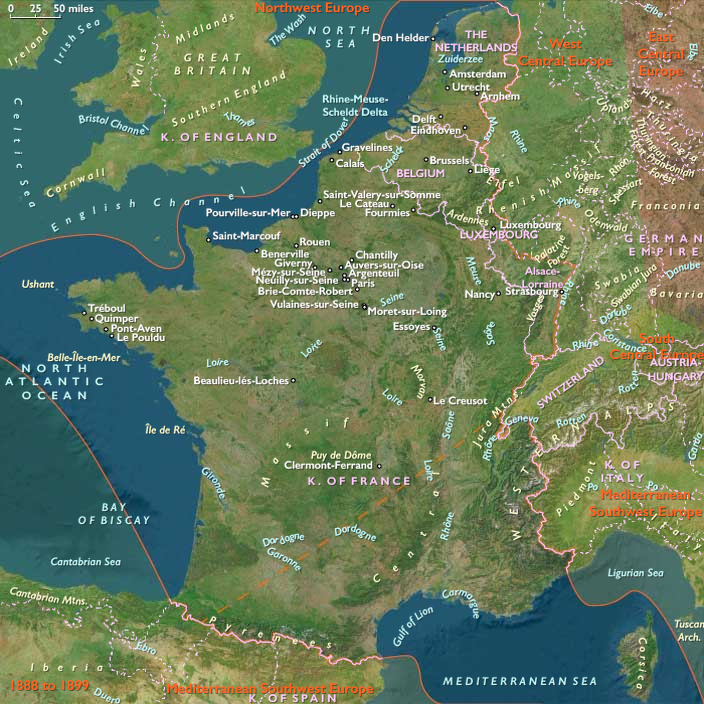
On June 10, 1940—with the Fall of France imminent—Italy officially enters the war and eventually occupies parts of southeast France, Corsica, and Tunisia.
Mussolini plans to concentrate Italian forces on a major offensive against the British Empire in Africa and the Middle East, known as the "parallel war", while expecting the collapse of the UK in the European theater.
The Italians invade Egypt, bomb Mandatory Palestine, and occupy British Somaliland with initial success.
However, the British government refuses to accept proposals for a peace that would involve accepting Axis victories in Europe; plans for an invasion of the UK do not proceed and the war continues.
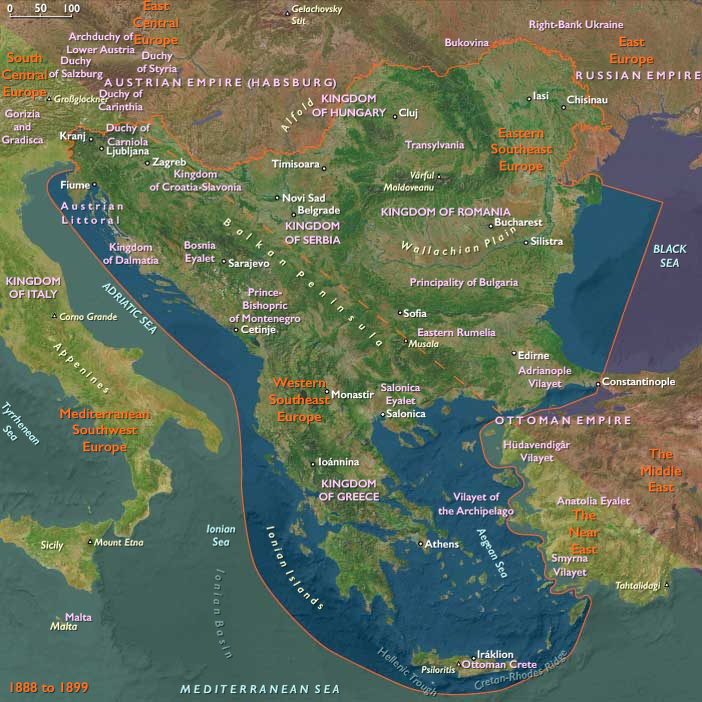
In October 1940, Mussolini sends Italian forces into Greece, starting the Greco-Italian War.
The Royal Air Force prevents the Italian invasion and allows the Greeks to push the Italians back to Albania.
The Balkan campaign continues until June 1941, and leads to the Axis occupation of Greece and Yugoslavia.
Furthermore, the German invasion of the Soviet Union and the Japanese attack on Pearl Harbor force Mussolini to send an Italian army in Russia and declare war on the United States.
Mussolini is aware that Italy, whose resources are reduced by the campaigns of the 1930s, is not ready for a long conflict against three superpowers but opts to remain in the conflict to not abandon the fascist imperial ambitions.
In 1943, Italy suffers major disasters: by February the Red Army has completely destroyed the Italian Army in Russia and in May the Axis collapses in North Africa despite previous Italian resistance at the second battle of El Alamein.
On July 9, the Allies invade Sicily and by the 16th it becomes clear the German summer offensive in the USSR has failed.
As a consequence, early on July 25, the Grand Council of Fascism passes a motion of no confidence in Mussolini; later that day the King dismisses him as head of government and has him placed in custody, appointing Pietro Badoglio to succeed him as Prime Minister.
After the king agrees to the armistice with the allies, on September 12, 1943, Mussolini is rescued from captivity in the Gran Sasso raid by German paratroopers and Waffen-SS commandos led by Major Otto-Harald Mors.
Hitler, after meeting with the rescued former dictator, now puts Mussolini in charge of a puppet regime in northern Italy, the Italian Social Republic (Italian: Repubblica Sociale Italiana, RSI), informally known as the Salò Republic.
In late April 1945, in the wake of near total defeat, Mussolini and his mistress Clara Petacci attempt to flee to Switzerland, but both were captured by Italian communist partisans and summarily executed by firing squad on April 28, 1945 near Lake Como.
The bodies of Mussolini and his mistress are taken to Milan, where they are hung upside down at a service station to publicly confirm their demise.
Related Events
Filter results
Showing 10 events out of 14 total
Interior East Africa (1828–1971 CE): Slave Caravans, Imperial Revival, and Colonial Partition
Geographic & Environmental Context
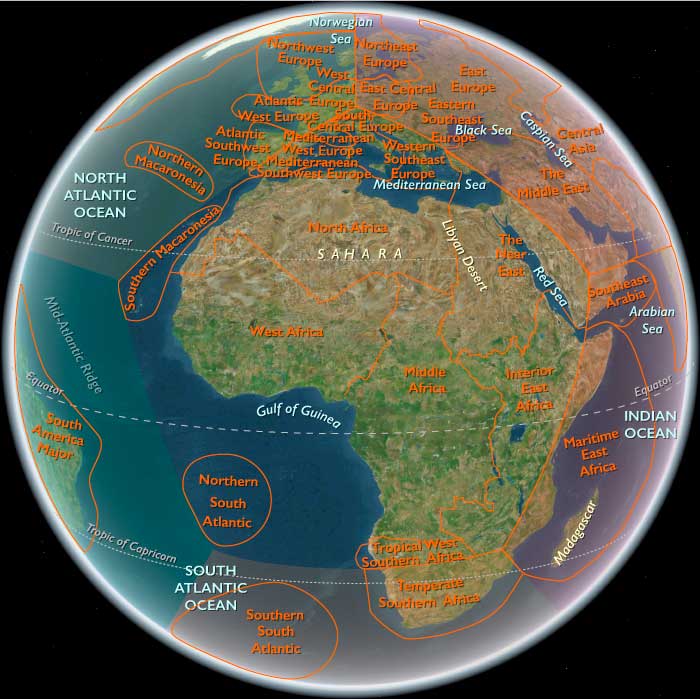
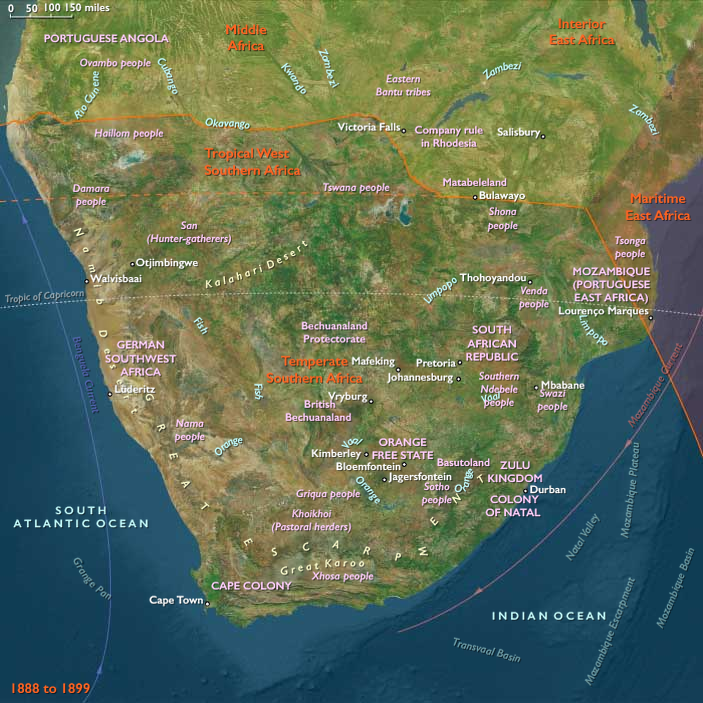
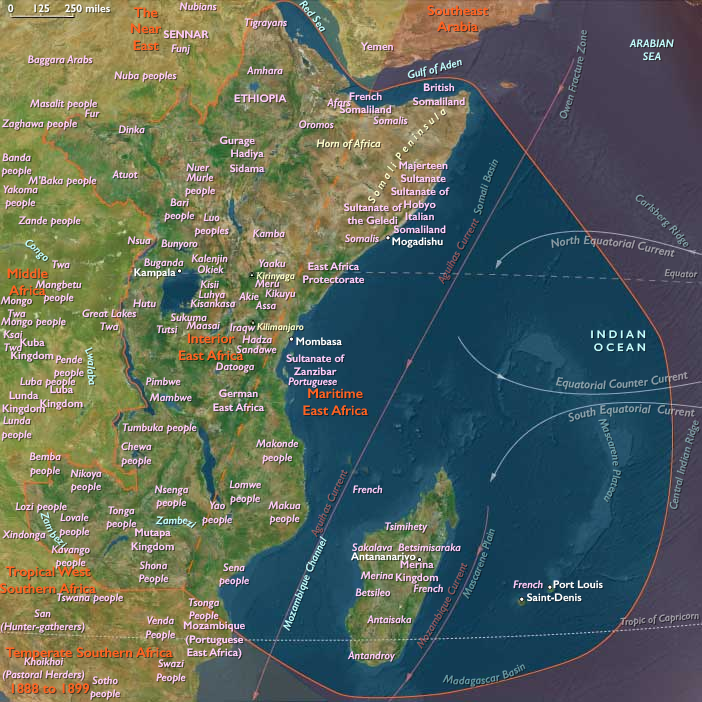
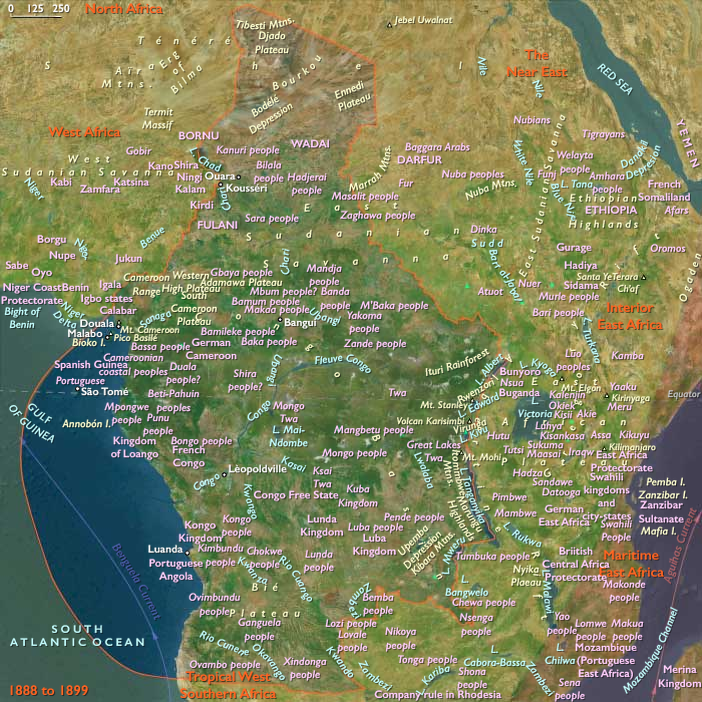
The subregion of Interior East Africa includes Eritrea, Djibouti, Ethiopia, South Sudan, Uganda, Rwanda, Burundi, Zambia, northern Zimbabwe, northern Malawi, northwestern Mozambique, inland Tanzania, and inland Kenya. Anchors included the Ethiopian highlands, the Great Rift lakes (Victoria, Tanganyika, Turkana, Kivu, Mweru), the interlacustrine kingdoms of Rwanda–Burundi–Uganda, the savanna–woodland mosaics of inland Tanzania and Zambia, and the Nile–Sudd marshes in South Sudan. By this period, the region was increasingly reshaped by Indian Ocean trade, European exploration, and later colonial boundaries.
Climate & Environmental Shifts
The 19th century saw alternating droughts and heavy rain years. The mid-1880s famine years devastated highland Ethiopia and the Great Lakes, tied to rinderpest outbreaks that decimated cattle. Fluctuating lake levels affected fisheries and floodplain cultivation. In the mid-20th century, population growth, soil depletion, and drought cycles placed further stress on subsistence systems, especially in pastoral belts of South Sudan and northern Kenya.
Subsistence & Settlement
-
Highlands (Ethiopia/Eritrea): Terrace agriculture of teff, barley, and wheat persisted; ox-plowing remained central. Coffee expanded as a cash crop. Sheep, goats, and cattle supplemented diets.
-
Great Lakes kingdoms (Buganda, Bunyoro, Rwanda, Burundi): Banana groves, sorghum, beans, and cattle supported dense populations. Tribute flows supplied royal courts.
-
Savanna zones (inland Tanzania–Zambia–Malawi–Mozambique): Sorghum, millet, and maize (now widespread) structured village subsistence; cassava spread as a famine reserve. Fisheries on Victoria and Tanganyika supported large communities.
-
Pastoral belts (South Sudan–Turkana–Karamoja): Cattle herding remained central; milk, hides, and bridewealth structured society. Grain was acquired via exchange with cultivators.
Technology & Material Culture
Iron hoes and knives remained vital, supplemented by imported textiles, beads, and firearms. Canoe fleets on the Great Lakes expanded for trade and warfare. Court regalia included drums, spears, and thrones, while Christian Ethiopia produced illuminated manuscripts and stone churches. In the 20th century, colonial regimes built roads, railways, and administrative compounds. Mission schools and printing presses introduced new literacies. Urban craft traditions developed in Kampala, Addis Ababa, Kigali, and Lusaka.
Movement & Interaction Corridors
-
19th-century caravan trade: From inland Tanzania and Zambia, ivory and enslaved people moved to coastal entrepôts like Bagamoyo, Kilwa, and Zanzibar, under Swahili and Omani merchant control.
-
Ethiopia: Caravans carried salt, coffee, and grain across the highlands to Red Sea ports; arms and textiles moved inland.
-
Nile–Sudd routes: Linked South Sudanese cattle and captives to Egyptian markets.
-
Colonial era: Railways tied Mombasa to Kampala, Dar es Salaam to Kigoma, and Benguela (Angola) to Zambian copper mines. Roads and steamers integrated Victoria and Tanganyika into wider circuits.
-
Air and road networks: By mid-20th century, Nairobi, Addis Ababa, Kampala, and Lusaka became aviation and trade hubs.
Cultural & Symbolic Expressions
-
Ethiopia: The Solomonic dynasty revived under Menelik II, who built Addis Ababa and symbolized Christian kingship. The victory over Italy at the Battle of Adwa (1896) became a touchstone of African resistance.
-
Great Lakes kingdoms: Courtly rituals of drums, regnal names, and oral epics remained central, while Christianity and Islam spread through missions and traders.
-
Colonial missions: Introduced Christian festivals, hymnody, and schools, while Islamic brotherhoods deepened ties across the Nile and Sahel.
-
Postcolonial culture: Writers, musicians, and political leaders articulated national identity—Congolese rumba influenced Uganda and Rwanda, while Ethiopia projected imperial grandeur through Haile Selassie’s court rituals.
Environmental Adaptation & Resilience
Communities diversified crops—cassava and maize buffered famine risk. Pastoralists rebuilt herds after rinderpest, adjusted transhumance routes, and negotiated pasture rights. Fisherfolk smoked and dried catches to stabilize diets. Colonial governments attempted irrigation (Gezira scheme, Tanganyika sisal estates), though often favoring export crops. Kinship, clan systems, and cooperative labor traditions sustained resilience, supplemented by missions and churches that organized relief during famine.
Technology & Power Shifts (Conflict Dynamics)
-
Ethiopia: Menelik II expanded territory southward; the empire endured Italian invasion attempts, defeating them at Adwa (1896). Later, Haile Selassie I modernized state institutions, only to face Italian occupation (1936–1941) before liberation with Allied support.
-
Great Lakes: Buganda expanded under British alliance; Rwanda and Burundi fell under German, then Belgian rule. Colonial indirect rule reshaped clan and clientship systems.
-
Savannas and Zambia: Caravans gave way to colonial railroads; copper mining in Katanga and Zambia drew massive labor migrations.
-
Resistance and nationalism: Maji Maji Rebellion (1905–1907) in Tanzania resisted German rule; later independence movements mobilized unions, churches, and student groups. Uganda (1962), Tanzania (1961), Zambia (1964), Malawi (1964), Rwanda (1962), and Burundi (1962) emerged as new states; Ethiopia and Liberia stood as symbols of African sovereignty.
Transition
By 1971 CE, Interior East Africa was a patchwork of newly independent nations and enduring monarchies. Ethiopia remained an empire under Haile Selassie, though unrest grew. The Great Lakes had transitioned from kingdoms to fragile republics. Zambia and Tanzania led pan-African movements, while Uganda under Idi Amin (from 1971) entered authoritarian rule. Across the region, legacies of caravans, Christian and Islamic traditions, and resilient subsistence systems met the challenges of sovereignty, development, and Cold War geopolitics.
Southwest Europe (1828–1971 CE)
Nationhood, Civil War, and the Making of Modern Iberia
Geography & Environmental Context
Southwest Europe comprises two fixed subregions:
-
Mediterranean Southwest Europe — Italy (including Sardinia and Sicily), Malta, southeastern Spain, and the Balearic Islands.
-
Atlantic Southwest Europe — northern Spain and central to northern Portugal, including Lisbon, the Tagus Valley, and the Cantabrian Mountains.
Anchors include the Apennines, the Po and Ebro valleys, the Italian Peninsula’s volcanic south, the Tagus, Douro, and Guadalquivir rivers, and key coastal and urban centers—Rome, Naples, Milan, Barcelona, Valencia, Lisbon, and Porto. The region bridges the Atlantic and Mediterranean, uniting maritime trade routes, mountain frontiers, and deep agricultural basins that have long sustained dense populations and layered civilizations.
Climate & Environmental Shifts
A Mediterranean climate of hot, dry summers and mild, wet winters dominated much of the south, while the northwest’s Atlantic façade received abundant rainfall. Deforestation and soil exhaustion from centuries of cultivation gave way to reforestation and terracing programs in the 19th century. Earthquakes occasionally struck southern Italy and Portugal’s coast. By the mid-20th century, irrigation and dam projects modernized agriculture, while industrialization, urban air pollution, and rural depopulation reshaped landscapes.
Subsistence & Settlement
-
Agriculture: Grain, olives, vines, and citrus remained staples; the 19th century saw agrarian reforms and consolidation under liberal monarchies. Mechanization and fertilizers expanded yields by mid-century, but sharecropping and land inequality persisted in southern Italy, Sicily, and Spain.
-
Urbanization: Lisbon, Barcelona, Milan, Rome, and Naples grew as administrative and industrial centers. Northern Italy industrialized rapidly after unification, while southern regions lagged.
-
Migration: Seasonal and transatlantic migration (to the Americas and later to northern Europe) served as economic safety valves. After WWII, internal migration filled factory towns in northern Italy and Catalonia.
-
Fishing and maritime trade: Coastal economies thrived on shipbuilding, sardine and tuna fisheries, and maritime commerce linking the Atlantic and Mediterranean basins.
Technology & Material Culture
Railways (Lisbon–Madrid, Milan–Turin, Naples–Rome) and telegraphs in the 19th century integrated national markets. Industrialization centered on textiles, steel, and shipbuilding, while southern agrarian zones remained semifeudal. After WWII, infrastructure and consumer industries (automobiles, household goods) expanded under European reconstruction aid. Architecture ranged from neoclassical state projects to fascist monumentalism and postwar modernism. Artistic modernism flourished: Gaudí’s Catalan designs, Marinetti’s Futurism, and Morandi’s minimalist painting exemplified divergent paths to modernity.
Movement & Interaction Corridors
-
Maritime corridors: The Mediterranean and Atlantic coasts connected ports like Genoa, Barcelona, and Lisbon to imperial routes across Africa and the Americas.
-
Rail and road networks: Bound the interior to ports; after 1950, highways and airports tied Iberia and Italy to Western Europe’s tourism boom.
-
Labor migration: Italians and Portuguese joined transatlantic migrations to Brazil, Argentina, and the U.S.; by the 1960s, many worked in France, Germany, and Switzerland.
-
Tourism routes: The French and Italian Rivieras, Spanish Balearics, and Portuguese Algarve became global tourist zones after WWII.
Cultural & Symbolic Expressions
Romantic nationalism merged with Catholic revival and liberal reform.
-
Italy: Giuseppe Verdi’s operas and Garibaldi’s campaigns symbolized unification (Risorgimento). Postwar cinema—Rossellini, De Sica, Fellini—portrayed social reconstruction.
-
Spain: Writers and artists such as Goya, Unamuno, and Picasso reflected political trauma and creative rebellion; Flamenco and Andalusian folk arts embodied enduring regional identities.
-
Portugal: Fado captured nostalgia under authoritarian rule; poets like Fernando Pessoa gave voice to existential modernism.
-
Malta and the Balearics: Maritime cultures blended Catholic ritual, seafaring craft, and multilingual exchange.
Catholicism remained culturally dominant, yet anticlerical movements and republicanism spurred secular education and reform.
Environmental Adaptation & Resilience
Irrigation and terrace maintenance stabilized fragile mountain agriculture; coastal marshes were drained; reforestation curbed erosion. Postwar hydroelectric and dam projects (notably on the Tagus and Po) modernized water and power supply. Cooperative farming and later Common Market integration improved productivity. Rural depopulation and emigration altered traditional village structures but relieved demographic pressure on marginal lands.
Political & Military Shocks
-
Liberal revolutions: Spain and Portugal alternated between monarchy and republic amid 19th-century liberal uprisings.
-
Italian Unification (Risorgimento, 1848–71) created a single kingdom under Victor Emmanuel II; regional disparities persisted.
-
Republics and dictatorships:
-
Spain’s First Republic (1873–74) failed amid instability; the Second Republic (1931–39) collapsed in the Spanish Civil War, leading to Francisco Franco’s dictatorship (1939–75).
-
Portugal’s Estado Novo, founded by António Salazar (1933), maintained corporatist authoritarianism until the Carnation Revolution (1974).
-
Italy’s Fascist regime under Mussolini (1922–43) joined the Axis powers; postwar reconstruction created a republic (1946).
-
-
World Wars: Italy fought on both sides; Spain and Portugal remained neutral in WWII but served as refuges and transit corridors.
-
Decolonization: Italy lost Libya, Eritrea, and Somaliland; Portugal clung to its African colonies; Spain withdrew from Morocco’s protectorate (1956).
-
Cold War: Italy and Portugal joined NATO (1949); Spain aligned with the U.S. (1953 agreements) despite Franco’s isolation.
Transition
Between 1828 and 1971, Southwest Europe traversed the arc from agrarian monarchies and fragmented kingdoms to industrial, authoritarian, and democratic states. The Risorgimento, Iberian revolutions, and postwar transitions forged modern nations marked by stark contrasts—prosperous industrial norths and impoverished rural souths, deep religiosity and militant secularism, dictatorship and democracy. The rebuilding after WWII brought integration into Western alliances and the first wave of tourism-led growth. By 1971, the region—its olive terraces, factory belts, and crowded ports—stood as both the southern pillar of Western Europe and a crossroads of lingering empires and emerging modern identities.
Mediterranean Southwest Europe (1828–1971 CE): Nation-Building, Dictatorship, and the Reinvention of Mediterranean Economies
Geography & Environmental Context
Mediterranean Southwest Europe encompasses Italy (including Sardinia and Sicily), Malta, southeastern Spain (Andalusia, Murcia, Valencia, Catalonia’s southern coast, and the Balearic Islands). Anchors include the Po Valley and northern Italian plain, the Apennines, Mount Vesuvius and Etna, the Sicilian interior, the Ebro and Guadalquivir valleys, the Balearic archipelagos, and Malta’s limestone plateaus. This is a region of rugged Mediterranean coastlines, volcanic soils, and irrigated plains that supported agriculture, industry, and rapidly growing urban centers such as Rome, Milan, Naples, Palermo, Barcelona, Valencia, Seville, Palma de Mallorca, and Valletta.
Climate & Environmental Shifts
The climate remained characteristically Mediterranean: hot, dry summers and cool, wet winters. Drought cycles in Andalusia and Sicily produced periodic crop failures in the 19th century, while devastating floods affected northern Italy (notably the Adige flood of 1882). Volcanic eruptions at Etna and Vesuvius (most famously 1906 and 1944) threatened nearby settlements. Reforestation and irrigation works expanded in the 20th century, particularly under Fascist Italy’s land reclamation schemes (Pontine Marshes) and Spain’s Franco-era irrigation projects.
Subsistence & Settlement
-
Agriculture:
-
Italy: Wheat in the south; olives, vines, and citrus across peninsular and insular zones; dairy and maize in the Po Valley.
-
Spain: Wheat, citrus, rice (Valencia), and olives; Andalusia’s latifundia coexisted with smallholders.
-
Malta: Dryland farming of wheat and barley with reliance on imported food.
-
-
Industry:
-
Italy’s “industrial triangle” (Milan–Turin–Genoa) became Europe’s key steel, textile, and automotive hub.
-
Barcelona developed as Spain’s textile and industrial center.
-
Naples, Palermo, Andalusian cities lagged behind, locked in agrarian economies.
-
-
Urban growth: Rome became Italy’s capital (1871); Barcelona and Valencia expanded port industry; Valletta was transformed by British naval dominance. By the mid-20th century, rapid urbanization created sprawling suburbs and modernist housing.
Technology & Material Culture
-
Transport: Railways (Piedmont, Catalonia, Andalusia, Naples–Rome) and modern ports transformed connectivity in the 19th century. After WWII, motorways and airports (Milan Malpensa, Rome Fiumicino, Barcelona El Prat, Palma de Mallorca) anchored tourism.
-
Industry & energy: Coal in Asturias and Sardinia; hydroelectric in the Alps and Pyrenees; Fiat (Turin) symbolized Italian industrial growth; postwar petrochemicals reshaped Sicilian and Andalusian coasts.
-
Everyday life: Rural material culture—stone farmhouses, terraced vineyards, hand looms—gave way to urban consumer goods: radios, Vespa scooters, Fiat cars, and televisions by the 1960s.
Movement & Interaction Corridors
-
Migration:
-
19th century: Italians emigrated en masse to the Americas (Argentina, Brazil, the U.S.), and Spaniards to Cuba, Mexico, and Argentina.
-
20th century: Postwar flows sent workers to France, Germany, Switzerland, and Belgium; remittances fueled local economies.
-
-
Colonial ties:
-
Spain retained colonies in Africa until mid-20th century; Italy pursued expansion (Libya, East Africa, Albania, Dodecanese).
-
Malta, as a British fortress colony, was central in Mediterranean naval strategy until independence (1964).
-
-
Tourism: Began in the 19th century with aristocratic visits to Naples, Sicily, and the Balearics; exploded in the 1950s–60s with charter flights to Mallorca, Ibiza, Costa del Sol, Amalfi, and Capri.
-
War corridors: Italian unification wars (Risorgimento), Spanish Civil War (1936–1939), both World Wars, and Cold War naval deployments in Malta all militarized the region.
Cultural & Symbolic Expressions
-
Nationalism: Italy’s Risorgimento (Mazzini, Garibaldi, Cavour) culminated in unification (1861–1871). Spain oscillated between monarchy, republic, dictatorship, and Franco’s authoritarianism (1939–1975). Malta blended Catholic and British influences, asserting independence mid-century.
-
Arts & literature: Italian Romanticism (Verdi), Futurism, and postwar neorealist cinema (Rossellini, De Sica). Spanish cultural figures (Goya’s late works, Gaudí’s Barcelona architecture, Picasso, Miró, Lorca) shaped global modernism.
-
Religion & tradition: Catholicism dominated, with papal authority central in Italy; local fiestas, processions, and Mediterranean folk traditions persisted.
-
Tourist imagery: Romantic depictions of Capri, Amalfi, and Andalusia, later mass-marketed as sun-and-sea resorts, reshaped cultural perception of the Mediterranean.
Environmental Adaptation & Resilience
-
Agrarian reform: Land reforms in Italy (1950s–60s) and Spain (Franco’s agrarian policy) redistributed holdings, though inequality persisted.
-
Irrigation: Expansion of canals and reservoirs modernized citrus and rice production in Valencia and Sicily.
-
Terracing: Maintained soil fertility in hilly regions; mechanization after 1950 reduced reliance on labor-intensive terrace farming.
-
Urban resilience: Cities devastated in WWII (Naples, Rome, Barcelona, Valletta) were rebuilt with modernist architecture and new transport systems.
Political & Military Shocks
-
Italy: Unification (1861–71); Fascist rule (1922–43); WWII defeat and transition to republic (1946).
-
Spain: Carlist Wars; colonial loss in 1898; Civil War (1936–39) leading to Franco’s dictatorship; neutrality in WWII; tourism-led development by the 1960s.
-
Malta: Great Siege memories lived on under British rule; WWII bombardments earned it the George Cross; independence achieved in 1964.
-
Allied & Axis strategy: Mediterranean ports and islands were pivotal in both World Wars, especially Sicily, Malta, and Gibraltar’s approaches.
Transition
Between 1828 and 1971, Mediterranean Southwest Europe moved from agrarian economies under monarchy and empire toward industrialization, dictatorship, and postwar integration. Italy unified and industrialized unevenly, its north surging ahead while the south lagged. Spain suffered civil war and Francoist repression, yet by the 1960s pivoted toward mass tourism. Malta endured as a fortress colony, emerging into independence. Across the region, emigration and remittances provided lifelines, while the rise of modern tourism, consumer culture, and European integration marked the final transformation of this Mediterranean arc into a keystone of 20th-century Europe.
Mediterranean Southwest Europe (1912–1923 CE): War, Crisis, and National Transformation
The era from 1912 to 1923 CE in Mediterranean Southwest Europe—encompassing the Italian Peninsula, southern and eastern Spain, southern Portugal, Andorra, the Balearic Islands, Sicily, Sardinia, and Malta—is profoundly shaped by the turmoil of World War I, post-war economic and social upheaval, the rise of authoritarian movements, and evolving cultural identities.
Italy: World War I, Post-War Turmoil, and Rise of Fascism
Italy enters World War I (1915–1918) on the side of the Entente Powers, driven by promises of territorial gains from the Austro-Hungarian Empire. Despite eventual victory, Italy's post-war period is marked by profound disillusionment, economic hardship, and social unrest. Disappointed by the modest territorial rewards granted at the Treaty of Versailles, Italian nationalists condemn this "mutilated victory," fueling widespread resentment.
The resultant instability provides fertile ground for radical ideologies. In 1919, Benito Mussolini founds the Fascist Party, rapidly gaining popularity by exploiting national grievances and promising order, economic revival, and renewed national prestige. Mussolini's March on Rome in October 1922 culminates in King Victor Emmanuel III appointing him Prime Minister, marking the start of authoritarian rule in Italy.
Spain: Neutrality and Deepening Internal Struggles
During World War I, Spain remains neutral, benefiting economically by supplying wartime Europe but exacerbating social disparities domestically. The profits from neutrality fuel industrial and financial growth, particularly in urban centers like Barcelona and Madrid, yet simultaneously deepen social tensions between the working class and the ruling elites.
Post-war Spain is characterized by escalating social conflicts, anarchist activism, regionalist movements, and frequent governmental instability. The deepening crisis ultimately prompts a military coup led by General Miguel Primo de Rivera in 1923, who establishes a military dictatorship promising to restore order and stability, suppressing parliamentary politics and regional autonomy movements.
Andorra: Continued Cultural Growth and Political Stability
Andorra continues its gradual cultural and social modernization, largely insulated from the upheavals impacting larger neighbors. The principality's participation in the Catalan Renaixença remains robust, strengthening its distinct Catalan identity through education and cultural institutions. Politically stable, Andorra maintains its traditional dual sovereignty between the French President and the Bishop of Urgell, successfully balancing tradition and modernity during this tumultuous period.
Malta: Strategic Importance and Emerging Nationalism
As a critical naval base within the British Empire during World War I, Malta experiences substantial economic benefit and infrastructural improvements due to increased British military presence. Yet, the war's aftermath sees growing nationalist sentiments and demands for greater political autonomy. Political organizations advocating Maltese self-government gain traction, highlighting emerging tensions between the island’s colonial dependence and aspirations for self-determination.
Conclusion: Transition and Authoritarianism
From 1912 to 1923, Mediterranean Southwest Europe undergoes dramatic transformations—Italy experiences the trauma of war followed by the establishment of fascism, Spain plunges deeper into political instability leading to dictatorship, while Andorra and Malta each navigate their paths through cultural reaffirmation and political evolution. This era sets the stage for significant geopolitical and social changes in subsequent decades, deeply influencing regional and global history.
Interior East Africa (1924–1935 CE): Colonial Consolidation, Early Nationalism, and Prelude to Conflict
Between 1924 and 1935, Interior East Africa experienced intensified colonial rule, early stirrings of nationalism, significant economic transformations, and diplomatic tensions that would culminate in the Second Italo-Ethiopian War.
Ethiopia: Modernization and Rising Tensions with Italy
In Ethiopia, Emperor Haile Selassie (crowned in 1930 following his earlier role as Regent Ras Tafari Makonnen) undertook ambitious modernization and centralization efforts. He promoted infrastructure projects, education, legal reforms, and attempted to establish a professional bureaucracy. His reforms sought to centralize power, limit regional autonomy, and curtail the traditional influence of local nobility (ras).
However, Ethiopia faced significant international pressures. Italy, under Benito Mussolini, grew increasingly aggressive, using border skirmishes in the disputed Walwal region as a pretext for invasion. In December 1934, the Walwal Incident sparked diplomatic confrontations between Ethiopia and Italy, leading ultimately to the Italian invasion in 1935.
British East Africa: Economic Expansion and African Discontent
In British-controlled territories (Kenya, Uganda, and Tanganyika), colonial authorities emphasized commercial agriculture, infrastructure development, and resource extraction. In Kenya Colony, the expansion of European settlement and the displacement of indigenous communities—particularly the Kikuyu, Kalenjin, and Maasai—increased tensions. African discontent intensified, driven by economic hardship, land dispossession, forced labor, and racial discrimination. Political associations and protest groups emerged, notably among the Kikuyu, laying foundations for future nationalist movements.
In Uganda Protectorate, the British favored Buganda, promoting cotton and coffee production and significantly enriching its landed aristocracy. However, resentment among other groups such as the Acholi, Lango, and the kingdoms of Bunyoro and Tooro continued to simmer, occasionally erupting into localized resistance.
Tanganyika: Mandate Administration and Agricultural Transformation
Under British administration, mandated Tanganyika (former German East Africa) saw continued focus on agricultural expansion, primarily cotton, coffee, and sisal. British economic policies intensified rural impoverishment, undermined traditional social structures, and deepened dissatisfaction among rural communities, setting the stage for future political unrest. Early nationalist figures began to emerge quietly during this period, although organized political movements were still nascent.
Anglo-Egyptian Sudan: Continued Marginalization and Unequal Development
Sudan remained under joint Anglo-Egyptian condominium rule, although effective administration was entirely British. Southern Sudanese communities—including the Dinka, Nuer, Zande, Bari, and Shilluk—continued facing isolation, economic neglect, and limited access to education and political participation under the British "Southern Policy." In the north, Khartoum benefited disproportionately from infrastructure projects, intensifying north-south divisions that would persist into future decades.
Ruanda-Urundi: Belgian Administration and Deepening Ethnic Divides
Under Belgian mandate authority, colonial rule in Ruanda-Urundi formalized and institutionalized the ethnic hierarchy favoring the Tutsi aristocracy over the Hutu majority. Belgians intensified the administrative and political marginalization of Hutu populations. Catholic missions expanded educational opportunities primarily for Tutsi elites, embedding socio-economic inequalities further into local society and setting foundations for future ethnic conflict.
Nyasaland and Northern Rhodesia: Labor Migration and Colonial Exploitation
In Nyasaland (modern Malawi) and Northern Rhodesia (modern Zambia), British colonial policies emphasized cash-crop agriculture and mining, significantly shaping local economies. Thousands of African men traveled to mines in Southern Rhodesia and South Africa, leading to significant social disruptions. The economic hardships resulting from exploitative colonial policies began fueling early anti-colonial sentiments among local communities.
Uganda and Kenya: Early Movements toward Nationalism
Early political movements began emerging quietly during the late 1920s and early 1930s. In Kenya, African political associations, including the Kikuyu Central Association (KCA) (established 1924), became focal points for anti-colonial agitation, land rights, and demands for representation. Early nationalist leaders such as Jomo Kenyatta began articulating grievances against British colonial injustices.
In Uganda, political movements initially emerged primarily within ethnic kingdoms, notably Buganda. While anti-colonial agitation was relatively muted compared to Kenya, grievances about colonial economic policies and limited representation were expressed through cultural and social organizations.
Early International Attention and European Rivalries
During this period, colonial rule faced increased international scrutiny, particularly through the League of Nations' mandate system, which was meant to oversee colonial governance. In reality, oversight was limited, allowing abuses and exploitation to continue largely unchecked. Ethiopia's status as an independent African nation attracted international attention, becoming symbolic of African sovereignty and resistance to European imperialism.
Prelude to Conflict: The Walwal Incident and Italian Aggression
The era culminated in the tense diplomatic confrontation between Ethiopia and Italy over the Walwal Incident (1934), in which Italian and Ethiopian forces clashed near a disputed border outpost. This provided Mussolini a pretext for full-scale invasion in 1935, marking the beginning of a conflict with profound regional and international implications.
Long-Term Consequences and Historical Significance
The period 1924–1935 marked a critical phase of colonial consolidation, early African nationalism, and heightened international tensions. Important outcomes included:
-
Increasingly exploitative and coercive colonial economic policies causing widespread dissatisfaction among African populations.
-
Emergence of nationalist political organizations and prominent African leaders who would dominate future independence movements.
-
Heightened ethnic divisions in areas such as Ruanda-Urundi, creating fault lines for future conflicts.
-
Prelude to Italy’s invasion of Ethiopia, setting the stage for broader conflict and highlighting African issues on the global stage.
These developments laid essential groundwork for significant political upheaval, anti-colonial resistance, and eventual moves toward independence that defined subsequent decades in Interior East Africa.
Mediterranean Southwest Europe (1924–1935 CE): Consolidation of Authoritarianism and Social Change
The era from 1924 to 1935 CE in Mediterranean Southwest Europe—including the Italian Peninsula, southern and eastern Spain, southern Portugal, Andorra, the Balearic Islands, Sicily, Sardinia, and Malta—is dominated by the consolidation of authoritarian regimes, significant social transformations, economic challenges, and cultural evolutions.
Italy: Consolidation of Fascism and Totalitarian Rule
Under Benito Mussolini, Italy solidifies its transformation into a fascist state. Between 1924 and 1926, Mussolini systematically dismantles democratic institutions, suppresses opposition, and establishes a totalitarian regime characterized by aggressive nationalism, centralized control, and state intervention in the economy.
The Lateran Treaty of 1929 significantly stabilizes Mussolini’s regime by resolving the longstanding "Roman Question." The treaty establishes the Vatican City as an independent sovereign state and confirms Catholicism as Italy’s official religion, greatly enhancing Mussolini’s domestic legitimacy.
Despite authoritarian rule, Italy embarks on substantial modernization projects, notably in infrastructure, agriculture, and industry. Fascist policies promote demographic growth, social discipline, and militarization, setting the stage for Italy’s aggressive foreign policy leading toward war in the late 1930s.
Spain: The End of Primo de Rivera’s Dictatorship and the Rise of the Second Republic
General Miguel Primo de Rivera initially stabilizes Spain through authoritarian measures after his 1923 coup, but economic hardship, political discontent, and mounting opposition erode his regime’s support. In 1930, Primo de Rivera resigns under immense pressure, leading to the collapse of his military dictatorship.
Following a brief transitional period under King Alfonso XIII, Spain’s political landscape undergoes a dramatic shift. In April 1931, the monarchy is abolished, and the Second Spanish Republic is proclaimed. The republic initiates extensive reforms aiming at secularization, regional autonomy, land redistribution, and improved labor rights. These measures, however, sharply polarize Spanish society, setting the stage for escalating political tensions and violence.
Andorra: Continued Stability and Economic Development
Andorra continues its trajectory of stable governance and gradual economic modernization, maintaining its unique political arrangement under the dual sovereignty of the French President and the Bishop of Urgell. Benefiting from relative insulation from wider European turmoil, Andorra sees improvements in infrastructure and tourism, gradually integrating further into regional economic networks.
Malta: Constitutional Advances and Rising National Consciousness
In Malta, nationalist movements advocating greater autonomy from British colonial rule gain significant ground. The 1921 constitution, granting responsible self-government, faces setbacks due to political conflicts and colonial intervention but ultimately strengthens Maltese national identity and political awareness.
Malta experiences significant social change as labor movements grow stronger and political parties emerge advocating workers’ rights and greater autonomy, laying crucial foundations for Malta's eventual independence aspirations.
Portugal: Political Instability and the Rise of Salazar’s Estado Novo
Portugal endures chronic political instability following the collapse of the First Republic (1910–1926). Military coups and frequent government changes culminate in the military coup of 1926, ushering in a dictatorial regime under military leadership. In 1932, economist António de Oliveira Salazar becomes prime minister, establishing the authoritarian Estado Novo regime.
Salazar’s Estado Novo emphasizes conservative Catholic values, economic austerity, national unity, and a corporatist economic model. This regime brings political stability and economic control but severely restricts political freedoms and suppresses dissent, profoundly reshaping Portuguese society and governance for decades.
Conclusion: Era of Authoritarian Consolidation and Social Transformation
Between 1924 and 1935, Mediterranean Southwest Europe experiences an era defined by the consolidation of authoritarian regimes in Italy and Portugal, a tumultuous but transformative republican experiment in Spain, and growing nationalist aspirations in Malta. Andorra continues its steady evolution, successfully balancing tradition and modernization. This period fundamentally reshapes the political, economic, and social fabric of the region, influencing developments for generations to come.
Northwest Europe (1924–1935): Interwar Britain, Economic Crisis, and Rising Global Tensions
Labour’s Ascendancy and Shifting Political Dynamics (1924–1929)
In January 1924, Britain experienced a landmark political shift when the Labour Party, led by Ramsay MacDonald, formed its first government, a minority administration supported by the Liberals. Though short-lived (January to October), this marked a decisive turning point, demonstrating Labour’s viability as a governing party. Conservatives, under Stanley Baldwin, quickly regained power later in 1924, emphasizing stability, economic discipline, and industrial recovery.
The Conservatives, in power from 1924 to 1929, focused on economic consolidation, cautiously rebuilding Britain's weakened economy through orthodox financial policies, notably under Chancellor Winston Churchill, who controversially returned Britain to the Gold Standard (1925), a decision later criticized for worsening deflation, unemployment, and trade deficits.
The General Strike and Social Turmoil (1926)
Britain’s industrial landscape remained deeply troubled during the 1920s. Persistent economic stagnation, intensified global competition, and depressed wages culminated in the General Strike of May 1926, a monumental nine-day confrontation involving over three million workers. Initially triggered by proposed wage reductions in the coal-mining industry, the strike rapidly spread across multiple sectors, temporarily paralyzing the country.
Though ultimately defeated, the strike dramatically highlighted class tensions and labour discontent, profoundly shaping British social attitudes and labour relations. Baldwin’s Conservative government responded firmly, passing the restrictive Trade Disputes and Trade Unions Act (1927), sharply limiting future union militancy.
Cultural Transformation and the Mass Media Age
This period witnessed dramatic transformations in British society and culture. Mass media, particularly radio broadcasting, reshaped national life. The establishment of the British Broadcasting Corporation (BBC) in 1927 transformed information dissemination and entertainment, creating a unified cultural experience across Britain.
Cinema also flourished, reflecting changing attitudes and values. Hollywood films heavily influenced British audiences, introducing new fashions, attitudes, and cultural norms, particularly among younger generations.
Changing Gender Roles and Women’s Suffrage
British women achieved political equality through the Representation of the People Act (1928), granting suffrage to all women over 21. This completed a long campaign for gender equality and symbolized broader social shifts triggered by women's active roles during World War I. Women's participation in education, employment, and public life expanded markedly, reshaping gender norms and expectations.
Economic Turbulence and the Great Depression (1929–1935)
The global economic crisis of the Great Depression, beginning in 1929, deeply impacted Britain, aggravating existing industrial decline. Unemployment soared, exceeding three million by 1932, with severe distress concentrated in industrial regions dependent on coal mining, shipbuilding, steel, and textiles. Industrial stagnation and mass unemployment severely tested Britain’s social fabric, triggering widespread poverty and protest.
Labour, returning to power in 1929 under MacDonald, grappled painfully with economic crisis. Faced with collapsing public finances, MacDonald controversially pursued austerity measures—spending cuts and reduced unemployment benefits—in 1931, fracturing Labour ranks. Ultimately, MacDonald resigned from Labour, forming a coalition National Government dominated by Conservatives, led first by MacDonald (1931–1935), and then succeeded by Conservative leader Stanley Baldwin (1935).
To stabilize the economy, the National Government abandoned the Gold Standard in September 1931, devaluing the pound, implementing tariffs to protect domestic industries, and pursuing fiscal restraint. These policies eventually produced modest economic stabilization by 1934–1935, although regional disparities and high unemployment persisted, especially in northern England, Scotland, and Wales.
Ireland and the Commonwealth Realignment
Throughout these years, Britain's relationship with Ireland evolved significantly. Following the Anglo-Irish Treaty (1921), the Irish Free State gained dominion status, confirmed formally by the Statute of Westminster (1931), which recognized the sovereignty of dominions. Yet Ireland’s political climate remained unsettled, culminating later in constitutional reforms leading to full independence, while tensions over Northern Ireland persisted unresolved.
International Uncertainties: Rise of European Dictatorships
During the 1920s and early 1930s, Europe witnessed alarming political shifts. Benito Mussolini’s fascist regime in Italy consolidated power and adopted aggressive foreign policies. In Germany, economic turmoil and resentment over Versailles fueled extremist movements. The rise of Adolf Hitler’s Nazi Party culminated in his appointment as Chancellor in January 1933, rapidly dismantling democracy and initiating military rearmament.
Britain initially responded cautiously, deeply scarred by World War I’s horrors, and reluctant to confront continental instability directly. British policymakers pursued policies of cautious neutrality and appeasement, particularly under Baldwin, aiming to avoid renewed conflict through diplomatic moderation.
Imperial Strains and Challenges to British Dominance
Globally, Britain faced significant imperial challenges. Nationalist movements intensified across the empire, notably in India under Mahatma Gandhi’s leadership, advocating peaceful resistance against British rule. British authorities grappled uneasily with these movements, reluctantly conceding incremental political reforms, foreshadowing eventual imperial withdrawal.
Middle Eastern mandates, particularly Palestine and Iraq, posed further problems, with rising tensions and contradictory British promises to Jews and Arabs complicating governance, ultimately fueling future instability.
Technological Advancements and Modern Infrastructure
Despite economic challenges, Britain experienced significant technological and infrastructure developments. Motorcars became increasingly common, prompting improvements in road networks and transportation. Aviation expanded notably; Imperial Airways, established in the 1920s, provided international flights, significantly enhancing Britain’s global connectivity and reinforcing imperial ties.
Scandinavian Stability and Social Democratic Model
Scandinavia, in contrast, enjoyed relative political and social stability during this period. Sweden, Denmark, and Norway successfully navigated economic turmoil through effective social-democratic governance and welfare-state expansions, establishing strong safety nets, low unemployment, and stable democratic institutions. Iceland continued advancing towards greater autonomy, economically resilient despite global disruptions.
Cultural Flourishing and Literary Modernism
Culturally, interwar Britain flourished despite adversity. Modernist literature, exemplified by writers such as Virginia Woolf, T.S. Eliot, and Irish-born James Joyce, explored contemporary anxieties, fragmented identities, and disillusionment following World War I. Modernism profoundly influenced British cultural expression, challenging traditional literary forms and conventional social attitudes.
The performing arts also thrived. Theatre, popularized by playwrights such as Noël Coward and George Bernard Shaw, explored contemporary social issues with sophistication, wit, and sharp social critique. Jazz music, embraced from America, reshaped Britain’s musical landscape, especially among younger generations, symbolizing cultural modernity.
Britain’s Military and Strategic Preparedness
As fascist regimes rose and European tensions mounted, Britain began cautiously reconsidering its military capabilities. Despite severe economic constraints, modest rearmament slowly commenced from 1934 onward, with limited increases in defense spending and modernization of the Royal Air Force. Public and political debates intensified regarding national preparedness, reflecting growing recognition of Germany’s aggressive rearmament under Hitler.
Conclusion: Transition, Crisis, and the Gathering Storm
From 1924 to 1935, Britain navigated complex transitions marked by severe economic turbulence, profound political realignments, and rising international threats. Labour’s ascendancy reshaped British politics fundamentally, highlighting class tensions and reform aspirations. The General Strike and subsequent economic crises revealed severe socioeconomic divides, compelling difficult policy choices, including the formation of the National Government and abandonment of the Gold Standard.
Culturally, rapid transformations—driven by mass media, changing gender roles, and modernist expression—reshaped British society profoundly. Internationally, Britain faced escalating European instability, rising fascism, and imperial challenges, gradually recognizing vulnerabilities requiring military preparedness.
These transformative, uncertain years deeply reshaped Northwest Europe, especially Britain, setting critical foundations for the profound global upheavals soon to follow.
Interior East Africa (1936–1947 CE): Global War, Colonial Transitions, and Emerging Nationalism
Between 1936 and 1947, Interior East Africa experienced the profound impacts of the Second World War, significant colonial realignments, increased nationalist activism, and shifts in international attitudes toward empire and independence.
Ethiopia: Italian Occupation and Restoration of Independence
In 1935–1936, Italy under Benito Mussolini invaded and occupied Ethiopia, overthrowing Emperor Haile Selassie, who fled into exile in Britain. Italian occupation was marked by harsh repression, resistance movements, and economic exploitation. Ethiopia, Eritrea, and Italian Somaliland were merged into Italian East Africa (Africa Orientale Italiana).
Resistance within Ethiopia, however, never ceased. Patriotic guerrillas, including leaders like Ras Abebe Aregai and Belay Zeleke, maintained fierce opposition to Italian rule. By 1941, aided by British Commonwealth forces, Ethiopian patriots succeeded in expelling the Italians. Haile Selassie triumphantly returned to Addis Ababa on May 5, 1941, restoring Ethiopia’s independence and sovereignty, although the post-war period brought challenges in reconstruction, political consolidation, and regional integration.
British East Africa during World War II
Throughout the Second World War, the British colonies—Kenya, Uganda, and Tanganyika—became vital strategic bases. Britain mobilized tens of thousands of African soldiers as part of the King's African Rifles (KAR), who fought prominently in the East African Campaign (1940–1941) against Italian forces, notably in Ethiopia, Eritrea, and Somalia.
Colonial authorities introduced forced labor and intensified resource extraction to support the war effort, causing widespread hardship but also stimulating urbanization, industrial growth, and a significant demographic shift toward urban centers such as Nairobi, Kampala, and Dar es Salaam.
Intensifying Colonial Administration and Economic Transformation
Post-war economic policies further entrenched export-oriented agriculture. Uganda Protectorate saw expanded cotton and coffee production, primarily in Buganda and Busoga, benefiting a rising class of prosperous Baganda landowners. In Kenya Colony, European settlers strengthened their political and economic dominance, particularly in the fertile White Highlands, deepening resentment among indigenous groups like the Kikuyu, Kalenjin, and Maasai.
In Tanganyika, the British promoted sisal and cotton production, yet severely limited local political participation, increasing frustrations that would fuel later nationalist movements.
Sudan: Shifting Colonial Policies and Southern Marginalization
In Anglo-Egyptian Sudan, the British pursued distinct policies in the north and south. Southern Sudanese—largely Dinka, Nuer, Shilluk, Zande, and Bari—experienced intensified isolation under the British "Southern Policy," intended to limit Islamic influence and preserve African cultural identities. These measures, however, entrenched marginalization and economic underdevelopment, laying foundations for later internal divisions and tensions.
Rwanda and Burundi under Belgian Mandate: Deepening Ethnic Division
Belgian control of Ruanda-Urundi reinforced ethnic divisions by formalizing and exploiting the social hierarchies between Tutsi and Hutu populations. Identity cards explicitly labeled ethnic groups from the 1930s onwards, deepening socio-political cleavages. The Catholic Church expanded its influence, further shaping political dynamics. Belgian policies entrenched inequality and resentment, sowing seeds for future conflicts.
Nyasaland and Northern Rhodesia: Increasing Labor Migration and Political Awareness
In Nyasaland (modern Malawi) and Northern Rhodesia (modern Zambia), British economic policies intensified dependence on cash-crop agriculture (tobacco in Nyasaland, copper mining in Northern Rhodesia). Economic hardships pushed many young men into migrant labor, notably in South African mines and Rhodesian plantations, generating wealth for European companies but exacerbating local social disruption and economic exploitation. Exposure to ideas abroad facilitated early nationalist consciousness, leading to increased demands for political rights upon their return.
The Impact of WWII on Colonial Policy and Nationalism
World War II dramatically shifted global attitudes toward colonialism, as the rhetoric of freedom and self-determination contrasted sharply with colonial realities. African veterans returning from military service abroad became pivotal figures in early nationalist movements, applying the political lessons and organizational skills acquired during wartime service.
Emergence of Nationalist Movements and Leaders
Nationalist movements intensified dramatically in this period:
-
In Kenya, leaders such as Jomo Kenyatta became prominent, advocating political representation, economic rights, and cultural dignity, laying the foundations for future resistance such as the Mau Mau movement.
-
In Uganda, increased education and economic differentiation contributed to the rise of political awareness, though nationalist movements remained localized until after 1945.
-
In Tanganyika, Julius Nyerere emerged in the late 1940s, soon to become a central figure promoting a unified nationalist movement.
-
In Sudan, the period saw early seeds of nationalism among northern and southern elites, influenced by anti-colonial sentiments elsewhere.
The Post-War International Context: Towards Decolonization
The formation of the United Nations (1945) and its mandate system encouraged international accountability in colonial administration. Ethiopia's regained independence became symbolic, encouraging anti-colonial sentiments across the continent. Globally, attitudes toward colonization shifted, creating international pressure for reforms and eventual independence.
Long-Term Consequences and Historical Significance
The period 1936–1947 thus proved transformative, marked by:
-
The destabilizing yet galvanizing impact of World War II on regional politics, economics, and societies.
-
The restoration of Ethiopian sovereignty, symbolizing resistance to European colonialism.
-
Heightened exploitation of colonial economies and societies, generating intensified anti-colonial resistance.
-
Formation and growth of nationalist movements across the region, influenced by war-time experiences and shifting global attitudes toward colonial rule.
-
Increased international scrutiny and eventual erosion of legitimacy for European colonial systems.
This era laid critical groundwork for the rapid escalation of nationalist struggles and subsequent independence movements that dominated Interior East Africa's political landscape in subsequent decades.
Mediterranean Southwest Europe (1936–1947 CE): Civil War, Authoritarian Expansion, and Postwar Realignments
The era from 1936 to 1947 CE in Mediterranean Southwest Europe—encompassing the Italian Peninsula, southern and eastern Spain, southern Portugal, Andorra, the Balearic Islands, Sicily, Sardinia, and Malta—is marked by violent upheaval, aggressive authoritarian expansion, devastating warfare, and significant geopolitical and social realignments.
Spain: The Civil War and Rise of Franco’s Dictatorship
In Spain, escalating political polarization culminates in the outbreak of the brutal Spanish Civil War (1936–1939). General Francisco Franco leads a Nationalist rebellion against the Second Spanish Republic, backed by fascist regimes in Germany and Italy. Despite heroic Republican resistance, including international volunteers in the International Brigades, the Nationalists prevail, and Franco establishes a long-lasting authoritarian regime.
Under Franco, Spain becomes a repressive, corporatist state emphasizing conservative Catholicism, nationalism, and autarky. His regime systematically suppresses political opposition, regional autonomy, and workers' rights, leaving lasting divisions in Spanish society.
Italy: Fascist Aggression and World War II
Under Benito Mussolini, Italy aggressively expands its fascist ambitions, invading Ethiopia in 1935–1936, solidifying its position as a militarized fascist state. Italy allies itself closely with Nazi Germany through the Pact of Steel (1939), joining World War II as part of the Axis Powers in 1940.
Italy’s wartime experience is disastrous, characterized by military defeats in North Africa and Greece. By 1943, Mussolini is deposed following Allied invasions of Sicily and the Italian mainland. Italy suffers extensive devastation and becomes a battleground until liberation in 1945. Post-war, Italy transitions toward democracy with the abolition of the monarchy in 1946 and the establishment of the Italian Republic following a public referendum.
Portugal: Consolidation of the Estado Novo
In Portugal, António de Oliveira Salazar solidifies his Estado Novo authoritarian regime, emphasizing neutrality during World War II despite ideological sympathies with fascist powers. Salazar manages to maintain Portuguese neutrality, balancing cautiously between Axis and Allied pressures, and uses wartime conditions to reinforce domestic authoritarian control, severely limiting political freedoms and opposition activities.
Portugal’s neutrality allows it to benefit economically from trade with both sides during the war, consolidating the regime's strength and Salazar's personal rule.
Malta: World War II and the Struggle for Survival
Malta, strategically vital due to its position in the Mediterranean, endures severe bombardment and siege conditions during World War II, earning recognition as the most heavily bombed location in the conflict. The Maltese people’s resilience under constant attack earns the entire island the prestigious George Cross from King George VI in 1942, symbolizing civilian bravery and endurance.
Post-war, the valor demonstrated strengthens Maltese national identity and fuels demands for greater autonomy from British colonial rule.
Andorra: Neutrality and Continued Stability
Andorra maintains its traditional neutrality and political stability, remaining insulated from wartime upheavals. The principality continues to quietly develop its tourism and infrastructure, further integrating economically into regional markets. Andorra’s political and social structures remain largely unchanged, providing a stable contrast to broader regional turmoil.
Postwar Realignments and Reconstruction
By 1947, Mediterranean Southwest Europe emerges fundamentally transformed. Spain and Portugal remain under authoritarian regimes, insulated from broader postwar democratization efforts. Italy transitions to a democratic republic, becoming a central player in the emerging Western alliance system during the early Cold War. Malta’s wartime experiences bolster national consciousness and set the stage for its eventual path toward independence. Andorra, meanwhile, continues its trajectory of stability and gradual modernization.
This tumultuous era profoundly reshapes Mediterranean Southwest Europe, laying the foundation for significant geopolitical, social, and economic realignments in the decades following World War II.
Mussolini establishes a second army of Italian and North African troops sixty miles (one hundred kilometers) into Egypt across the Libyan border in September 1940.