
Henry Clay Frick
American industrialist, financier, and art patron
1849 CE to 1919 CE
Henry Clay Frick (December 19, 1849 – December 2, 1919) is an American industrialist, financier, and art patron.
He founds the H. C. Frick & Company coke manufacturing company, is chairman of the Carnegie Steel Company, and plays a major role in the formation of the giant U.S. Steel steel manufacturing concern.
He also finances the construction of the Pennsylvania Railroad and the Reading Company, and owns extensive real estate holdings in Pittsburgh and throughout the state of Pennsylvania.
He later builds the historic neoclassical Frick Mansion (now a landmark building in Manhattan) and at his death donates his extensive collection of old master paintings and fine furniture to create the celebrated Frick Collection and art museum.
Once known by his critics as “the most hated man in America,” — Portfolio.com named Frick one of the "Worst American CEOs of All Time" — he has long been vilified by the public and historians for his ruthlessness and lack of morality in business.
World
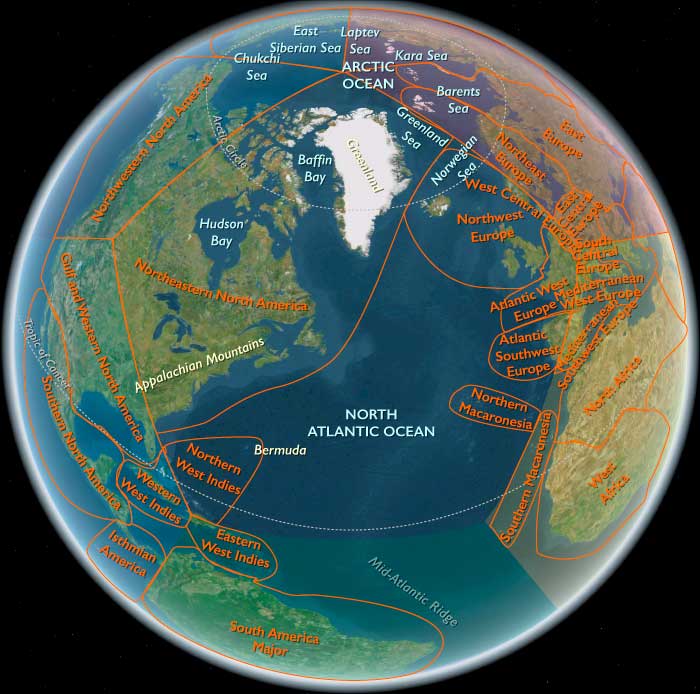
The Atlantic Lands
View →Related Events
Showing 5 events out of 5 total
Henry Clay Frick becomes chairman of the company he had formed with Andrew Carnegie, the predecessor to Unites States Steel.
Carnegie will make multiple attempts to force Frick out of the company they had created by making it appear that the company has nowhere left to go and that it is time for Frick to retire.
Despite the contributions Frick had made towards Andrew Carnegie's fortune, Carnegie disregards him in many executive decisions, including finances.
Frick was born in West Overton, Westmoreland County, Pennsylvania, U.S., a grandson of Abraham Overholt, the owner of the prosperous Overholt Whiskey distillery.
Frick's father, John W. Frick, had been unsuccessful in business pursuits.
Henry had attended Otterbein College for one year, but did not graduate.
A twenty-one years old in 1871, Frick had joined two cousins and a friend in a small partnership, using a beehive oven to turn coal into coke for use in steel manufacturing, and had vowed to be a millionaire by the age of thirty.
The company was called Frick Coke Company.
Thanks to loans from the family of lifelong friend Andrew W. Mellon, Frick had bought out the partnership by 1880.
The company had been renamed H. C. Frick & Company, employed a thousand workers and controlled eighty percent of the coal output in Pennsylvania.
Shortly after marrying his wife, Adelaide, in 1881, Frick had met Andrew Carnegie in New York City while the Fricks were on their honeymoon.
This meeting had resulted in a partnership between H. C. Frick & Company and Carnegie Steel Company, and is the predecessor to United States Steel.
This partnership ensures that Carnegie's steel mills have adequate supplies of coke.
The Homestead strike is organized and purposeful, a harbinger of the type of strike that marks the modern age of labor relations in the United States.
The Amalgamated Association of Iron and Steel Workers (AA) strike at the Homestead steel mill in 1892 is different from previous large-scale strikes in American history such as the Great railroad strike of 1877 or the Great Southwest Railroad Strike of 1886.
Earlier strikes had been largely leaderless and disorganized mass uprisings of workers.
The AA, an American labor union formed in 1876, is a craft union representing skilled iron and steelworkers
Andrew Carnegie consolidates his various holdings into the Carnegie Steel Company in 1892, allowing him to gain a monopoly in the United States steel industry.
Carnegie had begun the construction of his first steel mill, the Edgar Thomson Steel Works, in 1872 at Braddock, Pennsylvania.
The Thomson Steel Works had begun producing rails in 1874.
By a combination of low wages, efficient technology infrastructure investment and an efficient organization, the mill produces cheap steel, which sells for a large profit in the growing markets of industrial development.
Carnegie alone estimates that forty percent had been returned on the investment: i.e., a profit of $40,000 from a $100,000 investment in the mill.
The profits made by the Edgar Thomson Steel Works had been enough to let Carnegie and his partners, including Henry Clay Frick, his brother Thomas M. Carnegie, his cousin George Lauder, and Henry Phipps Jr., to buy other nearby steel mills.
These included the Homestead Steel Works, which Carnegie acquired in 1883.
The presence of the Allegheny, Monongahela, and Ohio rivers provide transport for the heavy materials associated with steel-making.
Each plant is nearby or alongside a river.
Carnegie has agreed to Frick's subsequent proposal that the various plants and assets be consolidated into one company.
This consolidation occurs on July 1, 1892, with the formation of the Carnegie Steel Company.
Carnegie Steel had made major technological innovations in the 1880s, especially the installation of the open hearth furnace system at Homestead in 1886.
It now became possible to make steel suitable for structural beams and, with the advanced work of George Lauder in arms and armament, for armor plate for the U.S. Navy and the militaries of other governments, which pay far higher prices for the premium product
In addition, the plant moves increasingly toward the continuous system of production.
Carnegie has installed vastly improved systems of material-handling, like overhead cranes, hoists, charging machines, and buggies.
All of this greatly speeds the process of steelmaking, and allows the production of far vaster quantities of steel.
As the mills expand, the labor force grows rapidly, especially less skilled workers.
The more skilled union members react with the unsuccessful 1892 Homestead Strike, along with demands for reduced working hours and against pay cuts.
Although badly wounded, Frick survives, and Berkman is arrested and will eventually be sentenced to twenty-two years in prison.