
William Petty, Earl of Shelburne
Irish-born British Whig statesman
1737 CE to 1805 CE
William Petty, 1st Marquess of Lansdowne, KG, PC (May 2, 1737 – May7, 1805), known as The Earl of Shelburne between 1761 and 1784, by which title he is generally known to history, is an Irish-born British Whig statesman who is the first Home Secretary in 1782, then Prime Minister in 1782–83 during the final months of the American War of Independence.
He succeeds in securing peace with America and this feat remains his most notable legacy.
He is also well known as a collector of antiquities and works of art.
Lord Shelburne was born in Dublin in 1737 and spent his formative years in Ireland.
After attending Oxford University he serves in the British army during the Seven Years' War, taking part in the Raid on Rochefort and the Battle of Minden.
As a reward for his conduct at the Battle of Kloster Kampen, Shelburne is appointed an aide-de-camp to George III.
He becomes involved in politics, becoming a member of parliament in 1760.
After his father's death in 1761 he inherits his title and is elevated to the House of Lords and takes an active role in politics.
He serves as President of the Board of Trade in the Grenville Ministry but resigns this position after only a few months and begins to associate with the opposition leader William Pitt.
When Pitt is made Prime Minister in 1766, Shelburne is appointed as Southern Secretary, a position which he holds for two years.
He departs office during the Corsican Crisis and joins the Opposition.
Along with Pitt he is an advocate of a conciliatory policy towards Britain's American Colonies and a long-term critic of the North Government's measures in America.
Following the fall of the North government Shelburne joins its replacement led by Lord Rockingham.
Shelburne is made Prime Minister in 1782 following Rockingham's death with the American War still being fought.
Shelburne's government is brought down largely due to the terms of the Peace of Paris (which brings the conflict to an end) which are considered excessively generous because they give the new nation control of vast trans-Appalachian lands.
Shelburne, however, has a vision of long-term benefit to Britain through trade with a large and increasingly prosperous United States, without the risk of warfare over the western territories.
After he is forced from office in 1783 at age forty-five, he permanently loses his power and influence.
Shelburne laments that his career has been a failure, despite the many high offices he holds over forty years, and his undoubted abilities as a debater.
He blames his poor education—although it had been as good as that of most peers—and saysthe real problem is that "it has been my fate through life to fall in with clever but unpopular connections."
Historians, however, point to a nasty personality that alienated friend and enemy alike.
His contemporaries distrusted him as too prone to trickery and duplicity.
Biographer John Cannon says "His uneasiness prompted him to alternate flattery and hectoring, which most of his colleagues found unpleasant, and to suspiciousness... In debate he was frequently vituperative and sarcastic."
Success had come too early, and produced jealousy, especially when he was tagged as an upstart Irishman.
He never understood the power of the House of Commons, or how to deal with its leaders.
He advocated numerous reforms, especially free trade, religious toleration, and parliamentary reform.
He was ahead of his time, but was unable to build an adequate network of support from his colleagues who distrusted his motives. In turn he distrusted others, and tried to do all the work himself so that it would be done right.
World
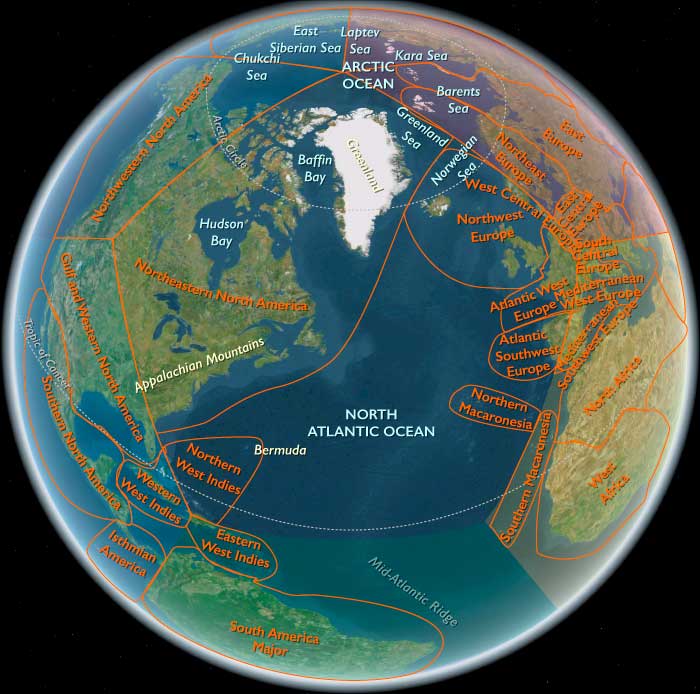
The Atlantic Lands
View →Related Events
Showing 10 events out of 12 total
This comes at a time when Britain is searching for allies, particularly Catholic Austria, in the American War of Independence to challenge the strong coalition the French have built.
After hearing of the riots, the Spanish government breaks off peace negotiations with Britain, believing that the disorder will lead to a widespread collapse of Britain and wishing to take advantage of it.
The riots highlight the problems Britain faces by not deploying a professional police force, a notion which is opposed as it is considered foreign and absolutist.
The Earl of Shelburne had shocked many the day after the riots broke out by proposing in parliament that Britain should consider forming a force modeled on the French police.
The riots destroy the popularity of radical politician John Wilkes, who led troops against the rioters.
Many of his followers see this as a betrayal; some of them may have been among the rioters.
A pamphlet and a book of poems defending the role of Gordon are written and published by the polemicist and hymn-writer Maria De Fleury.
The events at the Bank of England start a tradition where a detachment of soldiers, usually from the Brigade of Guards marches to the bank to perform security duties.
Until 1963 the duty will be performed by the Guards in Home Service Dress with bearskin, though tennis shoes are worn inside the bank.
On March 31, 1973 the detachment will become more functional than ceremonial, doing their duties in service dress with automatic weapons.
The Whig Lord Rockingham, previously Prime Minister from 1765–1766, forms a government.
The Rockingham Whigs have generally been sympathetic to the cause of the Colonists and under Rockingham the British government begins the negotiations leading to the Peace of Paris that will conclude the war.
Rockingham's death on July 1, 1782 causes a split in the ministry.
The Home Secretary Lord Shelburne is appointed to succeed him but several members of the government refuse to serve under him and resign.
These "Portland Whigs" (named after their nominal leader the Duke of Portland, but in reality led by Charles James Fox) ally in opposition with Lord North and will bring down the Shelburne ministry in March 1783, coming to power as the Fox–North coalition.
Representing the United States are Benjamin Franklin, John Jay, Henry Laurens, and John Adams.
David Hartley and Richard Oswald represent Great Britain.
The French Foreign Minister Vergennes had proposed in September, 1782, that is strongly opposed by his ally the United States.
France is exhausted by the war, and everyone wants peace except Spain, which insists on continuing the war until it can capture Gibraltar from the British.
Vergennes had come up with the deal that Spain will accept instead of Gibraltar.
The United States will gain its independence but be confined to the area east of the Appalachian Mountains.
Britain will take the area north of the Ohio River.
In the area south of that will be set up an independent Indian state under Spanish control.
It will be an Indian barrier state.
The British Prime Minister Lord Shelburne agrees.
He is in full charge of the British negotiations (some of which take place in his study at Lansdowne House, today a bar in the Lansdowne Club) and he now sees a chance to split the United States away from France and make the new country a valuable economic partner.
Although a French naval expedition had destroyed British trading posts in Hudson Bay during the summer, no territory had actually been captured.
From time to time, news arrives from India of continuing stalemate, both in the land wars (which involve the French only as supporters to local rulers) and in naval battles; the British still appear to hold all the French territory there that they had captured in 1778–79, while the French hold no British territory.
In the West Indies, on the other hand, the French still hold all the territory they had captured, while the British hold only one French island, St. Lucia.
The Spanish hold West Florida, the Bahamas and Menorca, and they are still maintaining an increasingly futile siege of Gibraltar.
An attempt to exchange Puerto Rico for Gibraltar collapses, probably because it would have brought too much competition for Jamaican products into the protected British market.
France also gains some territory around the Senegal River in Africa, which it had lost to Britain in 1763.
The whole arrangement for fishing around the Newfoundland coast has to be renegotiated because of the rights awarded to the Americans.
The Spanish do much better.
They do not have to hand back West Florida or Menorca, and are also given East Florida in exchange for the Bahamas (so tens of thousands of refugees who had fled to East Florida from the United States will have to move again).
Both East Florida and part of West Florida had been Spanish possessions before 1763, so the 1783 treaty does not specify boundaries, allowing the Spanish to claim that the 1763 boundaries still apply (the remainder of West Florida had been part of French Louisiana before 1763, and the rest of Louisiana had then been handed over to Spain).
The opportunity is taken to resolve long-standing disputes about logwood cutting in Central America.
The British, however, continue to hold Gibraltar after the siege is abandoned.
Spain's economy depends almost entirely on its colonial empire in the Americas, and a successful revolt by subjects of another colonial empire could set a ruinous example.
In fact, there had been a series of three rebellions by native South Americans against Spain between 1777 and 1781, led by Tomás Katari, Tupac Amaru II, and Julian Apasa (who adopted the name Tupac Katari)—all had been crushed with utter ruthlessness.
With such considerations in mind, Spain had continually thwarted John Jay's attempts to establish diplomatic relations during his long assignments in Madrid, and is the last participant in the American Revolutionary War to acknowledge the independence of the United States, a fortnight after the preliminary peace treaty with Britain, on February 3, 1783.
They can exercise no leverage over Britain, Spain, France or the United States in the peace negotiations, and do not make a preliminary treaty until September 2, 1783, the day before the other three treaties are formalized.
Britain agrees to return nearly all Dutch possessions captured in the East Indies (the most important of which, Trincomalee on Ceylon, had already been retaken by the French anyway) but keep Negapatnam on the Indian coast, and secure other concessions.
They are not a party to this treaty and will not recognize it until they were defeated militarily by the United States.
However, the British do promise to support the Indians.
They will sell them munitions and maintain forts in American territory until the Jay Treaty of 1795.
The concession of the Northwest Territory and the Newfoundland fisheries, and especially the apparent abandonment of Loyalists by an Article which the individual States would inevitably ignore, had been condemned in Parliament.
The last point had been the easiest solved—British tax revenue saved by not continuing the war will be used to compensate Loyalists.
Nevertheless, on February 17, 1783 and again on February 21, motions against the treaty had been successful in Parliament, so on February 24 Lord Shelburne had resigned, and for five weeks the British government had been without a leader.
Finally, a solution similar to the previous year's choice of Lord Rockingham had been found.
The government was to be led, nominally, by the Duke of Portland, while the two Secretaries of State were to be Charles Fox and, remarkably, Lord North.
Richard Oswald had been replaced by a new negotiator, David Hartley, but the Americans have refused to allow any modifications to the treaty—partly because they would have to be approved by Congress, which, with two Atlantic crossings, would take several months.
Therefore, on September 3, 1783, at Hartley's hotel in Paris, the treaty as agreed by Richard Oswald the previous November is formally signed, and ...