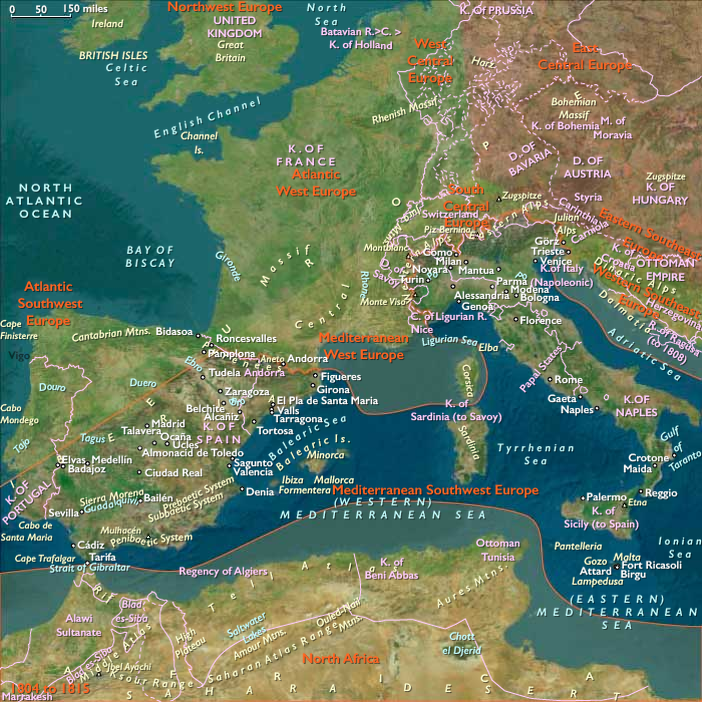
A Spanish National Assembly (the Cortes) elected…
March 1812 CE
A Spanish National Assembly (the Cortes) elected in 1810 in Cádiz (the only part of the country not invaded), promulgates the Constitution of Cádiz, which gives Spain a strictly limited monarchy (the king must work through his responsible ministers), a single-chamber Parliament with no special representation for the church or the nobility, and a modern centralized administrative system based on provinces and municipalities.
All this has little basis in the medieval precedents quoted in the debates and is inspired by the 1791 constitution of revolutionary France.
Bourgeois individualism inspires legislation against entail, favoring instead the sale of common lands and the individual's right to dispose of his property as he might wish.
The abolition of the Inquisition represents a mixture of historic regalism and modern anticlericalism.
Locations
Groups
Regions
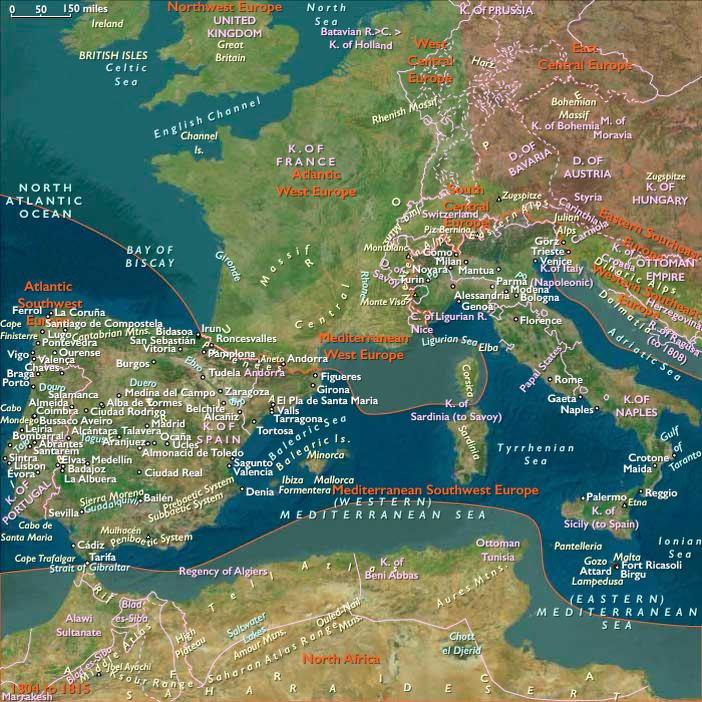
Southwest Europe
View →Subregions