
Fra Angelico’s Cortona “Annunciation” panel, painted in…
1438 CE
Fra Angelico’s Cortona “Annunciation” panel, painted in 1432-38, is among the finest of is large number of early paintings (and one that will prove greatly influential).
The accomplished Florentine painter Domenico Veneziano, asking a member of the Medici family for commissions in a letter written in 1438, acclaims Fra Angelico and Fra Filippo Lippi as the two most important Italian painters of the day.
Domenico, who spends much of his working life in Florence, here executes a group of frescoes (now lost) with the assistance of Piero della Francesca.
Described by sixteenth-century writer Giorgio Vasari as kindly and pleasure-loving, Domenico’s painting has nothing in common with the style of the Venetian school, although his name implies Venetian origin.
Two graceful Madonnas are among his few surviving works. (Domenico is believed by Vasari to be among the earliest painters to work in oils.)
Florentine sculptor Luca della Robbia, who had matriculated in 1432 in the guild of workers in stone and wood, is already an established artist when he produces his first major work, the “Cantoria” or “Singing Gallery,” a series of relief panels executed in 1431-38 for the Cathedral of Florence.
The lively expression of the performing musicians, together with the classical serenity with which Luca imbues the reliefs, displays the artist’s individualistic style.
In the late 1430s, Luca begins to employ enameled terra cotta as a coloristic accessory to marble sculpture.
He may have developed this form of sculpture in response to Brunelleschi’s new architectural ideal, compensating for Brunelleschi's relative bareness of color with further ornamentation.
Images

Fra Angelico: The Virgin of the Annunciation (Beato Angelico Annunciazione, annunciation San Marco Museum, Florence)
Locations
People
Commodities
Regions
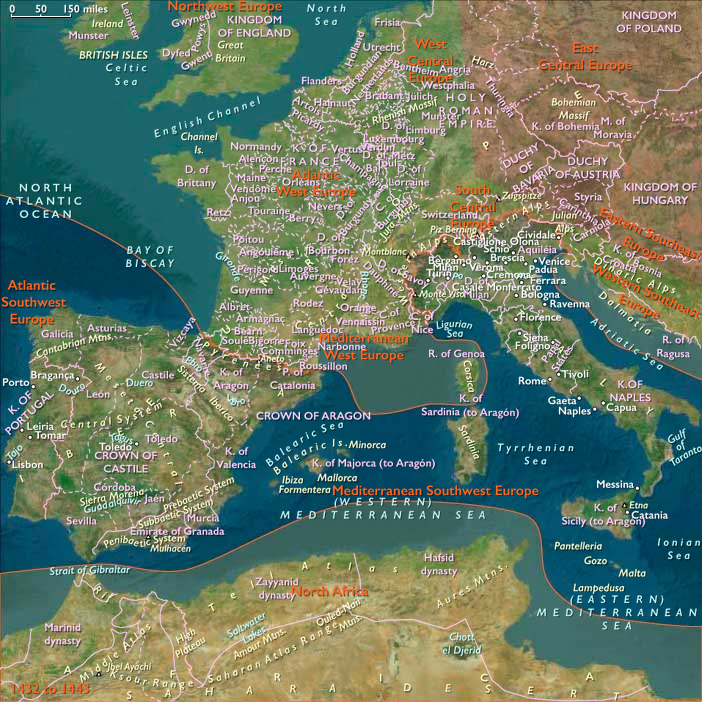
Southwest Europe
View →Subregions
