
Atlantic Southwest Europe (909–766 BCE): Consolidation of …
Years: 909BCE - 766BCE
Atlantic Southwest Europe (909–766 BCE): Consolidation of Agricultural Communities and Emerging Regional Identities
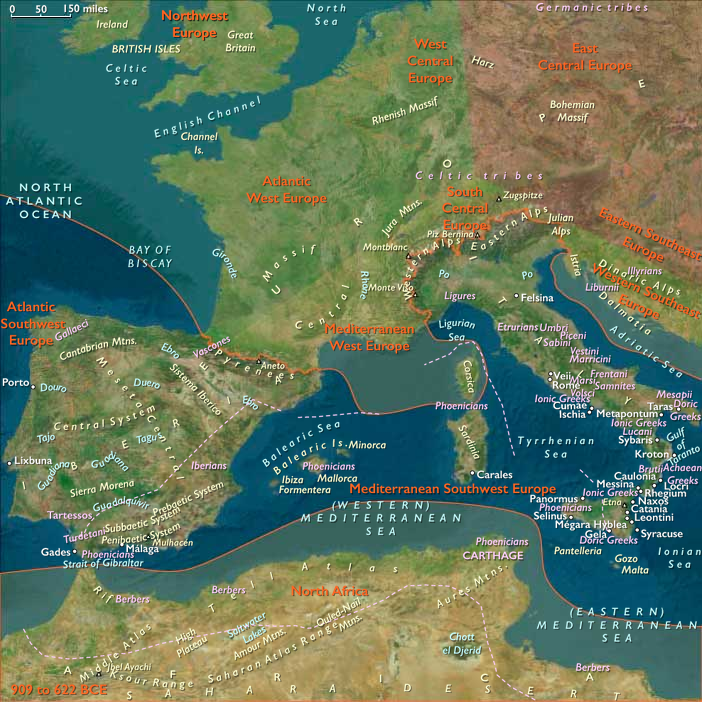
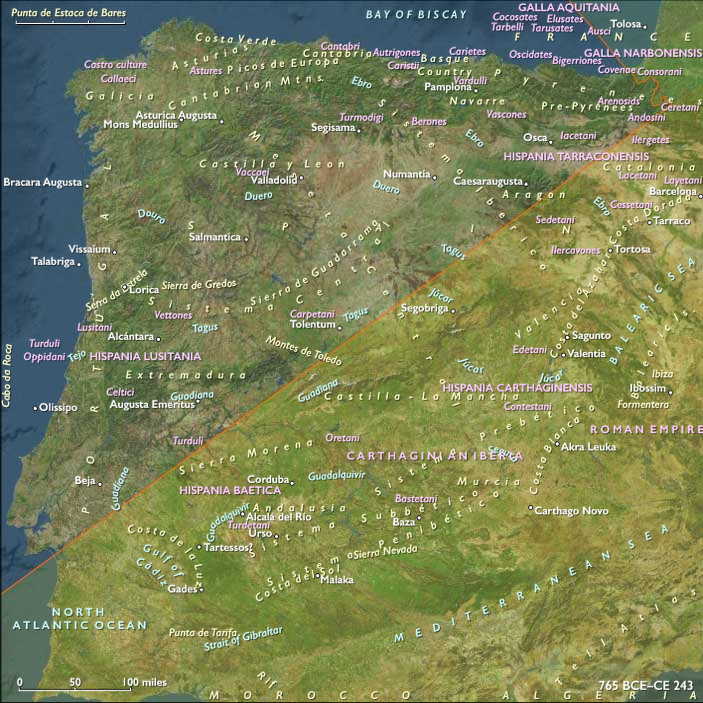
From 909 to 766 BCE, Atlantic Southwest Europe—comprising northern and central Portugal, Galicia, Asturias, Cantabria, and parts of northern Spain—entered a significant period of societal consolidation and regional differentiation. Agricultural communities expanded and became more sophisticated, strengthening trade networks and fostering distinctive local cultures, notably including early proto-Basque societies and the emergence of the significant Castro culture in northwestern Iberia.
Societal and Economic Developments
Agricultural Expansion and Settlement Consolidation
-
Agricultural practices improved significantly, with innovations in crop rotation, plowing, and livestock management enhancing productivity and food security.
-
Populations steadily increased, prompting the expansion and consolidation of settlements in fertile valleys along rivers such as the Minho, Douro, Tagus, and Ebro.
Strengthening Regional Trade Networks
-
Regional trade intensified, linking inland agricultural areas and coastal communities, facilitating the exchange of cereals, textiles, salt, metals (bronze and copper), ceramics, and early luxury items.
-
Maritime trade grew steadily along the Atlantic coast, connecting local tribes to early Mediterranean trading networks, including indirect contacts with Phoenician and emerging Carthaginian traders, laying groundwork for future significant maritime interactions.
Cultural and Technological Developments
Emergence and Influence of the Castro Culture
-
The distinctive Castro culture arose prominently during this period in northwestern Iberia, notably Galicia and northern Portugal, characterized by fortified hilltop settlements (castros), circular stone houses, sophisticated metalworking, and distinctive pottery.
-
The Castro settlements served as vital centers for agriculture, craftsmanship, trade, and defense, significantly shaping the cultural and social organization of the region.
Continued Influence of Late Bronze Age Cultures
-
The later stages of the Urnfield culture (c. 1300–750 BCE) continued influencing burial practices, metalworking techniques, and settlement patterns, reinforcing social complexity and regional cultural identities.
-
Local adaptations and innovations increasingly differentiated regional cultures, paving the way for distinctly Iberian and proto-Celtic cultural expressions in subsequent centuries.
Advances in Metalworking and Material Culture
-
Bronze metallurgy became widespread, with skilled artisans producing sophisticated tools, weapons, jewelry, and ceremonial items that displayed increasing regional stylistic variations.
-
Emerging iron-working technologies began appearing, slowly introducing transformative innovations that would significantly shape subsequent eras.
Cultural Identity and Proto-Basque Consolidation
Development of Proto-Basque Societies
-
The proto-Basque communities consolidated their settlements and cultural practices, primarily in regions surrounding the western Pyrenees, southwestern Aquitaine, and northern Iberian valleys.
-
Linguistic, cultural, and social distinctions became increasingly pronounced, shaping a durable regional identity that clearly differentiated them from neighboring Iberian and emerging Celtic-speaking communities.
Ritual and Religious Practices
-
Ritual practices grew more complex, with increasing numbers of burial mounds, megalithic structures, and sacred sites marking landscapes and emphasizing social hierarchies and collective religious beliefs.
-
Communities engaged extensively in ancestor veneration and nature-based rituals, reinforcing communal bonds and cultural continuity.
Notable Early Settlement Patterns
-
Fortified Villages and Castros: Communities constructed fortified settlements, reflecting concerns with defense, regional control, and social organization. Prominent among these were the distinctive castros characteristic of northwestern Iberia, marking the advent of the Castro cultural complex.
-
Coastal and Riverine Trading Centers: Early proto-urban communities emerged strategically along river valleys and coastal regions, serving as nodes for trade, cultural exchange, and emerging administrative organization.
Long-Term Significance and Legacy
Between 909 and 766 BCE, Atlantic Southwest Europe:
-
Experienced significant agricultural and demographic growth, laying foundational economic and social structures.
-
Intensified interactions with Mediterranean cultures, notably early Phoenician and Carthaginian trade contacts, strengthening interregional economic integration.
-
Saw the consolidation of distinct cultural identities, particularly among proto-Basque communities and the emergent Castro culture, shaping the enduring regional diversity characteristic of Atlantic Southwest Europe.
This period laid crucial economic, social, and cultural foundations for the intensification of Mediterranean interactions and further regional differentiation in subsequent eras.
Groups
Topics
- Subatlantic Period
- Younger Subboreal Period
- Atlantic Bronze Age
- Phoenician colonization
- Subatlantic Period
Commodoties
Subjects
Regions
Subregions
Related Events
Showing 10 events out of 66848 total
Years: 909BCE - 766BCE
Groups
Topics
- Subatlantic Period
- Younger Subboreal Period
- Atlantic Bronze Age
- Phoenician colonization
- Subatlantic Period
Commodoties
Subjects
Regions
Subregions