
The Assassination of Charles the Good and…
1125 CE
The Assassination of Charles the Good and the Succession Crisis in Flanders (March 2, 1127 CE)
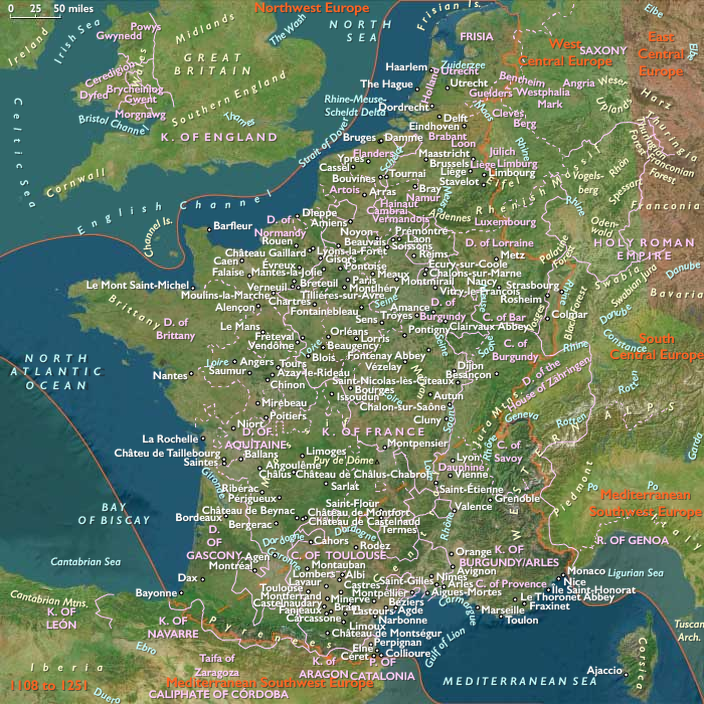
On the morning of March 2, 1127, Count Charles the Good of Flanders was brutally assassinated inside the Church of St. Donatian in Bruges by a group of knights loyal to the Erembald family. As he knelt in prayer, his attackers hacked him to death with broadswords, committing a sacrilegious murder that sent shockwaves throughout Flanders and beyond.
Public Outrage and the Martyrdom of Charles the Good
- Charles, already respected for his piety and acts of charity, was immediately regarded as a martyr and saintby the people.
- His murder provoked massive public outrage, uniting both nobles and commoners against the Erembald conspirators.
- Although Charles was not formally beatified until 1882, his reputation as a just and holy ruler ensured that his memory lived on as that of a martyr.
The Brutal Fate of the Erembalds
- In the days following Charles's murder, the people of Bruges and Ghent rose up in fury.
- The Erembald family and their accomplices were hunted down, arrested, and subjected to gruesome tortures before being executed.
- This violent purge marked the end of the Erembald faction’s influence in Flanders.
The Succession Crisis: King Louis VI Intervenes
- With Charles dead and no direct heir, Flanders fell into political chaos as different factions vied for control.
- King Louis VI of France, who had supported the noble uprising against the Erembalds, seized the opportunity to assert his authority over the county.
- Louis used his influence to install his own favored candidate, William Clito, the son of Robert Curthose and grandson of William the Conqueror, as the next Count of Flanders.
However, William Clito’s rule would face immediate resistance, as many Flemish nobles rejected Capetian interference, leading to a new period of instability and war in Flanders.
The assassination of Charles the Good not only shattered political stability in Flanders but also reshaped the balance of power in northern France, as the Capetians sought to expand their influence at the expense of the Flemish nobility.
Groups
Commodities
Regions
West Europe
View →Subregions
