
Atlantic Southwest Europe (93–82 BCE): Increased Roman…
93 BCE to 82 BCE
Atlantic Southwest Europe (93–82 BCE): Increased Roman Control, Northern Tribal Resilience, and Cultural Continuity
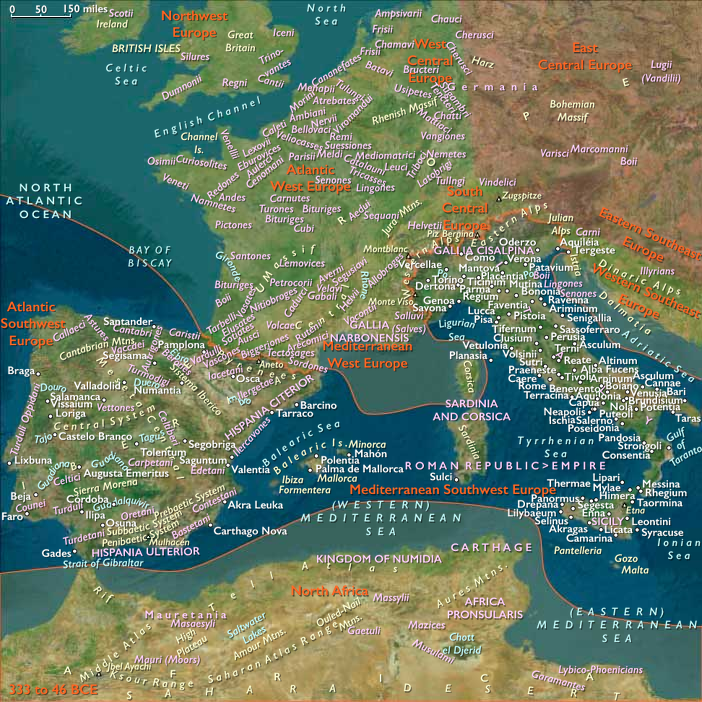
Between 93 and 82 BCE, Atlantic Southwest Europe—encompassing northern and central Portugal, Galicia, Asturias, Cantabria, and northern Spain south of the Franco-Spanish border (43.05548° N, 1.22924° W)—underwent significant territorial and political transformations marked by Rome’s increased provincial authority and territorial consolidation. Simultaneously, northern tribes—including the Gallaeci, Astures, Cantabri, and Vascones—maintained resilient autonomy and strategic resistance. Economically, the region became ever more intertwined with Mediterranean markets, relying heavily on slavery, while culturally, tribal identities and regional pride remained resilient despite growing external influence.
Political and Military Developments
Deepened Roman Territorial Control
-
Roman governance and military presence became firmly established across southern and central Lusitanian territories, reflecting Rome’s broader policy of administrative consolidation in Hispania. Roman authorities constructed new fortified settlements, roads, and military garrisons, significantly extending Roman influence and control.
-
Roman governors increasingly relied on local tribal elites for administration, enabling cooperative governance arrangements that stabilized provincial territories, while selectively suppressing localized resistance.
Continued Northern Tribal Autonomy and Resistance
-
The Gallaeci, Astures, and Cantabri persisted in strategic resistance, fortifying their settlements and strengthening military defenses. These tribes effectively repelled incursions, maintaining territorial independence and regional autonomy despite growing Roman pressures.
-
The Vascones maintained their careful neutrality and diplomatic balance, effectively preserving cultural identity, societal stability, and territorial integrity.
Local Tribal Diplomacy and Accommodation
-
The Lusitanians, Vettones, and Vaccaei tribes increasingly adapted to Roman rule through diplomatic collaboration, securing internal autonomy, local economic privileges, and territorial integrity. Though pockets of resistance remained, broader tribal accommodation to Roman governance significantly expanded, stabilizing southern and central regions.
Economic and Technological Developments
Intensified Mediterranean Economic Integration
-
Tribes continued deepening their economic ties with Roman-controlled Mediterranean trade networks, exporting metals, salt, timber, agricultural products, textiles, and notably slaves, and importing luxury goods, ceramics, wine, olive oil, and sophisticated iron products.
-
Tribal elites benefited substantially, reinforcing internal social stratification, economic specialization, and regional dependencies on Mediterranean commerce.
Sustained Importance of Slave Labor
-
Slavery remained an integral component of regional economies, extensively utilized in mining (silver, tin, copper), agricultural labor, domestic service, and artisanal production. Active participation in Mediterranean slave markets firmly embedded slavery within regional economic and social structures.
Continued Advances in Metallurgy and Craftsmanship
-
Ironworking technology continued to advance significantly, enhancing regional agricultural productivity, artisanal craftsmanship, and military capabilities. Skilled artisans from Lusitanian, Gallaeci, and Celtici communities crafted sophisticated iron weapons, armor, tools, and decorative objects, integrating indigenous traditions with Mediterranean artistic influences.
Cultural and Religious Developments
Persistent Cultural Resilience and Artistic Fusion
-
Regional material culture continued reflecting a vibrant synthesis of indigenous Iberian, Celtic, and increasingly Roman motifs. This cultural fusion appeared prominently in elaborate metalwork, jewelry, ceremonial artifacts, pottery, and household goods.
-
Tribal identities, notably among the Lusitanians, Gallaeci, Astures, Cantabri, and Vascones, remained culturally resilient, distinctly asserting local traditions and regional pride despite external pressures.
Ritual Complexity and Tribal Identity
-
Ritual and religious traditions further intensified, blending indigenous Iberian, Celtic, and Roman religious elements. Sacred landscapes, ritual sites, and ceremonial practices persisted prominently, reinforcing communal cohesion, cultural continuity, and regional identity.
-
Ancestral rites, warrior ceremonies, and communal feasts continued actively, providing social solidarity, resistance memory, and cultural stability amid increased Roman provincial control.
Notable Tribal Groups and Settlements
-
Lusitanians: Expanded cooperation with Roman authorities, securing internal autonomy and territorial stability through strategic diplomacy, while localized resistance continued in isolated pockets.
-
Vettones and Vaccaei: Successfully navigated Roman governance through diplomatic strategies, maintaining economic prosperity and regional autonomy.
-
Gallaeci, Astures, and Cantabri: Continued fortifying territories and maintaining military preparedness, effectively preserving regional autonomy and tribal independence.
-
Vascones: Retained distinctive identity and territorial autonomy, effectively maintaining diplomatic neutrality and regional stability.
Long-Term Significance and Legacy
Between 93 and 82 BCE, Atlantic Southwest Europe:
-
Experienced decisive Roman territorial consolidation and provincial stability in southern and central regions, significantly influencing future administrative and cultural developments.
-
Continued resilient northern tribal autonomy and resistance, shaping long-term historical trajectories involving prolonged regional independence and later Roman military campaigns.
-
Deepened economic integration with Mediterranean trade networks and solidified slavery as a fundamental economic institution, permanently influencing regional economic and social structures.
This critical period marked a clear step toward full Roman integration, yet emphasized the resilience, autonomy, and cultural persistence of Atlantic Southwest European tribes, profoundly influencing subsequent historical dynamics and regional identities.
Groups
Commodities
Subjects
Regions
Southwest Europe
View →Subregions
