
Atlantic Southwest Europe (105–94 BCE): Roman Provincial…
105 BCE to 94 BCE
Atlantic Southwest Europe (105–94 BCE): Roman Provincial Stabilization and Tribal Adaptation
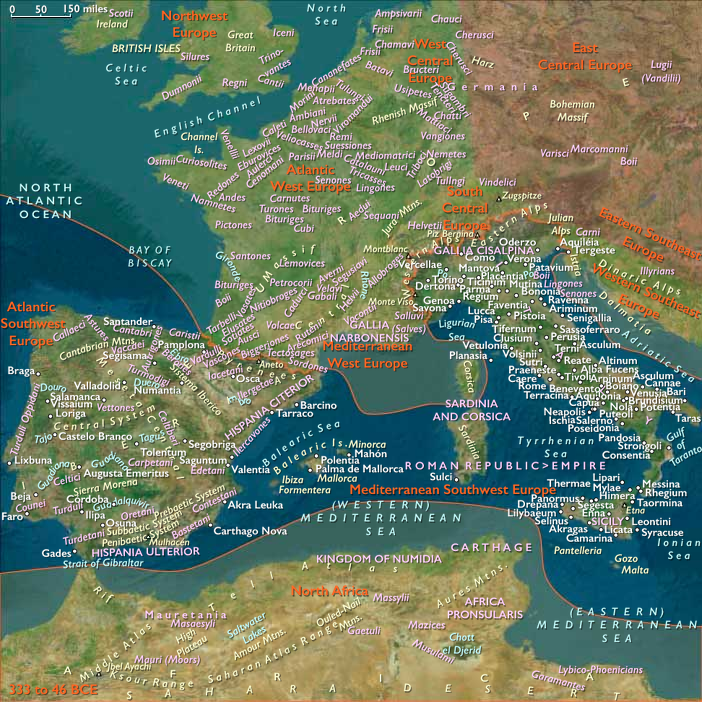
Between 105 and 94 BCE, Atlantic Southwest Europe—encompassing northern and central Portugal, Galicia, Asturias, Cantabria, and northern Spain south of the Franco-Spanish border (43.05548° N, 1.22924° W)—entered a period characterized by increased stability under Roman provincial governance in southern and central Lusitanian territories, while northern tribal regions continued their resilient autonomy and intermittent resistance. This era saw growing tribal adaptation to Roman authority, deeper economic integration within Roman-dominated Mediterranean trade, sustained reliance on slave labor, and continued regional cultural resilience, solidifying long-term cultural identities.
Political and Military Developments
Roman Provincial Consolidation and Stability
-
Rome effectively stabilized administrative control in Lusitanian and adjacent tribal territories, consolidating governance through strategically placed fortified settlements, military garrisons, and diplomatic alliances with tribal elites willing to cooperate.
-
Roman authorities focused on pacifying the southern and central territories through diplomacy and selective military pressure, increasingly successful in securing regional acceptance of Roman rule and provincial order.
Persistent Northern Tribal Autonomy and Resistance
-
Northern tribes—particularly the Gallaeci, Astures, and Cantabri—persisted in effective resistance, maintaining territorial autonomy through fortified settlements and strategic defensive alliances.
-
The Vascones continued successfully navigating diplomatic neutrality, preserving distinct cultural and territorial autonomy, carefully balancing relations with Roman authorities and neighboring tribes.
Tribal Adaptation and Diplomacy
-
The Lusitanians, following decades of intense conflict, gradually adapted to Roman rule. Local tribal elites selectively collaborated with Roman governors, securing internal autonomy and regional economic privileges, while pockets of localized resistance persisted.
-
Tribes such as the Vettones and Vaccaei similarly adjusted to Roman governance through diplomatic engagements, preserving territorial integrity, economic prosperity, and cultural continuity.
Economic and Technological Developments
Deepening Economic Integration with Rome
-
Tribal economies integrated even more deeply within Mediterranean trade networks dominated by Rome. Metals, agricultural goods, wool, salt, timber, and notably slaves were regularly exported, while Mediterranean products—luxury goods, fine ceramics, wine, olive oil, and sophisticated iron products—were imported extensively.
-
Tribal elites benefited economically from these exchanges, reinforcing regional social stratification, economic specialization, and dependence on external trade.
Continued Reliance on Slavery
-
Slave labor remained deeply embedded within regional economic structures, central to mining (silver, copper, tin), agricultural estates, domestic labor, and artisanal activities. The active slave trade with Roman merchants significantly reinforced regional economic integration and dependency.
Metallurgical Expertise and Technological Innovation
-
Technological advancement in iron metallurgy and artisanal production continued enhancing agricultural productivity, warfare capabilities, and economic specialization, reshaping local societies.
-
Skilled artisans among the Lusitanians, Vettones, and Gallaeci communities excelled in crafting sophisticated iron weaponry, armor, agricultural implements, and decorative objects, merging indigenous styles with Mediterranean artistic influences.
Cultural and Religious Developments
Continued Artistic and Cultural Fusion
-
Material culture reflected continued synthesis of indigenous Iberian traditions, Celtic artistic motifs, and Roman influences. This rich cultural fusion was evident in metalwork, pottery, decorative jewelry, ceremonial artifacts, and household items.
-
Despite deeper Roman provincial integration, regional cultural identities—especially Lusitanian, Gallaeci, Cantabrian, Asturian, and Vascones—remained resilient and distinct, expressed vividly in regional artistry.
Ritual Practices and Tribal Identity
-
Complex religious and ritual traditions persisted, blending indigenous Iberian, Celtic, and Roman elements. Ritual centers, sanctuaries, and sacred landscapes remained central, reinforcing communal cohesion, regional pride, and cultural continuity.
-
Warrior rites, ancestral ceremonies, and communal festivals continued actively, reinforcing tribal solidarity, regional identity, and resistance memory amidst growing Roman provincial control.
Notable Tribal Groups and Settlements
-
Lusitanians: Increasingly adapted diplomatically to Roman provincial administration, preserving substantial local autonomy and cultural identity despite growing acceptance of Roman rule.
-
Vettones and Vaccaei: Strategically balanced diplomatic cooperation and internal autonomy, maintaining territorial integrity and economic prosperity under Roman governance.
-
Gallaeci, Astures, Cantabri: Continued defensive resistance, preserving autonomy and regional independence, preparing strategically against further Roman encroachment.
-
Vascones: Maintained their careful neutrality, successfully preserving distinct cultural traditions and territorial autonomy, effectively managing relations with Rome and neighboring tribes.
Long-Term Significance and Legacy
Between 105 and 94 BCE, Atlantic Southwest Europe:
-
Experienced growing stability and provincial order in Lusitanian and central tribal territories under Roman governance, setting critical precedents for future cultural assimilation and regional integration.
-
Continued robust tribal autonomy and resilient cultural identities, especially among northern tribes and the Vascones, shaping future historical trajectories and resistance movements against external domination.
-
Deepened economic integration and dependency on Roman-controlled Mediterranean trade networks, firmly entrenching slavery as a fundamental component of the region’s economy.
This era decisively shaped regional historical developments, setting essential foundations for future cultural integration, sustained resistance, and eventual full incorporation into the Roman sphere.
Groups
Commodities
Subjects
Regions
Southwest Europe
View →Subregions
