
Atlantic Southwest Europe (244–255 CE): Navigating Imperial…
244 CE to 255 CE
Atlantic Southwest Europe (244–255 CE): Navigating Imperial Instability, Regional Autonomy, and Cultural Continuity
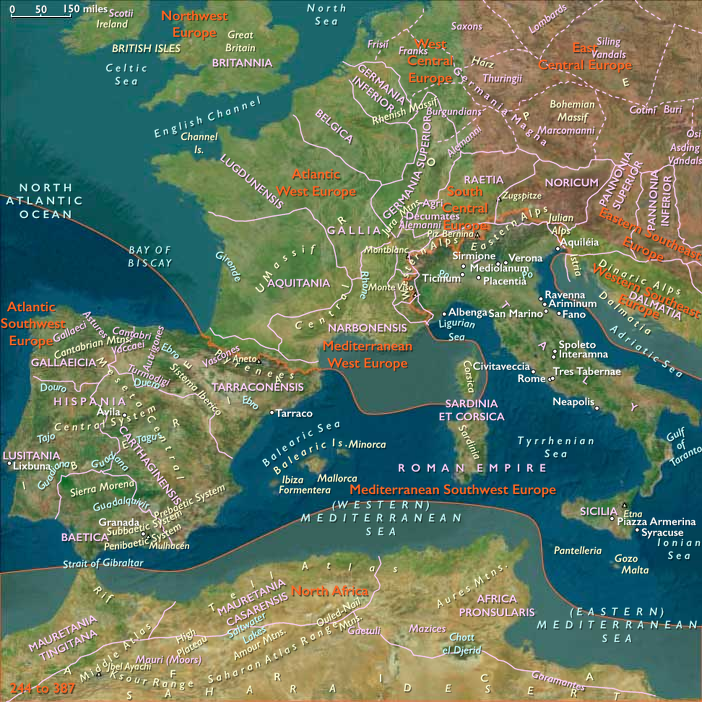
Between 244 and 255 CE, Atlantic Southwest Europe—comprising northern and central Portugal, Galicia, Asturias, Cantabria, and northern Spain south of the Franco-Spanish border (43.05548° N, 1.22924° W)—entered a new age characterized by increasing imperial instability associated with Rome’s Crisis of the Third Century. Despite widespread political and economic turmoil elsewhere in the empire, the region maintained considerable provincial stability, economic resilience, and cultural continuity. Local civic structures, significantly strengthened by prior centuries of stable Roman governance, enabled the region to adapt successfully to broader challenges while maintaining robust indigenous identities and traditions.
Political and Military Developments
Provincial Autonomy Amid Imperial Turmoil
-
With imperial power weakened by rapid succession and instability following Emperor Gordian III’s death in 244 CE, Atlantic Southwest Europe increasingly relied on well-established provincial governance structures and strong local elites. The Roman administrative system—fortified settlements, local bureaucracies, and permanent military garrisons—provided effective continuity and internal stability despite distant imperial disruptions.
-
Local civic leaders, deeply integrated into Roman governance due to universal citizenship (since 212 CE), assumed greater responsibilities in maintaining order and administrative effectiveness, reinforcing regional autonomy.
Stability and Continued Integration of Northern Tribes
-
Northern tribal regions—including the Gallaeci, Astures, and Cantabri—remained stable and prosperous, sustaining peaceful cooperation and full integration within the provincial governance framework, even as external instability grew.
-
The Vascones successfully maintained territorial autonomy, diplomatic neutrality, cultural distinctiveness, and internal stability.
Economic and Technological Developments
Economic Resilience Amid Imperial Disruptions
-
The regional economy remained resilient despite broader imperial economic crises. Integration with Mediterranean trade networks persisted, enabling continued exports of metals (silver, copper, tin), agricultural products, timber, salt, textiles, livestock, and slaves. Imports of luxury items, fine ceramics, wine, olive oil, and advanced iron products continued to sustain local prosperity, although trade volumes gradually declined.
-
Local economic structures adapted effectively to disruptions, allowing provincial elites to maintain relative prosperity, though the growing imperial instability began limiting economic growth.
Continued Reliance on Slave Labor
-
Slavery persisted as integral to the regional economy, particularly in agriculture, mining, artisanal crafts, domestic service, and urban development. Although imperial disruptions affected slave availability and trade, slavery remained firmly embedded economically and socially.
Infrastructure Maintenance and Technological Adaptations
-
Infrastructure—roads, aqueducts, public buildings, amphitheaters, temples, bridges, and ports—continued receiving necessary maintenance to ensure connectivity, economic efficiency, and urban amenities, though new investments slowed.
-
Technological innovation, particularly in metallurgy, agriculture, and construction, continued sustaining productivity and artisanal quality despite the challenging external environment.
Cultural and Religious Developments
Cultural Continuity and Resilient Local Identities
-
Material culture demonstrated remarkable resilience and continued blending of indigenous Iberian traditions, Celtic motifs, and Roman artistic influences. Intricate metalwork, jewelry, fine pottery, ceremonial artifacts, and household objects persisted, highlighting vibrant local identities and cultural vitality despite broader instability.
-
Indigenous communities—particularly Lusitanians, Gallaeci, Astures, Cantabri, and Vascones—continued robustly adapting and enriching provincial culture through persistent local traditions.
Ritual Continuity and Religious Adaptation
-
Ritual and religious practices remained active, integrating indigenous Iberian, Celtic, and Roman traditions. Sacred landscapes, temples, and communal ceremonies continued reinforcing regional identities, cultural cohesion, and tribal solidarity.
-
Traditional ancestral rites, warrior ceremonies, and local festivals persisted robustly, maintaining regional identity, social solidarity, and cultural resilience despite increasing external uncertainties.
Civic Identity and Provincial Autonomy
-
Civic integration following universal Roman citizenship remained strong, firmly embedding Roman administrative frameworks in local governance. However, regional autonomy and distinct local identities became increasingly important as provincial leaders navigated weakened imperial authority.
Notable Tribal Groups and Settlements
-
Lusitanians: Continued economic and cultural prosperity, actively involved in provincial administration, adapting to increased regional autonomy.
-
Vettones and Vaccaei: Maintained stability, prosperity, and autonomy through effective civic integration and administrative cooperation.
-
Gallaeci, Astures, Cantabri: Remained prosperous, stable, culturally resilient, and actively engaged in regional governance and civic structures.
-
Vascones: Successfully preserved territorial autonomy, diplomatic neutrality, cultural distinctiveness, and internal stability.
Long-Term Significance and Legacy
Between 244 and 255 CE, Atlantic Southwest Europe:
-
Successfully navigated increasing imperial instability through established provincial autonomy, effective local governance, and resilient civic structures.
-
Maintained economic resilience despite broader trade disruptions, embedding slavery within regional economic structures even as external availability declined.
-
Preserved cultural resilience and regional identities, dynamically blending indigenous and Roman traditions amidst growing external uncertainty.
This era firmly established the region’s ability to maintain internal stability and cultural continuity during broader imperial challenges, setting important precedents for its adaptive resilience throughout the rest of the third century and beyond.
Groups
Commodities
Subjects
Regions
Southwest Europe
View →Subregions
