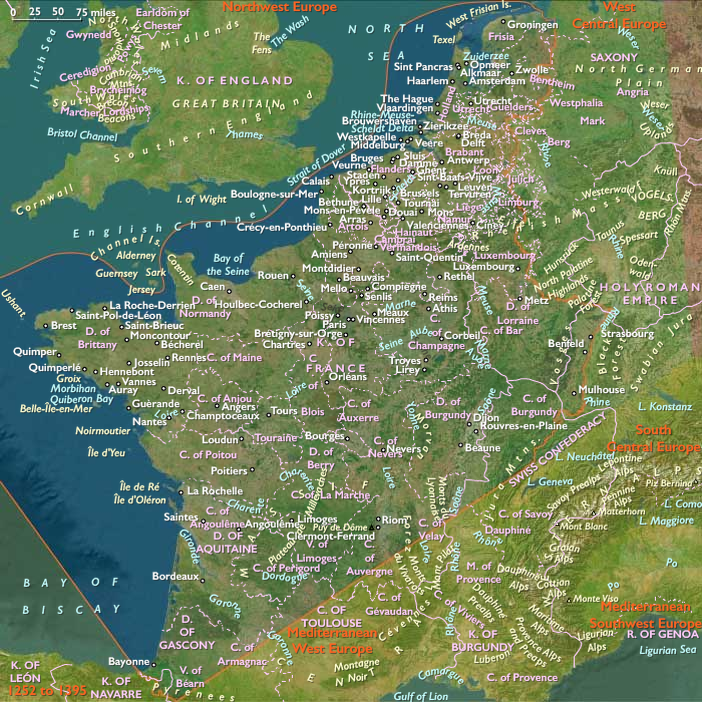
Atlantic West Europe (1300–1311): Turmoil, Consolidation, and…
1300 CE to 1311 CE
Atlantic West Europe (1300–1311): Turmoil, Consolidation, and Cultural Vitality
Between 1300 and 1311, Atlantic West Europe—encompassing the Low Countries, Brittany, Normandy, Burgundy, Aquitaine, central France, Alsace, and Franche-Comté—experienced significant turmoil amid internal conflicts and territorial disputes. Nevertheless, the region continued economic growth, cultural flourishing, and gradual political consolidation under increasing royal authority.
Political and Military Developments
-
France: Internal Struggles and Centralization
-
Philip IV (the Fair, r. 1285–1314) confronted significant internal challenges, including clashes with regional nobles and towns, notably in Flanders and Aquitaine.
-
The Battle of the Golden Spurs (1302) in Flanders marked a major defeat for French forces, solidifying Flemish autonomy.
-
Continued centralization efforts by the French crown led to tensions with the Papacy, culminating in the Avignon Papacy (1309–1377), which increased royal influence over church affairs.
-
-
Aquitaine and Gascony: Anglo-French Rivalries Persist
-
Ongoing disputes over Gascony intensified Anglo-French tensions, contributing to skirmishes and temporary truces rather than long-term resolutions.
-
-
Low Countries: Flemish Autonomy and Economic Strength
-
The Flemish cities, notably Bruges, Ghent, and Ypres, affirmed their economic and political independence following their victory at Courtrai in 1302.
-
Brabant and other Low Countries territories balanced local autonomy with regional alliances, maintaining a complex web of diplomatic relationships.
-
-
Burgundy, Alsace, and Franche-Comté: Strategic Diplomacy
-
Burgundy continued its semi-independent status through adept diplomatic maneuvers, skillfully balancing Capetian royal power and Imperial interests.
-
Alsace and Franche-Comté navigated ongoing power struggles between local rulers, French interests, and the Holy Roman Empire, securing regional autonomy.
-
-
Brittany and Normandy: Sustained Autonomy and Integration
-
Brittany preserved significant regional autonomy under Duke John II, utilizing strategic marriages and diplomacy.
-
Normandy was further integrated into French royal administration, although localized resistance and demands for autonomy persisted.
-
Economic and Social Developments
-
Maritime Trade and Economic Prosperity
-
Flemish cities continued their dominance in the wool trade, expanding economic networks across Europe.
-
Atlantic ports such as Bordeaux, La Rochelle, and Nantes flourished through robust wine trade and expanding maritime commerce.
-
-
Agricultural Stability and Expansion
-
Agricultural practices improved, resulting in surplus production that supported regional markets, fairs, and urban growth.
-
Cultural and Intellectual Developments
-
Advancement in Gothic Architecture
-
Architectural innovation persisted, with notable projects such as the cathedrals of Amiens and Strasbourg reflecting the height of Gothic architecture.
-
-
Educational and Scholarly Activity
-
The University of Paris remained an influential intellectual hub, attracting scholars and promoting advancements in philosophy, theology, and natural sciences.
-
Religious Developments
-
Increased Royal Influence over the Church
-
The relocation of the Papacy to Avignon (1309) significantly increased French royal authority over religious affairs, altering the dynamics of church-state relations.
-
-
Growth of Mendicant Orders
-
Mendicant orders such as the Franciscans and Dominicans played an increasingly prominent role in urban religious life, education, and spiritual outreach.
-
Legacy and Significance
The era 1300–1311 in Atlantic West Europe was marked by political upheaval, significant regional autonomy, and sustained economic and cultural growth. Despite military setbacks, particularly in Flanders, the period solidified the foundations of centralized royal authority, economic prosperity, and intellectual vitality, shaping the trajectory of subsequent historical developments.
Groups
Topics
Commodities
Subjects
Regions
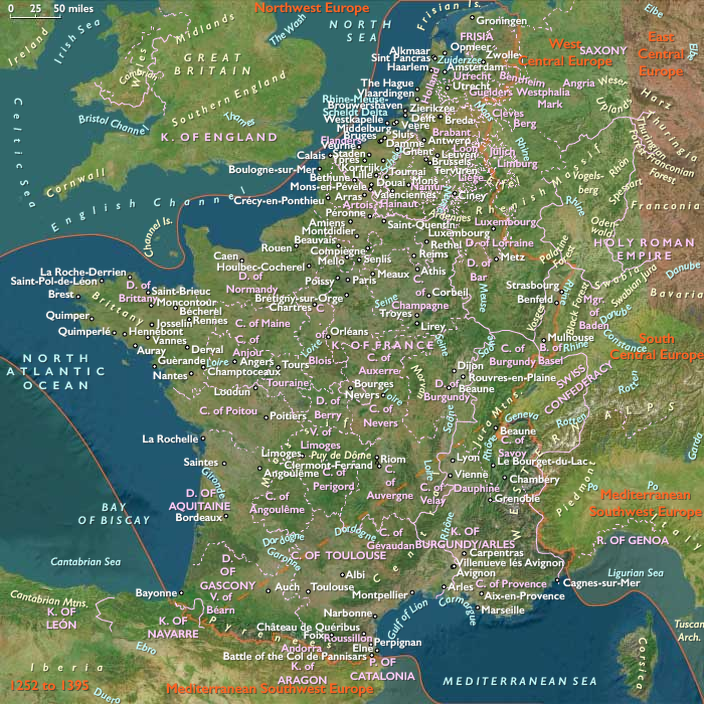
West Europe
View →Subregions