
Atlantic West Europe (1600–1611): Consolidation of Independence, …
Years: 1600 - 1611
Atlantic West Europe (1600–1611): Consolidation of Independence, Religious Tension, and Maritime Expansion
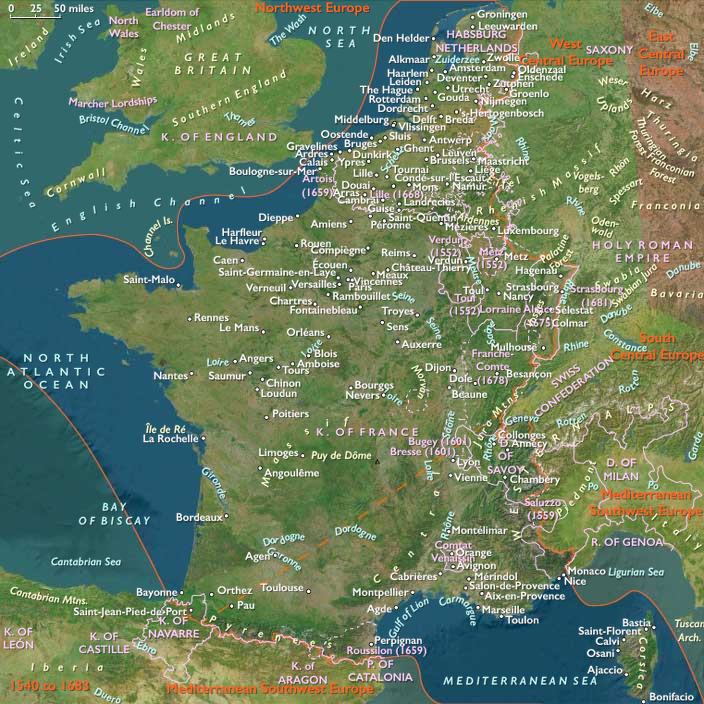
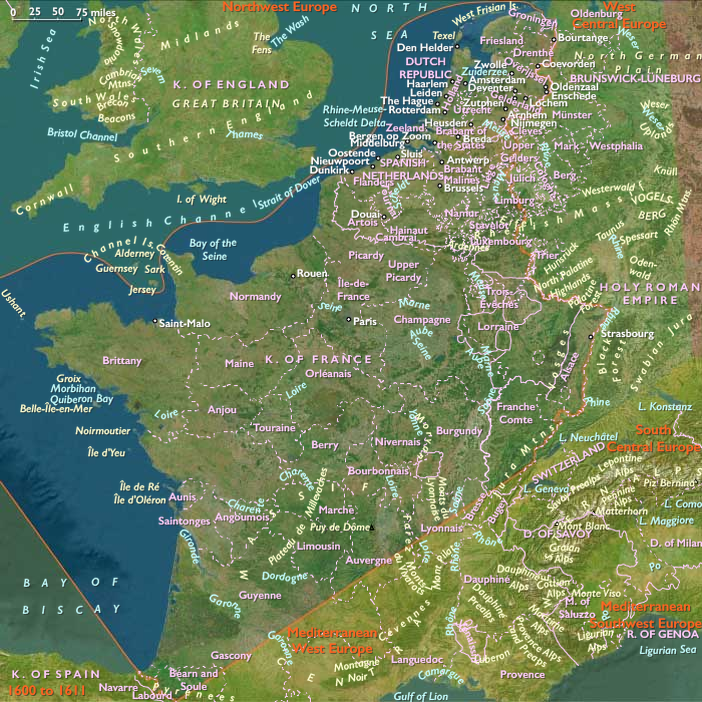
Between 1600 and 1611, Atlantic West Europe—encompassing northern France, the Low Countries (modern Belgium, Netherlands, Luxembourg), and the Atlantic and Channel coastal regions—witnessed further consolidation of Dutch independence, relative stabilization in France under Henry IV, increased economic growth led by Amsterdam's maritime commerce, and intensified religious and intellectual developments shaped by ongoing European tensions.
Political and Military Developments
Dutch Republic: Truce and Recognition
-
Under the strategic military leadership of Maurice of Nassau, the Dutch Republic continued consolidating its position, decisively defending its territories from Spanish control.
-
The pivotal Battle of Nieuwpoort (1600), though tactically inconclusive, demonstrated the resilience of Dutch forces and solidified Maurice’s military reputation, deterring further major Spanish offensives into the northern provinces.
-
Prolonged military stalemate and financial exhaustion led Spain to negotiate the Twelve Years' Truce (1609–1621), granting temporary yet crucial diplomatic recognition and stability to the Dutch Republic.
France: Henry IV and Internal Stability
-
King Henry IV of France (r. 1589–1610) continued solidifying royal authority, working effectively to restore internal stability and economic prosperity following decades of religious conflict. His pragmatic governance, epitomized by infrastructure improvements, notably road and canal projects, revitalized French trade and agriculture.
-
Henry’s assassination in 1610 abruptly ended this period of stability, ushering France into renewed political uncertainty under his young son, Louis XIII, and the regency of Marie de' Medici.
Economic Developments: Amsterdam's Golden Age and Regional Trade Expansion
Amsterdam’s Economic Prosperity
-
Amsterdam emerged decisively as Europe's premier commercial and financial center, benefiting immensely from the decline of southern rivals such as Antwerp. Its banking sector flourished, significantly funding maritime exploration, trade, and colonial expansion.
-
In 1602, the establishment of the Dutch East India Company (VOC) revolutionized global trade, marking the world's first multinational corporation. VOC dominance in Asian trade profoundly enriched Amsterdam and laid economic foundations for Dutch global influence.
French and Flemish Maritime Commerce
-
French Atlantic ports, particularly Bordeaux, La Rochelle, and Nantes, thrived by exporting wine, textiles, and agricultural produce, intensifying commercial links with England, Spain, and the Netherlands. Bordeaux’s wine industry gained prominence, exporting significantly to England and northern European markets.
-
Flemish and Walloon cities under Spanish control, notably Antwerp and Brussels, sought recovery through moderate trade revival, though religious and political restrictions hindered significant economic resurgence.
Religious and Intellectual Developments
Religious Tensions and Early Enlightenment Thought
-
The Dutch Republic became a refuge for religious dissidents from across Europe, hosting Calvinists, Mennonites, Jews, and others fleeing persecution. This diversity laid early foundations for the region’s intellectual openness.
-
Yet religious tensions persisted, exemplified by internal Calvinist disputes between strict orthodox factions (later Gomarists) and moderate reformers (Arminians), foreshadowing the future internal religious conflicts that culminated in the Synod of Dordrecht (1618–1619).
French Religious and Cultural Climate
-
In France, Henry IV’s Edict of Nantes (1598) remained cautiously enforced, balancing between Catholic and Protestant factions. Intellectual life flourished in Paris and regional cities, with scholars and humanists encouraged by royal patronage and stability.
-
French universities and literary academies thrived, nurturing a generation of thinkers and writers who laid early groundwork for the European Enlightenment.
Cultural and Artistic Developments
Dutch Cultural Renaissance and Artistic Patronage
-
The Dutch Golden Age of art accelerated, driven by wealth from commerce and patronage by merchants and civic leaders. Artists such as Hendrick Goltzius and Karel van Mander emerged prominently, refining naturalistic portraiture, genre painting, and landscape depiction that characterized early 17th-century Dutch art.
-
The establishment of artistic guilds and workshops in Amsterdam, Haarlem, and Utrecht promoted regional cultural expression, fostering artistic innovation and public patronage.
French Cultural Patronage and Urban Projects
-
King Henry IV initiated ambitious urban developments in Paris, notably the completion of the Pont Neuf (1607)and the expansion of public spaces, enhancing civic pride and royal authority.
-
French artistic expression flourished, transitioning from late Renaissance to early Baroque, reflecting royal aspirations and humanist ideals in architecture, sculpture, and painting, especially evident in projects begun in the Louvre and Fontainebleau.
Social Developments: Urbanization and Emerging Prosperity
Urban Growth and Social Mobility
-
Amsterdam’s population growth surged dramatically, driven by migration, trade prosperity, and religious toleration. This demographic expansion fostered vibrant civic life, increasing wealth, and social mobility among the merchant and artisan classes.
-
Similar urban growth occurred in Dutch cities like Rotterdam, Leiden, and Haarlem, establishing the urban foundations for the Dutch Golden Age.
French Rural Recovery and Social Stability
-
France experienced gradual recovery in rural areas due to Henry IV’s policies promoting agricultural productivity and reduced internal warfare. Improved economic conditions in northern French provinces stabilized rural communities, slowing the migration of rural populations toward urban centers.
Legacy and Significance
The period 1600–1611 was instrumental in shaping Atlantic West Europe’s political, economic, and cultural landscape:
-
Politically, the Dutch Republic’s recognition through the Twelve Years' Truce established the framework for sustained independence, significantly weakening Spanish influence in northern Europe.
-
Economically, Amsterdam’s ascendency, driven by innovative commercial practices and global trade networks, reshaped Europe's economic core, making the Dutch Republic a primary European maritime and financial power.
-
Religiously, continued religious pluralism and tensions in the Dutch Republic and cautious toleration in France contributed significantly to evolving European religious practices and attitudes.
-
Culturally, artistic flourishing and urban development in Amsterdam and Paris foreshadowed the region’s dominant cultural roles in 17th-century European art and thought.
By 1611, Atlantic West Europe had solidified critical foundations for enduring economic prosperity, cultural vibrancy, and political autonomy that defined its influential trajectory through subsequent centuries.
People
Groups
- Jews
- Flanders, County of
- Normandy, Duchy of
- Brittanny, Duchy of
- Liège, Prince-Bishopric of
- Namur, County of
- Christians, Roman Catholic
- Limburg, Duchy of
- Hainaut, County of
- Holland, County of
- Austria, Archduchy of
- Moravian Margravate
- Brabant, Duchy of
- Lorraine, (second) Duchy of
- Bohemia, Kingdom of
- Artois, County of
- France, (Valois) Kingdom of
- Luxemburg, Duchy of
- Holy Roman Empire
- Netherlands, Habsburg
- Lutheranism
- Protestantism
- Anabaptists
- Calvinists
- Huguenots (the “Reformed”)
- Mennonites
- Seventeen Provinces
- Franche-Comté (province of the Spanish Empire)
- Netherlands, United Provinces of the (Dutch Republic)
- Dutch East India Company (Vereenigde Oostindische Compagnie or VOC in Dutch, literally "United East Indies Company")
Topics
- Renaissance, French
- Protestant Reformation
- Colonization of the Americas, French
- Western Architecture: 1540 to 1684
- Eighty Years War (Netherlands, or Dutch, War of Independence)
- Western Art: 1600 to 1612
Commodoties
Subjects
- Writing
- Watercraft
- Painting and Drawing
- Conflict
- Scholarship
- Custom and Law
- Finance
- religious movement
Regions
Subregions
Related Events
Showing 10 events out of 34015 total
Years: 1600 - 1611
People
Groups
- Jews
- Flanders, County of
- Normandy, Duchy of
- Brittanny, Duchy of
- Liège, Prince-Bishopric of
- Namur, County of
- Christians, Roman Catholic
- Limburg, Duchy of
- Hainaut, County of
- Holland, County of
- Austria, Archduchy of
- Moravian Margravate
- Brabant, Duchy of
- Lorraine, (second) Duchy of
- Bohemia, Kingdom of
- Artois, County of
- France, (Valois) Kingdom of
- Luxemburg, Duchy of
- Holy Roman Empire
- Netherlands, Habsburg
- Lutheranism
- Protestantism
- Anabaptists
- Calvinists
- Huguenots (the “Reformed”)
- Mennonites
- Seventeen Provinces
- Franche-Comté (province of the Spanish Empire)
- Netherlands, United Provinces of the (Dutch Republic)
- Dutch East India Company (Vereenigde Oostindische Compagnie or VOC in Dutch, literally "United East Indies Company")
Topics
- Renaissance, French
- Protestant Reformation
- Colonization of the Americas, French
- Western Architecture: 1540 to 1684
- Eighty Years War (Netherlands, or Dutch, War of Independence)
- Western Art: 1600 to 1612
Commodoties
Subjects
- Writing
- Watercraft
- Painting and Drawing
- Conflict
- Scholarship
- Custom and Law
- Finance
- religious movement
Regions
Subregions