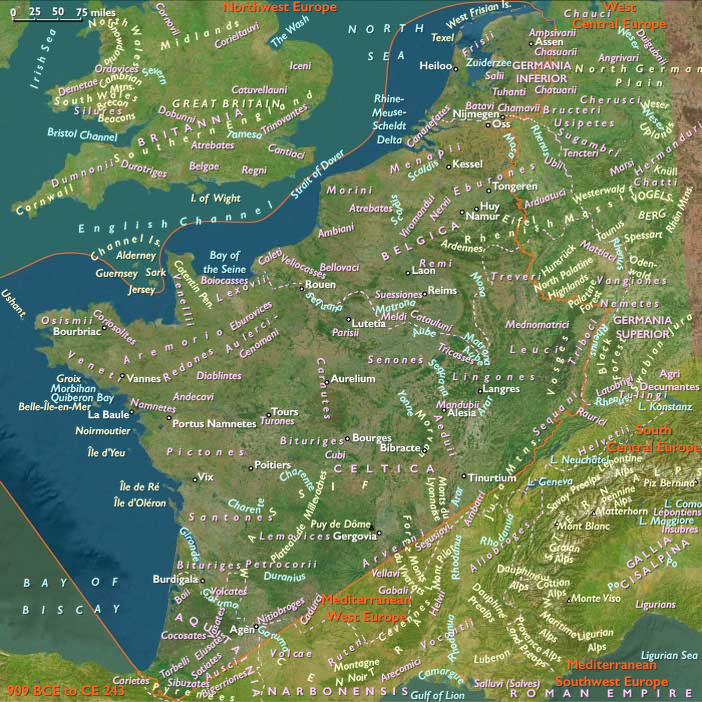
Atlantic West Europe (64–75 CE): Crisis, Consolidation,…
64 CE to 75 CE
Atlantic West Europe (64–75 CE): Crisis, Consolidation, and Recovery under the Flavians
Between 64 and 75 CE, Atlantic West Europe—including Aquitaine, the Atlantic coast, northern and central France, Alsace, and the Low Countries—experienced significant turbulence due to political instability following Emperor Nero’s downfall, the ensuing Year of the Four Emperors (69 CE), and eventual stabilization under the Flavian Dynasty. Despite temporary disruptions, the region emerged resilient, witnessing renewed imperial investment, reinforced frontiers, and continued Romanization.
Political and Military Developments
Turmoil of the Year of the Four Emperors (69 CE)
-
Nero’s death in 68 CE plunged the empire into chaos, with rapid successions of short-lived emperors—Galba, Otho, Vitellius, and ultimately Vespasian.
-
Atlantic West Europe initially supported Emperor Vitellius (commander in Germania), whose brief reign ended with his defeat by Vespasian’s forces in December 69 CE.
Stabilization under the Flavian Dynasty
-
Emperor Vespasian (r. 69–79 CE) restored stability and re-established strong central governance, appointing capable governors who quickly consolidated imperial authority.
-
Military units stationed along the Rhine frontier were reinforced, securing the eastern boundary against potential Germanic incursions.
Economic and Social Developments
Short-Term Disruptions and Long-Term Stability
-
The civil wars briefly disrupted trade and economic activity, notably along trade routes to Britain and the Rhine frontier.
-
By early 70 CE, trade resumed with vigor; economic centers such as Burdigala (Bordeaux) quickly recovered, continuing to export regional specialties such as wine, olive oil, pottery, and metals.
Renewal of Infrastructure and Urban Development
-
Vespasian initiated significant infrastructural investments to restore roads, bridges, and fortifications damaged or neglected during Nero’s later years and the civil war period.
-
Cities such as Augustodunum (Autun), Durocortorum (Reims), Burdigala, and various settlements along the Atlantic coast benefited from new imperial projects, including aqueducts, baths, and temples.
Agricultural Recovery and Expansion
-
Agriculture, particularly viticulture in Aquitaine, quickly rebounded after brief interruptions, regaining its prominent role in regional prosperity.
-
Surplus production and exports resumed, sustaining urban growth and further integrating the region’s economy within the broader empire.
Cultural and Religious Developments
Continued Romanization
-
Cultural integration deepened under Flavian patronage, with increased adoption of Latin and Roman customs among local elites and urban populations.
-
Architectural and cultural projects were sponsored widely, spreading Roman norms and traditions throughout provincial society.
Reinforcement of Imperial Cult
-
The cult of the emperor was reinvigorated under Vespasian, serving both religious and political purposes, uniting provincial loyalty around the new regime.
-
Temples and monuments dedicated to Vespasian and his dynasty were established across major urban centers in the region.
Key Figures and Events
-
Vespasian (r. 69–79 CE): Successfully restored order after Nero’s chaotic downfall, reinforcing imperial authority and provincial loyalty.
-
The turbulent but brief rule of Vitellius (69 CE): Highlighted the region’s strategic role as the gateway between Germania, Britain, and the heartland of Gaul.
Long-Term Significance
By 75 CE, Atlantic West Europe had:
-
Successfully navigated the political crises of 69 CE, emerging resilient under Flavian rule.
-
Re-established robust economic networks, reinforced agricultural productivity, and continued urban development.
-
Strengthened Roman cultural influence, setting a firm foundation for sustained growth and regional stability throughout the remainder of the first century and beyond.
These developments demonstrated the region's resilience and adaptability, ensuring its vital place within the Roman Empire for decades to come.
Groups
Topics
Commodities
Subjects
Regions
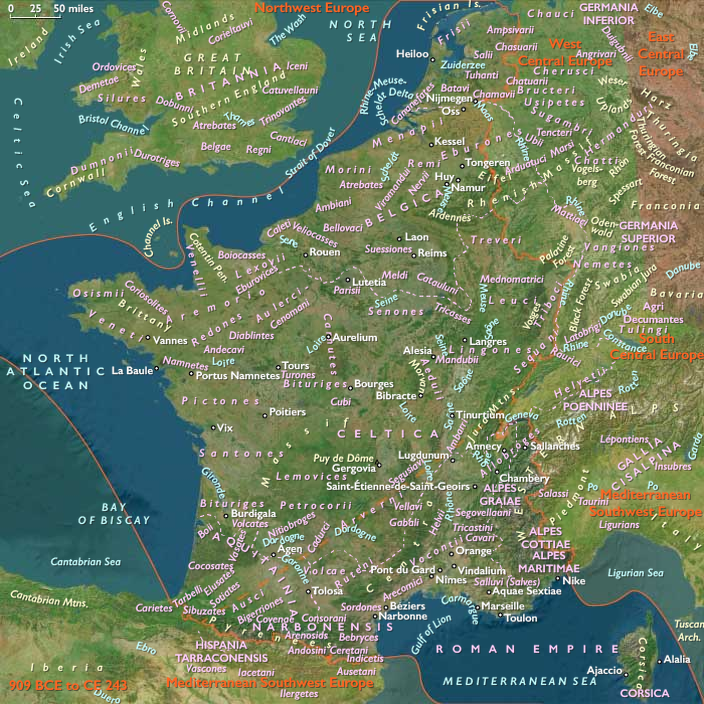
West Europe
View →Subregions