
Baldwin of Boulogne is a son of …
Years: 1097 - 1097
August
Baldwin of Boulogne is a son of Eustace II, Count of Boulogne and Ida of Lorraine, daughter of Godfrey III, Duke of Lower Lorraine.
He is the younger brother of Eustace III, Count of Boulogne and Godfrey of Bouillon.
As the youngest brother, Baldwin was intended for a career in the church, but he had given this up around 1080; according to William of Tyre, who lived later in the twelfth century and did not know Baldwin personally: "in his youth, Baldwin was well nurtured in the liberal studies.
He became a cleric, it is said, and, because of his illustrious lineage, held benefices commonly called prebends in the churches of Reims, Cambrai, and Liège."
Afterwards he lived in Normandy, where he married Godehilde, or Godvera, de Toeni, daughter of Raoul de Conches of a noble Anglo-Norman family and formerly betrothed wife of Robert de Beaumont.
She represents Baldwin’s only claim to European lands and wealth.
Baldwin had returned to Lower Lorraine in order to take control of the county of Verdun previously held by Godfrey.
He had joined the Crusade in 1096 with his brothers Godfrey and Eustace III of Boulogne, selling much of his property to the church in order to pay for his expenses.
His wife had also accompanied him.
This was the second movement of crusaders; the first, the People's Crusade, had caused much destruction on their march, although no more than other crusading groups.
When Godfrey passed through Hungary, King Coloman had demanded a hostage to ensure their good conduct, and Baldwin had been handed over until his companions had left Hungarian territory.
After entering imperial territory, there had been a few skirmishes with the Greeks, who had also suffered from the People's Crusade.
Baldwin had commanded a detachment of troops which captured a bridge in the vicinity of Constantinople.
After reaching the city, the mass of troops could not be restrained from pillaging the surrounding territory, and Emperor Alexios had been forced to provide a hostage in order to restore peace.
The hostage, his son the future emperor John II Komnenos, had been entrusted to Baldwin’s care.
According to Anna Komnena, Baldwin reprimanded one of his soldiers who dared to sit on Alexios' throne in Constantinople.
Baldwin had accompanied his brothers as far as Heraclea in Asia Minor, where he had broken away from the main body of the crusaders with Tancred to march into Cilicia.
Tancred was surely seeking to capture some land and establish himself as a petty ruler in the east, and Baldwin may have had the same goal.
During his absence, his wife had fallen ill and died at Marash, which means that Baldwin can no longer depend on his wife's lands for support.
Some historians have suggested that his entire strategy changed from that point, others believe that the change happened earlier.
After passing through the Cilician Gates, Baldwin, with no apparent incentive to return to Europe, sets off on his own towards the Armenian lands around the Euphrates.
Thus, he resolves to seize a fiefdom for himself in the Holy Land.
Locations
People
- Adhemar of Le Puy
- Al-Afdal Shahanshah
- Alexios I Komnenos
- Anna Komnene
- Baldwin I of Jerusalem
- Bohemond I of Antioch
- Constantine I
- Danishmend Gazi
- Eustace III
- Fakhr al-Mulk Radwan
- Godfrey of Bouillon
- Guglielmo Embriaco
- Hugh I
- Iftikhar al-Dawla
- John II Komnenos
- Kerbogha
- Kilij Arslan I
- Manuel Boutoumites
- Peter the Hermit
- Pope Urban II
- Raymond IV
- Robert Curthose
- Robert II, Count of Flanders
- Stephen
- Tancred
- Tatikios
- Yaghi-Siyan
Groups
- Arab people
- Persian people
- Armenian people
- Jews
- Kurdish people
- Lombards (West Germanic tribe)
- Germans
- Christians, Armenian Apostolic Orthodox
- Christians, Maronite
- Christians, Miaphysite (Oriental Orthodox)
- Coptic Orthodox Church of Alexandria
- Greeks, Medieval (Byzantines)
- Islam
- Egypt in the Middle Ages
- Muslims, Sunni
- Muslims, Shi'a
- Syrian people
- Papal States (Republic of St. Peter)
- Toulouse, County of
- Flemish people
- Flanders, County of
- Abbasid Caliphate (Baghdad)
- Normandy, Duchy of
- Normans
- German, or Ottonian (Roman) Empire
- Turkmen people
- Cyprus, East Roman (Byzantine)
- Fatimid Caliphate
- French people (Latins)
- France, (Capetian) Kingdom of
- Hungary, Kingdom of
- Genoa, (Most Serene) Republic of
- Druze, or Druse, the
- Bulgaria, Theme of
- Lorraine (Lothier), Lower, (second) Duchy of
- Seljuq Empire (Isfahan)
- Christians, Roman Catholic
- Christians, Eastern Orthodox
- England, (Norman) Kingdom of
- Danishmends
- Rum, Sultanate of
- Apulia, Norman Duchy of
- Aleppo, Seljuq Emirate of
- Armenia, Baronry of Little, or Lesser
- Roman Empire, Eastern: Komnenos dynasty, restored
Topics
Commodoties
Subjects
Regions
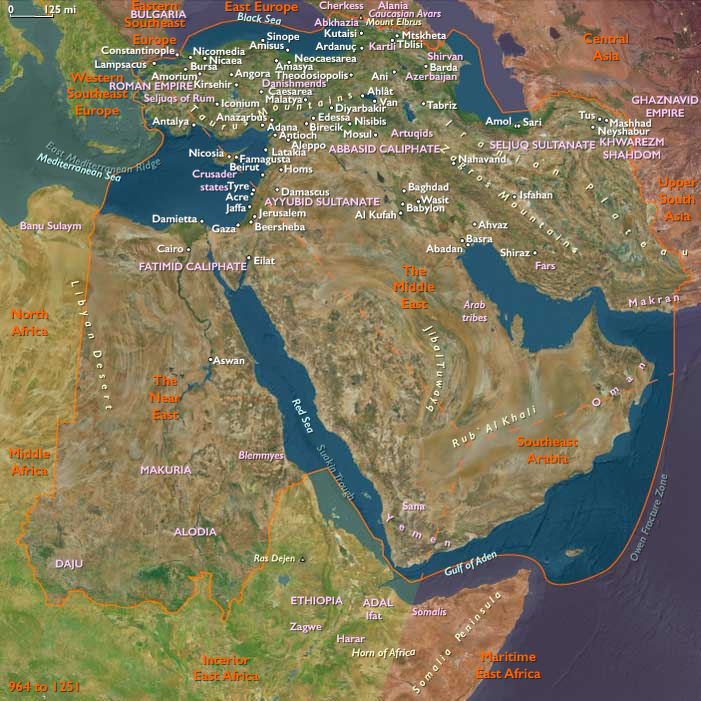
Subregions
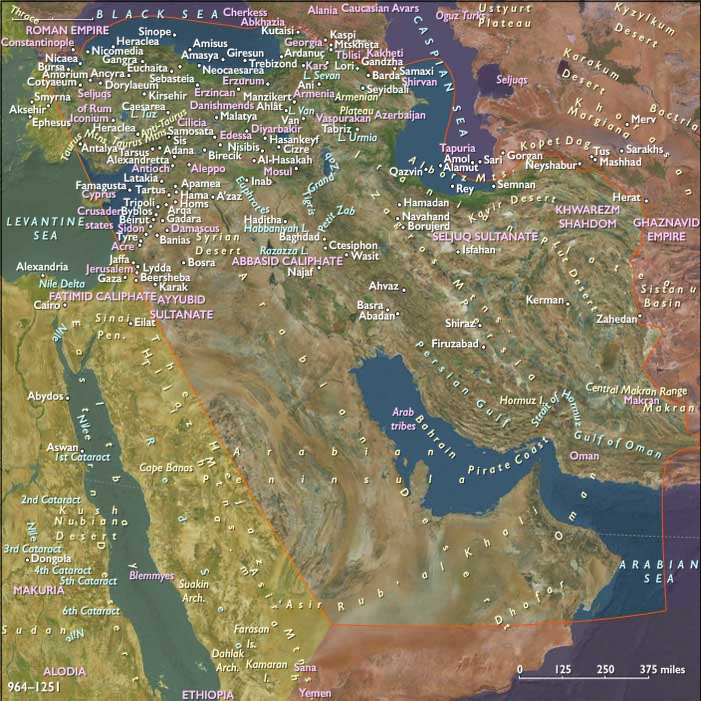
Related Events
Showing 5 events out of 5 total
Years: 1097 - 1097
August
Locations
People
- Adhemar of Le Puy
- Al-Afdal Shahanshah
- Alexios I Komnenos
- Anna Komnene
- Baldwin I of Jerusalem
- Bohemond I of Antioch
- Constantine I
- Danishmend Gazi
- Eustace III
- Fakhr al-Mulk Radwan
- Godfrey of Bouillon
- Guglielmo Embriaco
- Hugh I
- Iftikhar al-Dawla
- John II Komnenos
- Kerbogha
- Kilij Arslan I
- Manuel Boutoumites
- Peter the Hermit
- Pope Urban II
- Raymond IV
- Robert Curthose
- Robert II, Count of Flanders
- Stephen
- Tancred
- Tatikios
- Yaghi-Siyan
Groups
- Arab people
- Persian people
- Armenian people
- Jews
- Kurdish people
- Lombards (West Germanic tribe)
- Germans
- Christians, Armenian Apostolic Orthodox
- Christians, Maronite
- Christians, Miaphysite (Oriental Orthodox)
- Coptic Orthodox Church of Alexandria
- Greeks, Medieval (Byzantines)
- Islam
- Egypt in the Middle Ages
- Muslims, Sunni
- Muslims, Shi'a
- Syrian people
- Papal States (Republic of St. Peter)
- Toulouse, County of
- Flemish people
- Flanders, County of
- Abbasid Caliphate (Baghdad)
- Normandy, Duchy of
- Normans
- German, or Ottonian (Roman) Empire
- Turkmen people
- Cyprus, East Roman (Byzantine)
- Fatimid Caliphate
- French people (Latins)
- France, (Capetian) Kingdom of
- Hungary, Kingdom of
- Genoa, (Most Serene) Republic of
- Druze, or Druse, the
- Bulgaria, Theme of
- Lorraine (Lothier), Lower, (second) Duchy of
- Seljuq Empire (Isfahan)
- Christians, Roman Catholic
- Christians, Eastern Orthodox
- England, (Norman) Kingdom of
- Danishmends
- Rum, Sultanate of
- Apulia, Norman Duchy of
- Aleppo, Seljuq Emirate of
- Armenia, Baronry of Little, or Lesser
- Roman Empire, Eastern: Komnenos dynasty, restored
Topics
Commodoties
Subjects
Regions
Subregions