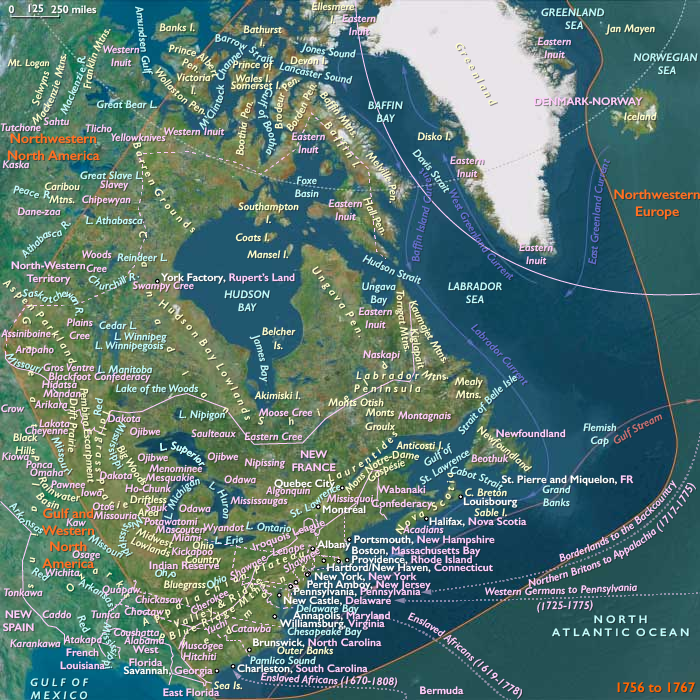
Colonel Bouquet, delayed in Pennsylvania while mustering…
October 1764 CE
He marches to the Muskingum River in the Ohio Country, within striking distance of a number of native villages.
Now that treaties have been negotiated at Fort Niagara and Fort Detroit, the Ohio natives are isolated and, with some exceptions, ready to make peace.
In a council that begins on October 17, Bouquet demands that the Ohio Native Americans return all captives, including those not yet returned from the French and Indian War.
Guyasuta and other leaders reluctantly hand over more than two hundred captives, many of whom have been adopted into native families.
Because not all of the captives are present, the natives are compelled to surrender hostages as a guarantee that the other captives will be returned.
The Ohio natives agree to attend a more formal peace conference with William Johnson, which will be finalized in July 1765.
People
Groups
Iroquois (Haudenosaunee, also known as the League of Peace and Power, Five Nations, or Six Nations)
View →
Wyandot, or Wendat, or Huron people (Amerind tribe)
View →
Miami (Amerind tribe)
View →
Lenape or Lenni-Lenape (later named Delaware Indians by Europeans)
View →
Ojibwa, or Ojibwe, aka or Chippewa (Amerind tribe)
View →
Odawa, or Ottawa, people (Amerind tribe)
View →
Seneca (Amerind tribe)
View →
Mascouten (Amerind tribe)
View →
Kickapoo people (Amerind tribe)
View →
Potawatomi (Amerind tribe)
View →
Wea (Amerind tribe)
View →
Piankeshaw (Amerind tribe)
View →
Susquehannock (Amerind tribe)
View →
Shawnees, or Shawanos (Amerind tribe)
View →
Ohio Country
View →
Illinois Country
View →
Britain, Kingdom of Great
View →
Mingo (Seneca-Cayuga Tribe of Oklahoma)
View →
Topics
Regions
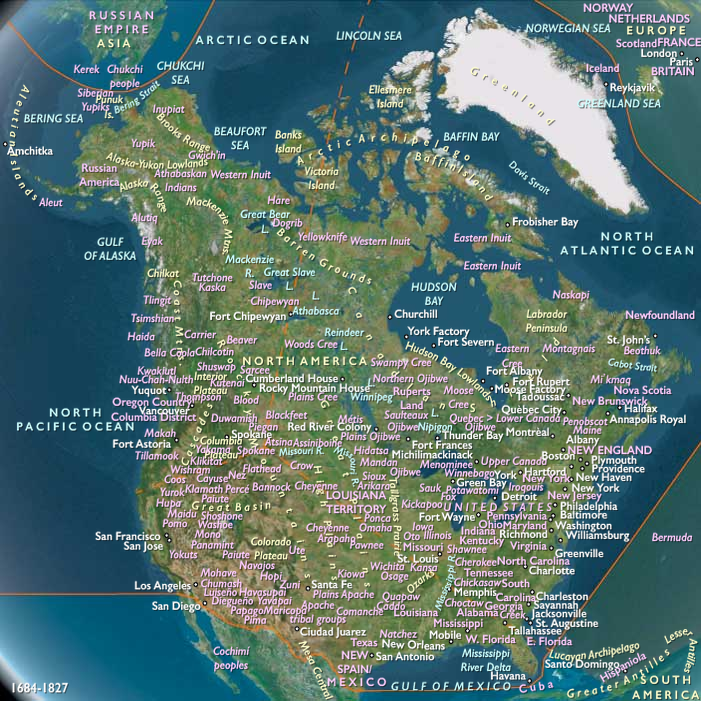
Northern North America
View →Subregions