
Atlantic Southwest Europe (100–111 CE): Provincial Prosperity,…
100 CE to 111 CE
Atlantic Southwest Europe (100–111 CE): Provincial Prosperity, Roman Administrative Refinement, and Cultural Flourishing
Between 100 and 111 CE, Atlantic Southwest Europe—comprising northern and central Portugal, Galicia, Asturias, Cantabria, and northern Spain south of the Franco-Spanish border (43.05548° N, 1.22924° W)—entered a phase marked by exceptional stability, economic vitality, and administrative efficiency during Emperor Trajan’s rule (98–117 CE). Under the first emperor of Iberian origin, the region benefited significantly from strengthened Roman administrative structures, expanded economic prosperity, robust infrastructure investment, and continued cultural adaptation. Indigenous identities remained resilient, creatively blending local traditions with Roman influence.
Political and Military Developments
Administrative Consolidation and Stability under Trajan
-
Emperor Trajan’s administration brought refined governance, increased efficiency, and substantial investments in regional infrastructure. Atlantic Southwest Europe experienced a heightened level of provincial stability, administrative coherence, and internal peace, supported by established garrisons, fortified towns, and well-organized urban administrative centers.
-
Local elites actively participated in the refined provincial administration, enhancing regional cohesion and contributing significantly to the maintenance of local peace.
Continued Stability in Northern Regions
-
The northern tribal territories—particularly the Gallaeci, Astures, and Cantabri—maintained peaceful and economically prosperous integration under stable Roman provincial governance, fully benefiting from Trajan’s policies and administrative refinements.
-
The Vascones successfully preserved their longstanding diplomatic neutrality, territorial autonomy, and cultural distinctiveness, benefiting from stable provincial administration.
Economic and Technological Developments
Peak Economic Prosperity and Mediterranean Integration
-
Economic integration into Roman-controlled Mediterranean trade networks reached new heights. Atlantic Southwest Europe exported metals (silver, copper, tin), agricultural products, timber, salt, textiles, livestock products, and significant numbers of slaves. Imports of luxury goods, fine ceramics, wine, olive oil, and advanced iron products enriched local economies and raised living standards.
-
Provincial elites thrived economically, reinforcing regional economic specialization, social stratification, and dependency on Roman commerce.
Ongoing Reliance on Slave Labor
-
Slavery continued as a cornerstone of the regional economy, essential to mining operations, agricultural estates, artisanal production, domestic services, and urban construction. The flourishing slave trade further entrenched slavery deeply within regional economic and social structures.
Infrastructure Investment and Technological Innovation
-
Technological advances, particularly in iron metallurgy, further enhanced agricultural productivity, artisanal quality, and military effectiveness. Local artisans produced high-quality weaponry, armor, tools, and decorative objects, combining indigenous techniques with Roman technological sophistication.
-
Under Trajan, substantial investments in provincial infrastructure—including roads, aqueducts, bridges, urban planning, and public buildings—facilitated greater trade efficiency, administrative effectiveness, and overall regional prosperity.
Cultural and Religious Developments
Continued Cultural Vitality and Artistic Flourishing
-
Cultural expressions remained dynamic, blending indigenous Iberian traditions, Celtic motifs, and Roman artistic styles. Material culture—such as intricate metalwork, decorative jewelry, pottery, ceremonial artifacts, and household objects—showcased vibrant regional identities and ongoing cultural adaptation.
-
Local tribal identities—especially among Lusitanians, Gallaeci, Astures, Cantabri, and Vascones—remained robust and creatively adaptive within the stable Roman provincial context.
Persistence and Adaptation of Ritual Traditions
-
Ritual practices actively persisted, integrating indigenous Iberian, Celtic, and Roman religious traditions. Sacred sites, sanctuaries, and communal ceremonies continued reinforcing communal cohesion, cultural continuity, and tribal identities.
-
Traditional ancestral rites, warrior ceremonies, and local festivals remained active, reinforcing regional solidarity, identity, and cultural resilience amidst Roman administrative dominance.
Notable Tribal Groups and Settlements
-
Lusitanians: Thrived economically and culturally under Trajan’s refined provincial governance, experiencing sustained prosperity.
-
Vettones and Vaccaei: Continued successful cooperation with Roman authorities, maintaining regional autonomy, prosperity, and territorial integrity.
-
Gallaeci, Astures, Cantabri: Fully integrated into provincial governance, actively participating in regional prosperity while preserving distinct local identities.
-
Vascones: Continued diplomatic neutrality, effectively preserving territorial autonomy, cultural distinctiveness, and internal stability.
Long-Term Significance and Legacy
Between 100 and 111 CE, Atlantic Southwest Europe:
-
Enjoyed exceptional provincial stability and refined administrative efficiency under Emperor Trajan, significantly shaping regional development.
-
Experienced peak economic prosperity and integration with Mediterranean trade networks, further solidifying slavery’s central economic role.
-
Demonstrated enduring cultural resilience and adaptability, preserving vibrant indigenous identities and traditions within the integrated Roman context.
This era firmly established Atlantic Southwest Europe’s historical legacy as a stable, prosperous, culturally vibrant province under Roman rule, laying robust foundations for continued development throughout the following centuries.
People
Groups
Topics
Commodities
Subjects
Regions
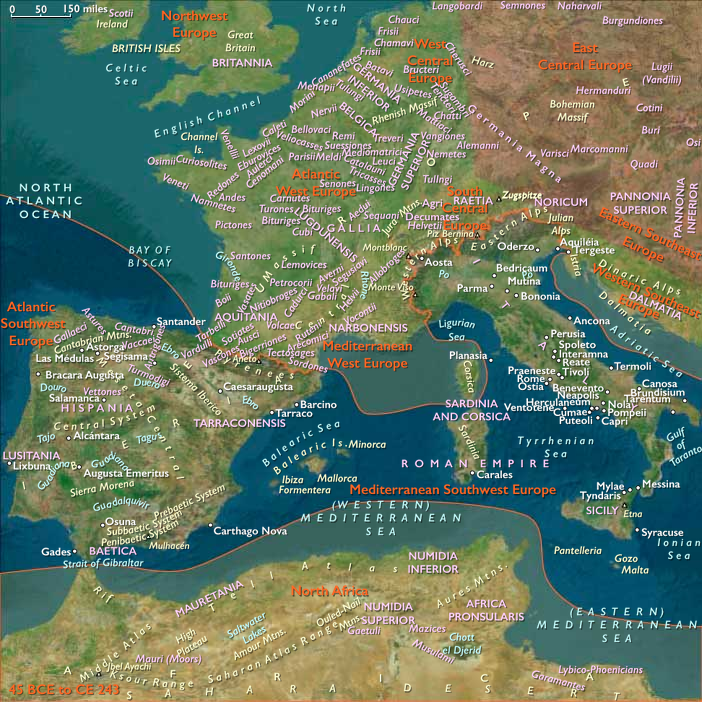
Southwest Europe
View →Subregions
