
Central Asia (532–675 CE): Turkic Ascendancy, Sogdian …
Years: 532 - 675
Central Asia (532–675 CE): Turkic Ascendancy, Sogdian Resilience, and New Religious Movements
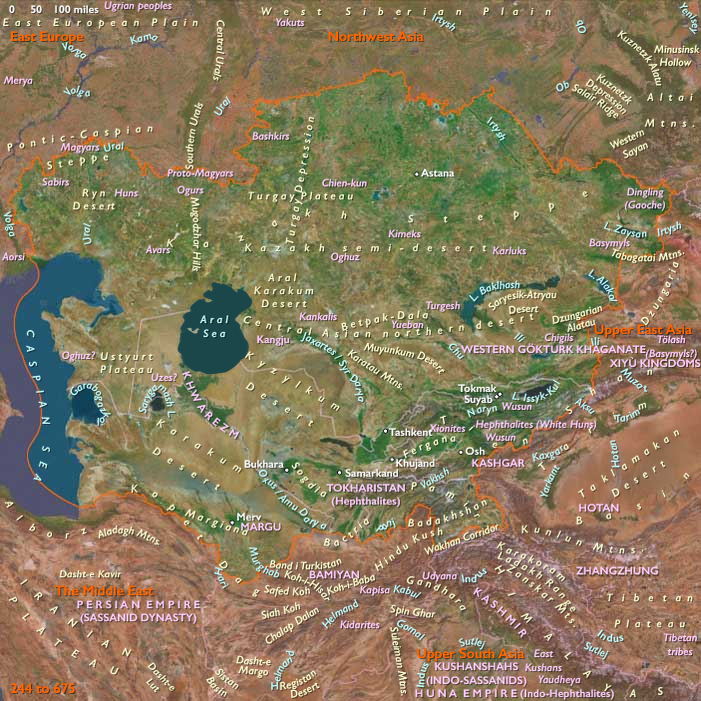
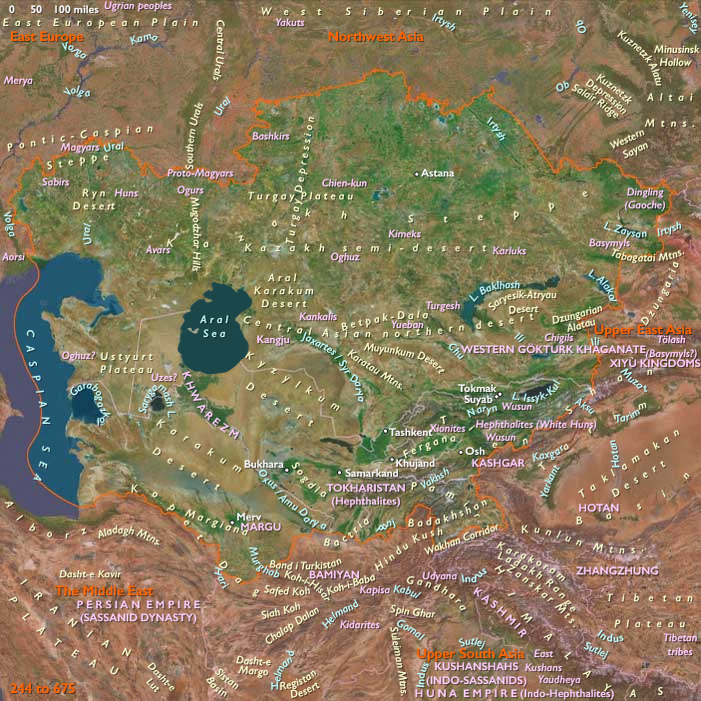
Between 532 and 675 CE, Central Asia—spanning modern-day Kazakhstan, Kyrgyzstan, Uzbekistan, Tajikistan, and Turkmenistan—underwent significant transformation characterized by the collapse of Hephthalite power, the dramatic ascendancy of Turkic peoples, and resilient Sogdian city-states. The period also witnessed the arrival and integration of new religious movements, especially Islam, which would later profoundly alter the region’s cultural and political landscape.
Political and Military Developments
Collapse of the Hephthalite Empire (Mid-6th Century)
The dominance of the Hephthalite Empire swiftly declined after devastating defeats by an alliance of the Sasanian Empire and the ascending Turkic Khaganate around 560 CE. This collapse left a power vacuum rapidly filled by Turkic nomads.
Rise and Expansion of the Turkic Khaganates
Emerging prominently around the Altai Mountains and rapidly moving westward, the Göktürks established the First Turkic Khaganate (552–603 CE), which dominated much of northern Central Asia. Turkic control expanded into former Hephthalite territories, imposing political order and fostering economic connections between China, Persia, and Byzantium.
Division into Eastern and Western Turkic Khaganates
Around 603 CE, the unified Turkic Khaganate fragmented into Eastern and Western factions. The Western Turkic Khaganate governed most of Central Asia from the mid-7th century, with its political core in the region around modern-day Kazakhstan, exerting substantial influence over the Silk Road networks.
Economic Developments
Sogdian Commercial Continuity and Expansion
Despite shifting political powers, Sogdian merchants maintained their economic preeminence along the Silk Road, skillfully adapting to the new Turkic-dominated political environment. Cities such as Samarkand, Bukhara, and Panjakent continued thriving as vibrant trade hubs connecting East and West.
Increased Integration with Chinese and Persian Economies
Trade flourished under Turkic oversight, reinforcing Central Asia's pivotal economic position. Goods such as silk, spices, precious stones, and luxury textiles passed through, enriching local urban centers and merchant elites.
Cultural and Religious Developments
Arrival and Spread of Islam
By the mid-7th century, Islamic conquests had reached the edges of Central Asia. Following Arab victories in Persia, Islamic influence began slowly permeating southern Central Asian regions, planting seeds for future cultural and religious transformation.
Continued Religious Pluralism and Syncretism
The age remained characterized by remarkable religious diversity. Buddhism retained substantial followings, particularly in urban centers and monasteries like those in Termez. Christianity, especially Nestorianism, persisted alongside indigenous Iranian and Turkic spiritual practices.
Turkic Cultural Influence
The Turkic ascendancy introduced new cultural dimensions to Central Asia. Turkic language and customs spread significantly, reshaping local traditions, societal structures, and linguistic landscapes, laying enduring cultural foundations.
Social and Urban Developments
Urban Resilience and Growth
Cities such as Samarkand and Bukhara expanded considerably during this period, despite political turbulence. Urban infrastructure improvements, supported by wealthy merchant classes, contributed to sustained economic and social vitality.
Interplay of Nomadic and Sedentary Life
Relations between nomadic Turkic groups and settled communities deepened, fostering cultural exchanges through trade, intermarriage, and shared religious and cultural practices. Nomadic groups frequently integrated into settled communities, creating blended societies and cultural syntheses.
Long-Term Consequences and Historical Significance
Between 532 and 675 CE, Central Asia experienced fundamental shifts that defined its historical trajectory. Politically, Turkic dominance restructured the region, creating powerful nomadic states that facilitated cross-cultural connections and trade networks. Economically, the resilience of Sogdian merchants preserved Central Asia’s role as a critical economic corridor. Religiously and culturally, the introduction of Islam set the stage for significant future transformations, while continued pluralism and the integration of Turkic influences created enduringly diverse cultural landscapes. This dynamic interplay laid essential foundations for subsequent historical developments in the region.
Groups
- Polytheism (“paganism”)
- Tajik people
- Iranian peoples
- Tocharians
- Arab people
- Persian people
- Scythians, or Sakas
- Zoroastrians
- Margiana
- Buddhism
- Sogdia
- Xiongnu (Hsiung-nu)
- Wusun
- Indo-Scythians
- Kushan Empire
- Buddhism, Mahayana
- Tokharistan (Kushan Bactria)
- Persian Empire, Sassanid, or Sasanid
- Kushano-Sasanid Kingdom
- Xionites
- Kidarites
- Hephthalite Empire
- Christians, Eastern (Diophysite, or “Nestorian”) (Church of the East)
- Göktürks (First Khaganate)
- Eastern (Göktürk) Qaghans
- Western Turkic Khaganate
- Chinese Empire, Tang Dynasty
Topics
Commodoties
- Weapons
- Hides and feathers
- Gem materials
- Domestic animals
- Grains and produce
- Textiles
- Ceramics
- Strategic metals
- Manufactured goods
- Spices
Subjects
Regions
Subregions
Years: 532 - 675
Groups
- Polytheism (“paganism”)
- Tajik people
- Iranian peoples
- Tocharians
- Arab people
- Persian people
- Scythians, or Sakas
- Zoroastrians
- Margiana
- Buddhism
- Sogdia
- Xiongnu (Hsiung-nu)
- Wusun
- Indo-Scythians
- Kushan Empire
- Buddhism, Mahayana
- Tokharistan (Kushan Bactria)
- Persian Empire, Sassanid, or Sasanid
- Kushano-Sasanid Kingdom
- Xionites
- Kidarites
- Hephthalite Empire
- Christians, Eastern (Diophysite, or “Nestorian”) (Church of the East)
- Göktürks (First Khaganate)
- Eastern (Göktürk) Qaghans
- Western Turkic Khaganate
- Chinese Empire, Tang Dynasty
Topics
Commodoties
- Weapons
- Hides and feathers
- Gem materials
- Domestic animals
- Grains and produce
- Textiles
- Ceramics
- Strategic metals
- Manufactured goods
- Spices
Subjects
Regions
Subregions