Chronic infighting between the Italian and French…
April 1503 CE
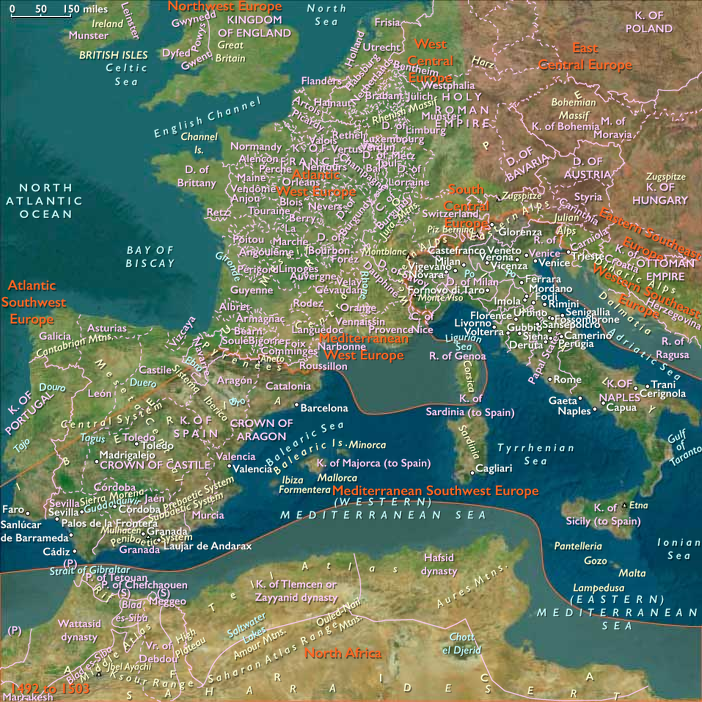
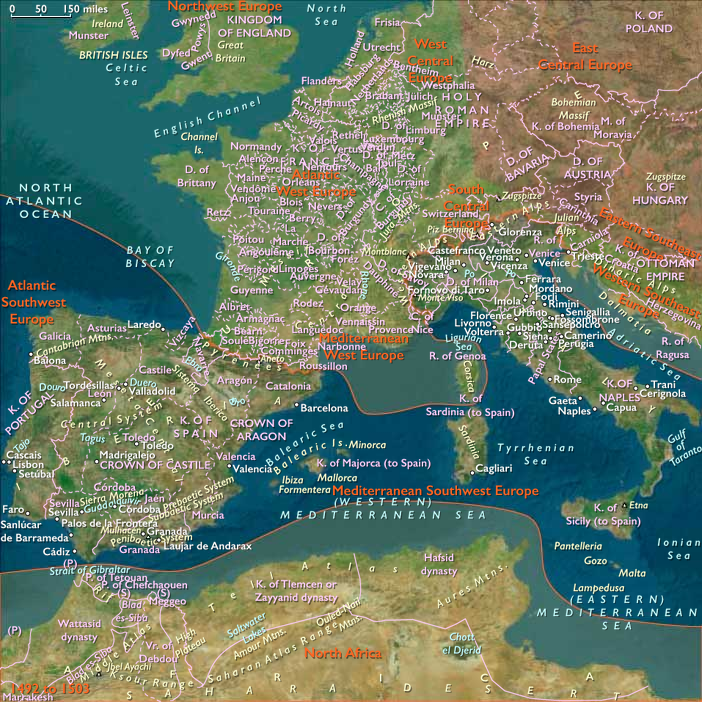
Chronic infighting between the Italian and French knights, as well as a better supply line guaranteed by the Spanish navy, gives Cordoba the upper hand against the French, who suffers defeat at Cerignola on April 28, 1503.
The French are reported to have lost around two thoiusand men, Spanish losses amounting to some five hundred men.
The French supplies, wagon train and all of the French artillery still in it fall into the hands of the victorious Spanish troops.
The end of the battle sees the first time a "call to prayer" (toque de oracion) wis issued, a practice that will later be adopted by most Western armies, when the Great Captain, upon seeing the fields full of French bodies (who, like the Spaniards, were Christian), orders three long tones to be played and his troops to pray for all the fallen.
After the battle the defeated French army retreats to the fortress of Gaeta north of Naples.
De Córdoba's forces attempt to storm the fortress, but the attacks all fail.
The besieged French are prepared for a long siege and are receiving supplies by sea.
Thus unable to take Gaeta and fearing the arrival of possible French reinforcements, De Córdoba lifts the siege and retreated to Castellone, some eight kilometers south of Gaeta.
In retrospect, Cerignola marks the beginning of a near invincible Spanish dominance on European battlefields until the defeat of Rocroi in 1643 and also marks the rise of pike and shot tactics.
It is considered to be the first major battle won largely through the use of firearms, comparable to what is to occur in Japan seven decades later in the Battle of Nagashino in 1575.
Locations
People
Groups
Commodities
Subjects
Regions
Southwest Europe
View →Subregions