The Construction of the West Façade of…
1067 CE
The Construction of the West Façade of Saint-Étienne at Caen (1067)
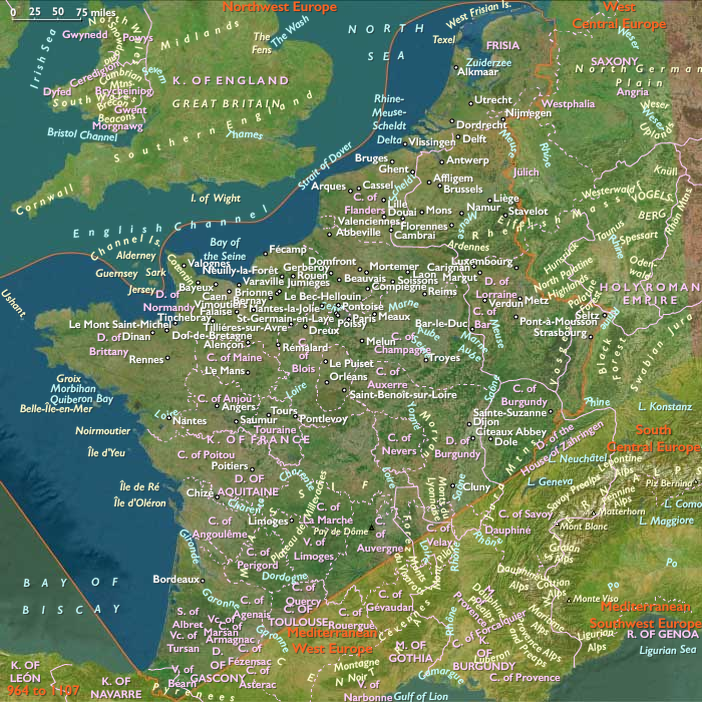
In 1067, construction began on the west façade of the Church of Saint-Étienne (Abbaye aux Hommes) in Caen, under the patronage of William I (formerly Duke William of Normandy, now King of England). This architectural project, undertaken in the wake of the Norman Conquest of England, was a testament to Norman ambition, power, and ecclesiastical patronage.
Architectural Features of the West Façade
- The design of the twin-towered façade reflects influences from Carolingian and Ottonian westworks, emphasizing a monumental and fortress-like structure.
- The façade is divided into three vertical bays, corresponding to the interior arrangement of:
- The central nave
- The two side aisles
- Massive vertical buttresses further divide the façade, reinforcing its structural solidity and grandeur.
Norman Romanesque Style
- The façade exemplifies early Norman Romanesque architecture, characterized by:
- Strong verticality, with tall towers that later influenced Gothic design.
- Round-arched windows and arcades, a signature of Romanesque architecture.
- Thick masonry walls, ensuring stability and durability.
- The west façade set a model for later Norman churches, influencing designs in England after the Norman Conquest.
Symbolic and Political Significance
- Caen was William’s power center, and Saint-Étienne served as a dynastic and religious monument to reinforce his legitimacy as ruler of both Normandy and England.
- The church was part of the twin monastic foundation in Caen, along with the Abbaye aux Dames, founded by William’s wife, Matilda of Flanders.
- The architecture symbolized both spiritual devotion and Norman military strength, reflecting the dual nature of William’s rule as warrior-king and Christian monarch.
Legacy
- Saint-Étienne’s west façade became a model for subsequent Norman and English cathedral designs, influencing structures such as Durham Cathedral in England.
- The abbey church later became William’s burial site after his death in 1087, cementing its dynastic importance.
- The twin-towered façade of Saint-Étienne remains one of the most influential examples of Norman Romanesque architecture, showcasing the grandeur and ambition of William’s reign.
The construction of the west façade in 1067, initiated just a year after William’s conquest of England, symbolized the Norman architectural legacy that would shape medieval church-building across France and England.
Locations
People
Groups
Regions
West Europe
View →Subregions