Continental South America (1516–1527 CE): Huayna Capac’s…
1516 CE to 1527 CE
Continental South America (1516–1527 CE): Huayna Capac’s Final Years, European Settlement, and Imperial Strains
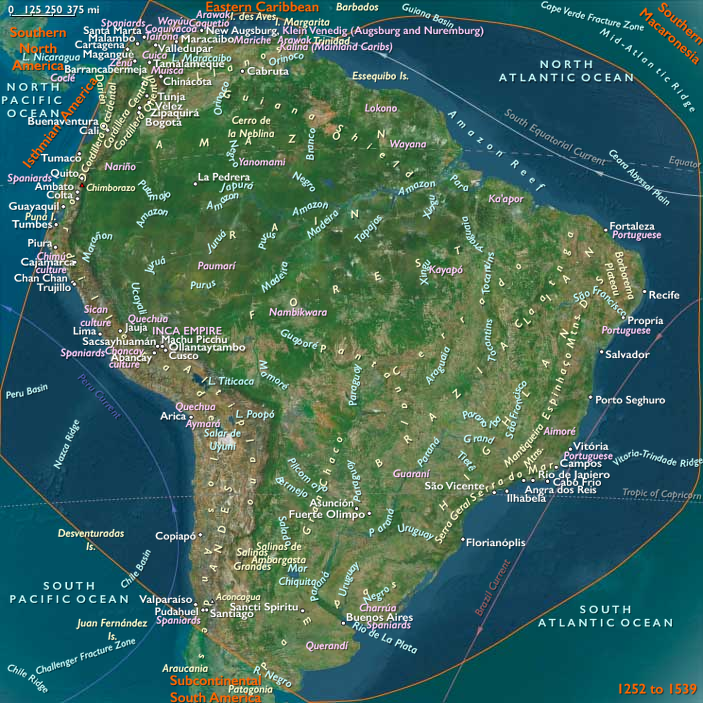
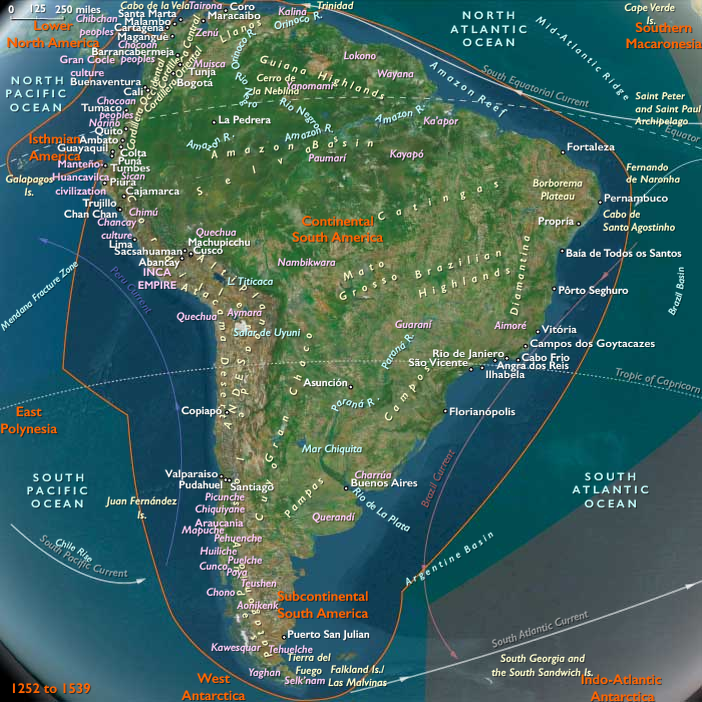
Between 1516 and 1527 CE, Continental South America—including Peru, Bolivia, Paraguay, Uruguay, Brazil, northern Argentina, northern and central Chile, central and eastern Colombia, most of Ecuador, Venezuela, Suriname, Guyana, and French Guiana—underwent crucial developments marking the final peak and subsequent weakening of Huayna Capac’s reign. Simultaneously, European incursions and initial colonial settlements expanded, introducing new stresses that began reshaping the continent’s political and social landscapes.
Political Developments
Huayna Capac’s Final Consolidation and Death
During this era, Huayna Capac continued to consolidate the Inca Empire, maintaining effective centralized control and administrative stability. However, around 1527 CE, Huayna Capac died (possibly due to smallpox or another introduced disease), creating significant uncertainty and triggering succession disputes that weakened imperial unity.
Intensified European Exploration and Early Settlements
European explorers—particularly Portuguese and Spanish—intensified their activities along coastal areas, establishing early colonial settlements such as Santa Marta in Colombia (1525) and expanding Portuguese outposts along the Brazilian coast. These settlements marked the start of significant colonial penetration into continental territories.
Increasing Imperial Vulnerabilities
Internal tensions grew within the Inca Empire following Huayna Capac’s death, sparking rivalry between his sons Huáscar and Atahualpa. This internal discord severely compromised imperial cohesion and opened the way for future European exploitation.
Economic Developments
Sustained Agricultural Productivity Amid Growing Strains
Despite emerging political vulnerabilities, agricultural productivity remained robust, supported by sophisticated infrastructure such as terraces, irrigation networks, and extensive storage (qollqas). However, internal instability and external pressures began to threaten the efficiency of this imperial system.
Shifting Trade Networks and Early European Influence
While traditional trade networks—textiles, precious metals, ceramics, agricultural produce—continued, coastal regions began to experience increased economic interactions with European settlers. Commodities such as precious metals, exotic woods, and agricultural products started flowing toward European markets, altering longstanding economic patterns.
Cultural and Technological Developments
Continued Monumental Construction
Major architectural and urban projects continued in imperial centers like Cuzco and Quito, showcasing advanced stone masonry and sophisticated engineering. These ongoing projects reflected cultural vitality despite emerging political tensions.
Artistic Flourishing Amidst Transition
Artistic traditions remained vibrant, with sophisticated textiles, ceramics, and metalwork continuing to blend regional motifs with imperial symbolism. Yet subtle shifts began to emerge, influenced by new contacts and changing political dynamics.
Social and Religious Developments
Intensified Imperial Rituals Amidst Uncertainty
Despite internal stresses, elaborate religious rituals dedicated to Inti, ancestor worship, and ceremonial festivals continued. These rituals served increasingly to maintain social cohesion amid growing uncertainty and internal strife.
Strained Social Hierarchies and Succession Conflict
The clearly defined social hierarchy—Inca nobility, regional elites, religious specialists, artisans, merchants, and commoners—began experiencing strain as imperial power structures faltered due to Huayna Capac’s death and ensuing civil tensions between competing successors.
Long-Term Consequences and Historical Significance
The era from 1516 to 1527 CE represented a turning point in Continental South America’s historical trajectory. The death of Huayna Capac and subsequent internal conflicts fundamentally weakened the Inca Empire precisely as European colonial influence intensified. These concurrent events set the stage for transformative shifts in the continent’s political, economic, and cultural landscapes, ultimately facilitating European conquest and reshaping the historical direction of South America profoundly in subsequent decades.
Groups
Topics
Commodities
Subjects
Regions
South America
View →Subregions