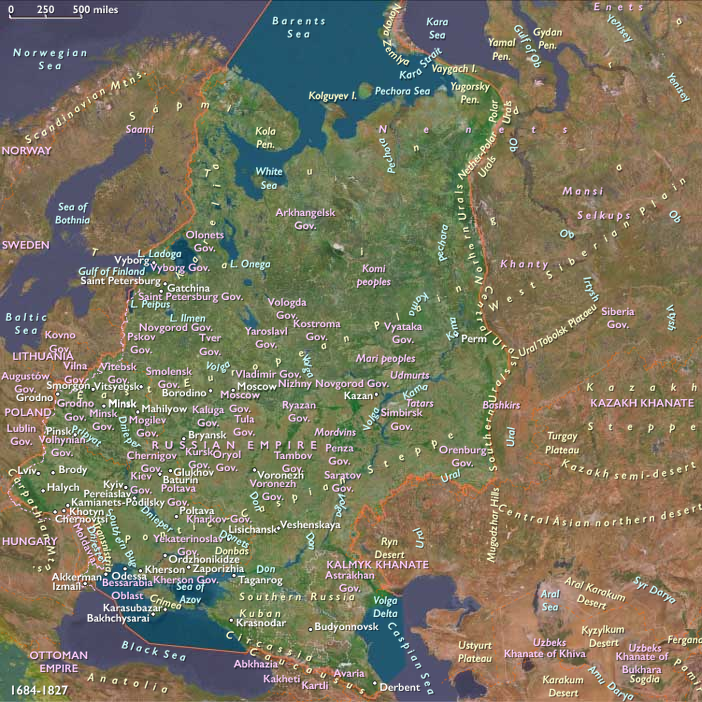
East Europe (1792–1803 CE): Consolidation of Power…
1792 CE to 1803 CE
East Europe (1792–1803 CE): Consolidation of Power and Expansion of Influence
Political and Military Developments
Reinforcement of Autocratic Governance
Between 1792 and 1803 CE, Russia solidified its autocratic governance, further centralizing authority under strong monarchical rule. Political stability and administrative coherence were reinforced, supporting Russia’s imperial ambitions and internal reforms.
Strategic Territorial Gains
Russia continued strategic territorial expansion, particularly in Eastern Europe and the Black Sea region. These expansions enhanced Russia’s geopolitical leverage, providing crucial access to trade routes and resources, and further reinforcing its status as a major European power.
Diplomacy and International Positioning
Russia actively engaged in European diplomacy, skillfully navigating complex alliances and conflicts resulting from the changing political landscape across Europe, notably impacted by the French Revolutionary Wars. This engagement significantly elevated Russia's diplomatic standing and international influence.
Economic and Technological Developments
Sustained Economic Growth
Economic expansion persisted, driven by continued industrialization, increased agricultural productivity, and robust trade. Russia's economy further integrated into European markets, facilitating greater economic stability and growth.
Advancements in Infrastructure and Technology
Infrastructure saw substantial enhancements, particularly in transportation, urban development, and military fortifications. These improvements increased administrative efficiency, economic productivity, and defense capabilities.
Cultural and Artistic Developments
Flourishing Cultural Life
Cultural patronage thrived, with significant advancements in architecture, arts, and literature. European artistic trends continued influencing Russian cultural development, enhancing its cultural richness and sophistication.
Intellectual Expansion and Educational Progress
Intellectual activities flourished, supported by an expanding network of educational institutions and increased scholarly exchanges with Europe. These interactions significantly advanced Russia’s academic and cultural landscapes.
Settlement Patterns and Urban Development
Urban Expansion and Modernization
Major urban centers such as Saint Petersburg and Moscow continued to grow significantly, benefiting from strategic urban planning, infrastructural improvements, and enhanced administrative management. These developments promoted urban prosperity and regional stability.
Strengthened Urban and Regional Defense
Fortification upgrades persisted, crucial for maintaining security and protecting vital economic and administrative centers from potential external threats, ensuring regional stability.
Social and Religious Developments
Social Cohesion and Progressive Reforms
Social cohesion continued to strengthen, driven by progressive policies that integrated diverse ethnic and regional groups. These reforms, influenced by Enlightenment ideals, improved societal stability and administrative effectiveness.
Evolving Relationship between State and Church
Relations between the Russian state and the Orthodox Church continued evolving, shaped by ongoing reforms aimed at aligning religious institutions with state objectives. This evolution significantly impacted the societal role and influence of the Church.
Long-Term Consequences and Historical Significance
The period from 1792 to 1803 CE represented significant consolidation of autocratic governance, strategic territorial expansion, and continued cultural development. These achievements laid crucial foundations for Russia’s sustained political stability, economic prosperity, and growing international prominence.
Subjects
Regions
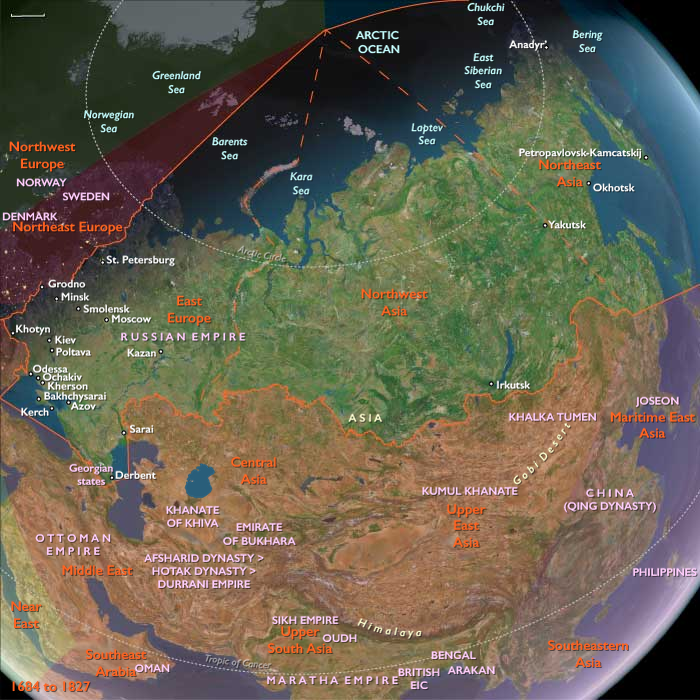
Northeastern Eurasia
View →Subregions