
Event
East Europe (1804–1815 CE): Wars, Alliances, and…
East Europe (1804–1815 CE): Wars, Alliances, and Imperial Strengthening
Political and Military Developments
Napoleonic Wars and Military Campaigns
Between 1804 and 1815 CE, Russia actively participated in the Napoleonic Wars, confronting significant military challenges posed by Napoleon’s expansionist ambitions. The decisive Russian victory during the French invasion of 1812 notably elevated Russia's prestige and influence in Europe.
Reinforced Autocratic Authority
The autocratic regime strengthened further under Alexander I, who balanced military strategy with internal administrative reforms. His governance promoted centralized control and enhanced bureaucratic efficiency, solidifying imperial authority.
Diplomatic Triumphs and Alliances
Russia's diplomatic influence expanded significantly through strategic alliances, notably participating in the formation of the Sixth Coalition against Napoleon. Successful diplomacy during the Congress of Vienna (1814–1815) further enhanced Russia's international standing.
Economic and Technological Developments
Continued Economic Resilience
Russia maintained robust economic growth despite wartime disruptions, driven by ongoing industrialization and agricultural improvements. Trade activities continued, sustaining economic stability and supporting military efforts.
Infrastructure Development
Significant investments in transportation infrastructure and urban planning continued, bolstering administrative capabilities and economic productivity. Military fortifications received further attention, crucial during wartime conditions.
Cultural and Artistic Developments
Vibrant Cultural Scene
The cultural sphere remained dynamic, enriched by increased European interactions. Artistic, architectural, and literary achievements flourished, reflecting both national and international influences.
Intellectual Engagement and Scholarly Growth
Intellectual pursuits expanded, with a growing number of educational institutions and heightened scholarly exchanges across Europe. This intellectual vigor significantly advanced Russia’s academic and cultural prestige.
Settlement Patterns and Urban Development
Urban Expansion and Reconstruction
Urban centers, particularly Saint Petersburg and Moscow, experienced significant growth and post-war reconstruction. Strategic urban planning, improved infrastructure, and administrative reforms enhanced urban life and economic resilience.
Fortified Urban and Regional Defenses
Further enhancements to fortifications safeguarded critical urban centers and strategic regions, essential for maintaining security amidst military and diplomatic challenges.
Social and Religious Developments
Enhanced Social Cohesion
Social structures continued integrating diverse ethnic and regional groups effectively, driven by Enlightenment-influenced reforms that promoted societal stability and administrative coherence.
State and Church Relations
The relationship between the state and the Orthodox Church evolved further, with ongoing reforms integrating religious institutions more deeply into state governance structures, significantly shaping their societal roles.
Long-Term Consequences and Historical Significance
The period from 1804 to 1815 CE was marked by significant military engagements, diplomatic successes, and continued imperial consolidation. These events solidified Russia's international position, laying critical foundations for its subsequent stability, influence, and imperial ambitions.
-
{# Image navigates to the detail page; the magnifying-glass chip is the only Fancybox lightbox trigger (kept a separate sibling — anchors can't nest). #}
 The Great Crossroads
World
-
{# Image navigates to the detail page; the magnifying-glass chip is the only Fancybox lightbox trigger (kept a separate sibling — anchors can't nest). #}
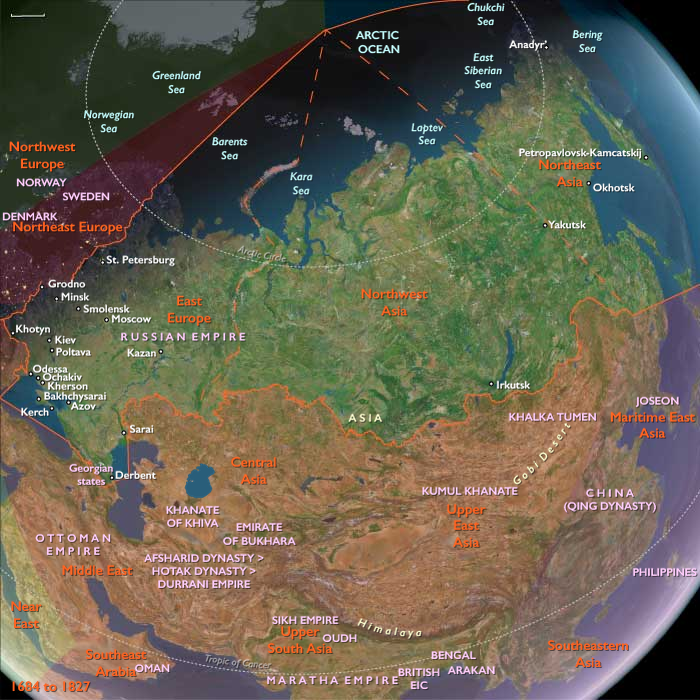 Northeastern Eurasia
Region
-
{# Image navigates to the detail page; the magnifying-glass chip is the only Fancybox lightbox trigger (kept a separate sibling — anchors can't nest). #}
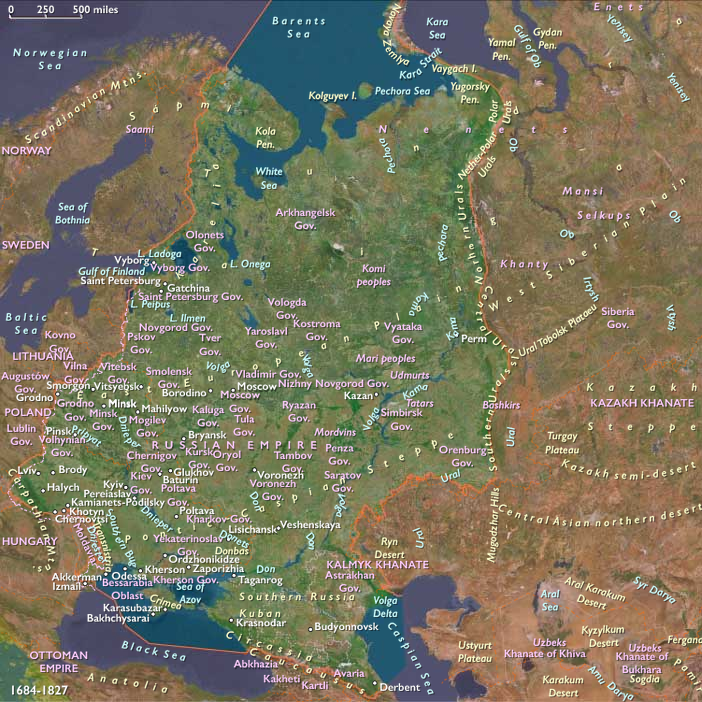 East Europe
Subregion
