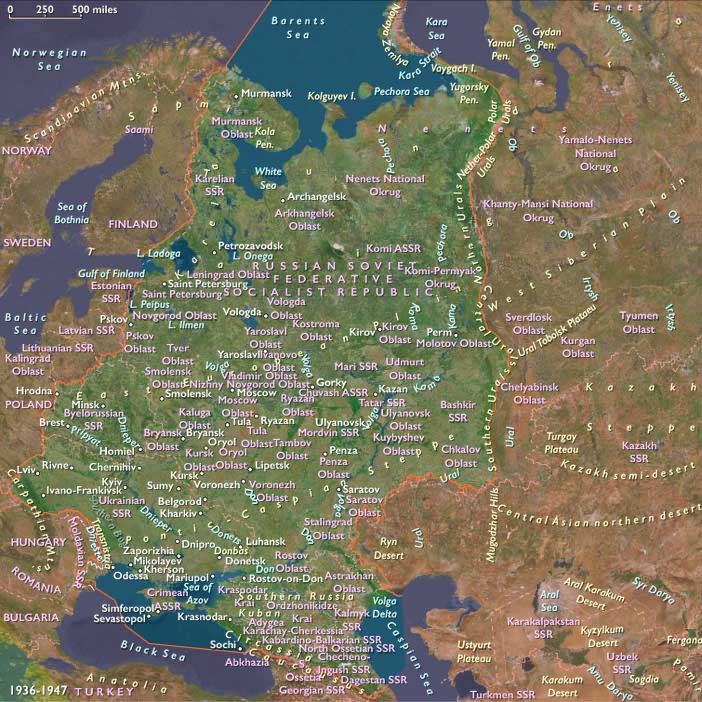
East Europe (1936–1947 CE): War, Occupation, and…
1936 CE to 1947 CE
East Europe (1936–1947 CE): War, Occupation, and Post-War Realignment
Political and Military Developments
Prelude to World War II and the Great Purge
The late 1930s saw the intensification of political repression under Stalin, exemplified by the Great Purge (1936–1938), resulting in widespread executions, imprisonments, and deepened political control. Concurrently, the geopolitical landscape in Eastern Europe became increasingly volatile, setting the stage for global conflict.
World War II (1939–1945)
The Soviet Union faced immense devastation during World War II, known domestically as the Great Patriotic War. Initially allied with Nazi Germany through the Molotov-Ribbentrop Pact (1939), the Soviet Union later became a crucial member of the Allied Powers after Germany’s invasion in 1941 (Operation Barbarossa). Massive battles, notably at Stalingrad and Kursk, turned the tide against Axis forces.
Post-War Occupation and Eastern Bloc Formation
Victory in 1945 led to Soviet occupation of Eastern European countries, reshaping regional geopolitics significantly. Stalin’s regime established communist governments across the region, laying the foundations of the Eastern Bloc and commencing the onset of the Cold War.
Economic and Technological Developments
War Economy and Industrial Mobilization
During WWII, the Soviet economy was fully mobilized toward war production, dramatically enhancing industrial capabilities and technological advancements, particularly in armaments, heavy machinery, and logistics.
Post-War Economic Reconstruction
Post-war economic efforts focused on extensive reconstruction, rebuilding devastated infrastructure, urban areas, and industrial capacities. Centralized economic planning intensified, aimed at restoring and exceeding pre-war production levels.
Cultural and Artistic Developments
Patriotic Culture and Propaganda
Cultural production during this period was heavily influenced by wartime propaganda and patriotic themes, reinforcing Soviet resilience and national unity. Artistic expressions underscored heroism, sacrifice, and Soviet triumph.
Education and Scientific Advancement
The wartime and immediate post-war periods emphasized rapid scientific and technological advancement, particularly in military and industrial applications. Educational institutions expanded significantly, bolstering the nation’s scientific and technical expertise.
Settlement Patterns and Urban Development
War-Time Destruction and Urban Reconstruction
Eastern Europe, particularly cities such as Stalingrad (Volgograd), Leningrad (Saint Petersburg), and Warsaw, experienced catastrophic wartime destruction. Post-war reconstruction efforts reshaped urban landscapes, emphasizing rapid rebuilding and modernization.
Military Infrastructure and Border Security
Significant resources were allocated toward military infrastructure and fortifications, especially in newly occupied territories, reflecting heightened Cold War tensions and Soviet security priorities.
Social and Religious Developments
War Impact and Social Cohesion
The war significantly impacted social dynamics, enhancing social cohesion through shared experiences of hardship and national survival. However, it also exacerbated social control, political repression, and reinforced the cult of Stalin’s personality.
Renewed Anti-Religious Campaigns
Post-war Soviet policies renewed anti-religious campaigns aggressively, continuing persecution of religious institutions, particularly the Russian Orthodox Church. Religious practices remained heavily suppressed as part of broader ideological control.
Long-Term Consequences and Historical Significance
The era from 1936 to 1947 CE dramatically reshaped Eastern Europe, defined by intense warfare, geopolitical realignments, and extensive social and economic reconstruction. The formation of the Eastern Bloc established new geopolitical dynamics, significantly influencing global politics and regional stability in subsequent decades.
People
Groups
Topics
Commodities
Subjects
Regions
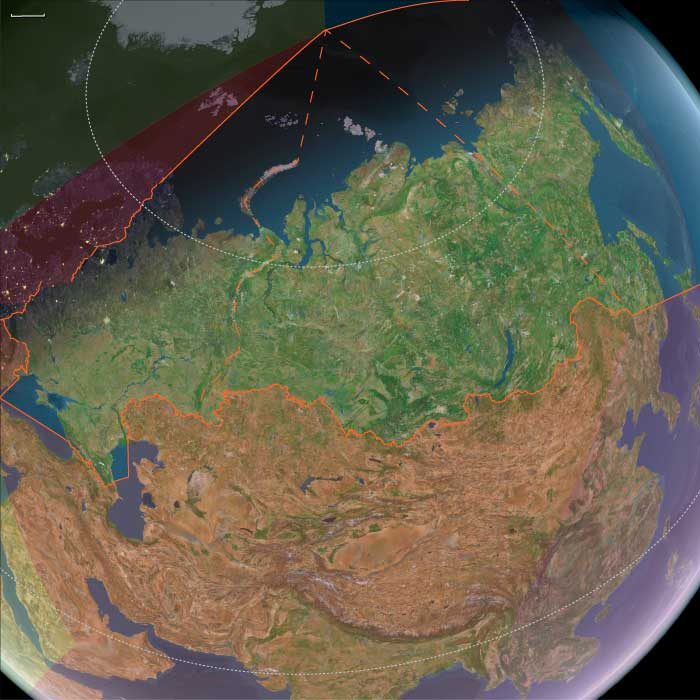
Northeastern Eurasia
View →Subregions