
East Europe (676–819 CE): Slavic Consolidation and …
Years: 676 - 819
East Europe (676–819 CE): Slavic Consolidation and the Rise of New Polities
Political and Military Developments
Consolidation of Slavic Tribes
Between 676 and 819 CE, East Europe witnessed significant consolidation among the Slavic tribes, resulting in the establishment of powerful tribal confederations and early states. Communities increasingly united under regional leadership, fostering the formation of cohesive political entities.
Rise of the Khazar Khaganate
The Khazar Khaganate, emerging from the steppes of Central Asia, extended its influence into parts of East Europe, particularly in areas near the Volga and Don rivers. This powerful entity exerted considerable political and military pressure on neighboring Slavic and nomadic groups, shaping regional power dynamics.
Formation of Early Rus' Polities
Early forms of Rus' polities began to emerge, characterized by loosely structured federations of Slavic and Varangian (Norse) groups. These polities marked the beginning of organized political and social structures, laying foundations for future statehood.
Economic and Technological Developments
Expansion and Stabilization of Trade Routes
East Europe became a central hub of extensive trade networks linking the Byzantine Empire, Western Europe, Scandinavia, and the Islamic world. Rivers like the Dnieper and Volga served as critical arteries for commerce, facilitating robust economic exchange.
Advancements in Agricultural and Military Technologies
Improvements in agricultural techniques and the introduction of new crops led to increased productivity and population growth among Slavic settlements. Military technology also advanced, influenced by interactions with the Khazars, Byzantines, and Norse traders.
Cultural and Artistic Developments
Maturation of Slavic Artistic Expression
Slavic artistic traditions matured significantly, reflected in distinctive pottery styles, jewelry, and metalwork. Cultural exchanges with Byzantium, the Khazar Khaganate, and the Norse further enriched artistic expressions, incorporating diverse influences.
Cultural Interactions and Synthesis
This period saw intensified interactions between Slavic, Norse, Khazar, and Byzantine cultures. These interactions produced a vibrant cultural synthesis evident in material culture, art, architecture, and religious practices.
Settlement Patterns and Urban Development
Urbanization and Growth of Trade Centers
Slavic settlements expanded and urbanized substantially, particularly along key trade routes and river systems. Early urban centers, such as Kiev and Novgorod, began to thrive, becoming significant political, economic, and cultural hubs.
Fortification and Defensive Strategies
Increasing political and military pressures led to more extensive fortifications and defensive planning within settlements. The strategic development of fortified towns reflected heightened security concerns and improved socio-political organization.
Social and Religious Developments
Emergence of Aristocratic Leadership
Societal structures became more hierarchical, with aristocratic leaders emerging prominently. Leadership was increasingly determined by military capabilities, control over trade routes, and alliances with neighboring powers.
Religious Diversification and Early Christian Influence
East Europe's religious landscape diversified further, featuring traditional Slavic paganism alongside significant influences from Byzantine Christianity, Judaism (notably within the Khazar Khaganate), and Norse pagan practices. Early forms of Christianity began to penetrate Slavic regions, setting the stage for broader religious shifts.
Long-Term Consequences and Historical Significance
The era from 676 to 819 CE was instrumental in shaping East Europe's early medieval identity. The consolidation of Slavic tribes, emergence of powerful regional entities, and intensive cultural interactions laid crucial groundwork for subsequent political, economic, and cultural developments in the region.
Groups
- Polytheism (“paganism”)
- Jews
- Slavs, East
- Christianity, Chalcedonian
- Roman Empire, Eastern: Heraclian dynasty
- Khazar Khaganate
- Volga Bulgaria, or Volga-Kama Bulgaria
- Roman Empire, Eastern: Non-dynastic
- Roman Empire, Eastern: Heraclian dynasty
- Roman Empire, Eastern: Non-dynastic
- Roman Empire, Eastern: Isaurian dynasty
- Varangians
- Rus' Khaganate
- Roman Empire, Eastern: Nikephorian dynasty
- Roman Empire, Eastern: Non-dynastic
Topics
Commodoties
- Weapons
- Hides and feathers
- Gem materials
- Domestic animals
- Grains and produce
- Ceramics
- Strategic metals
- Slaves
- Sweeteners
- Beer, wine, and spirits
Subjects
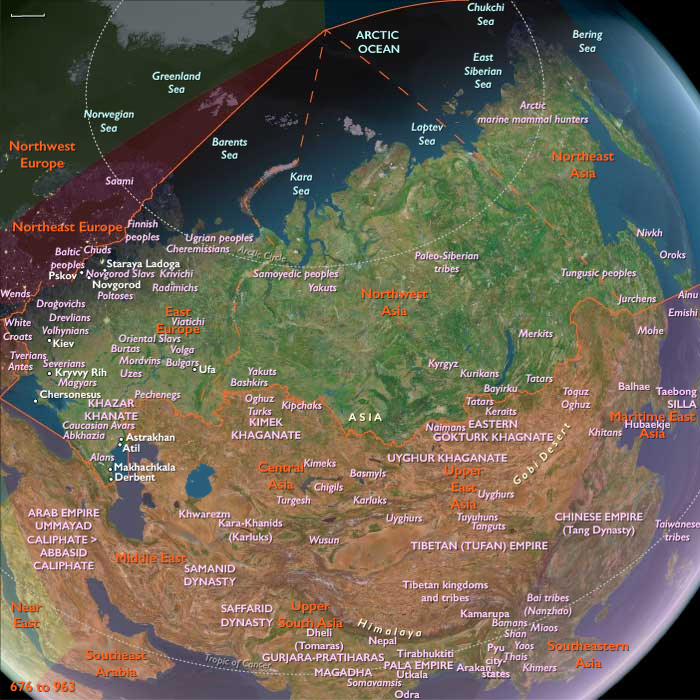
Regions
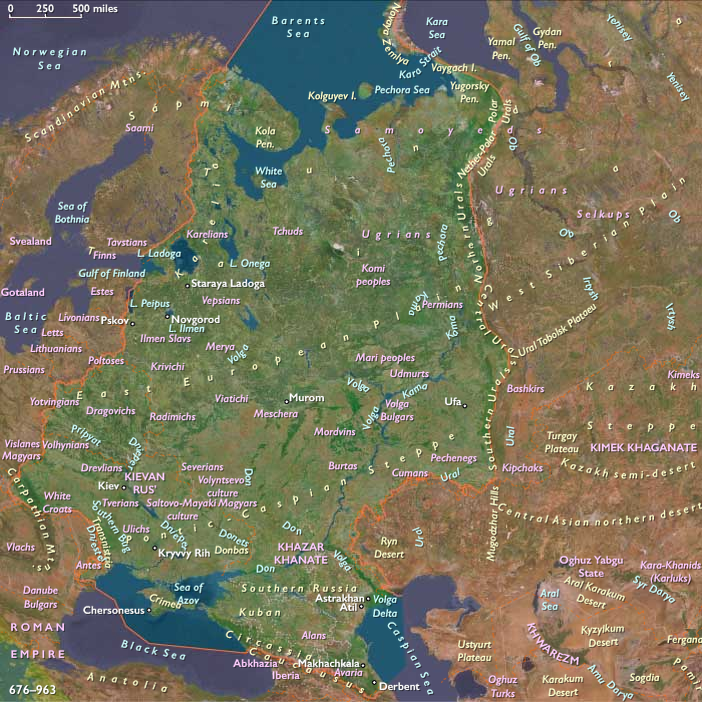
Subregions
Related Events
Showing 10 events out of 56205 total
Years: 676 - 819
Groups
- Polytheism (“paganism”)
- Jews
- Slavs, East
- Christianity, Chalcedonian
- Roman Empire, Eastern: Heraclian dynasty
- Khazar Khaganate
- Volga Bulgaria, or Volga-Kama Bulgaria
- Roman Empire, Eastern: Non-dynastic
- Roman Empire, Eastern: Heraclian dynasty
- Roman Empire, Eastern: Non-dynastic
- Roman Empire, Eastern: Isaurian dynasty
- Varangians
- Rus' Khaganate
- Roman Empire, Eastern: Nikephorian dynasty
- Roman Empire, Eastern: Non-dynastic
Topics
Commodoties
- Weapons
- Hides and feathers
- Gem materials
- Domestic animals
- Grains and produce
- Ceramics
- Strategic metals
- Slaves
- Sweeteners
- Beer, wine, and spirits
Subjects
Regions
Subregions