Event
Antarctica (1252–1395 CE): Polar Equilibrium and the…
Antarctica (1252–1395 CE): Polar Equilibrium and the Imagined South
At the farthest end of the Earth, the vast white continent lay in frozen silence—unseen by humankind yet integral to the planet’s living balance. Between 1252 and 1395 CE, while empires, traders, and scholars on other continents expanded their horizons, Antarctica remained unknown: a realm of ice, wind, and oceanic rhythm. Its stability sustained the world’s climate, its currents and krill fed distant seas, and its very existence lingered as speculation on medieval maps—a Terra Australis Incognita, half myth and half necessity.
Geographic and Environmental Context
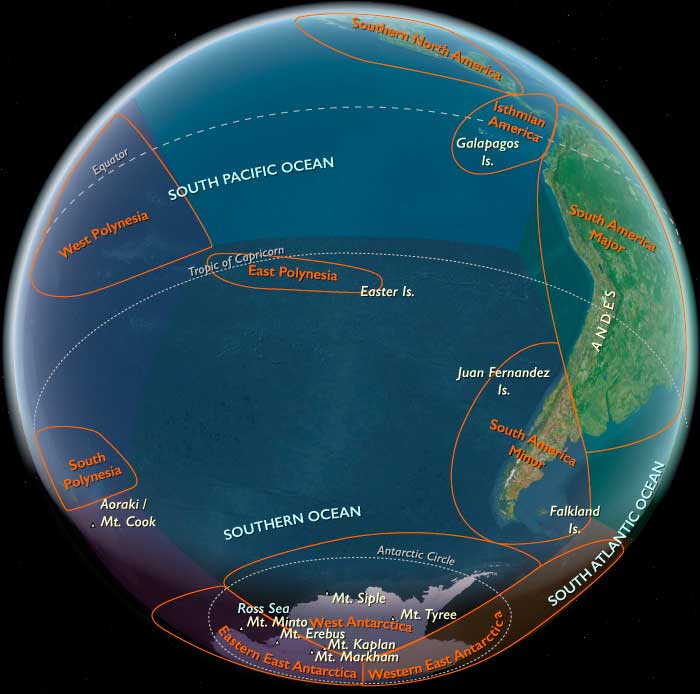
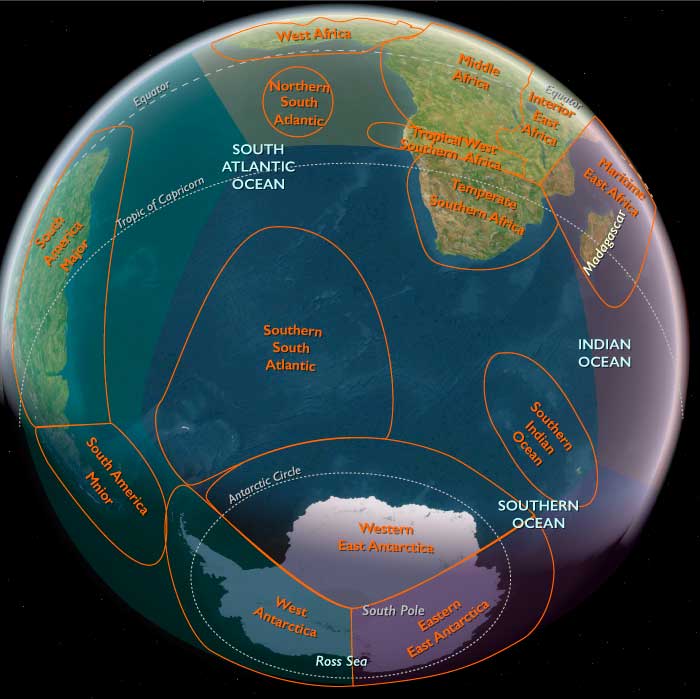
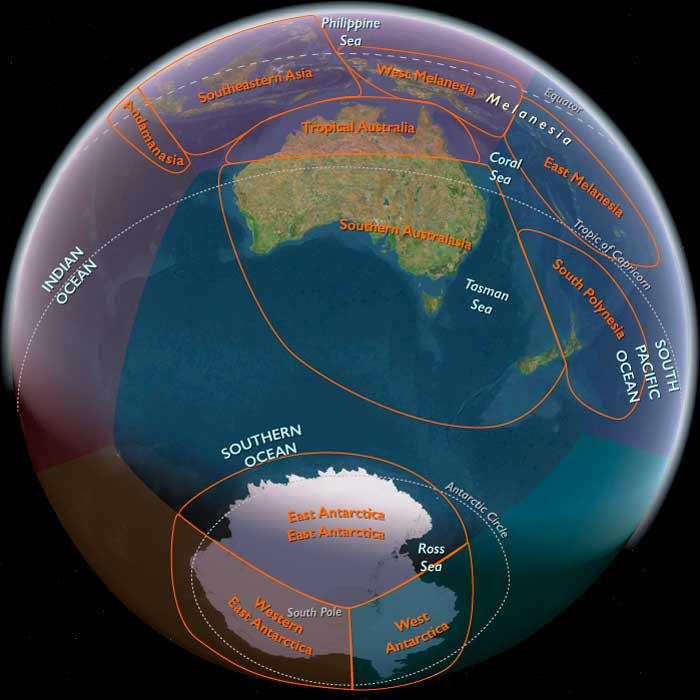
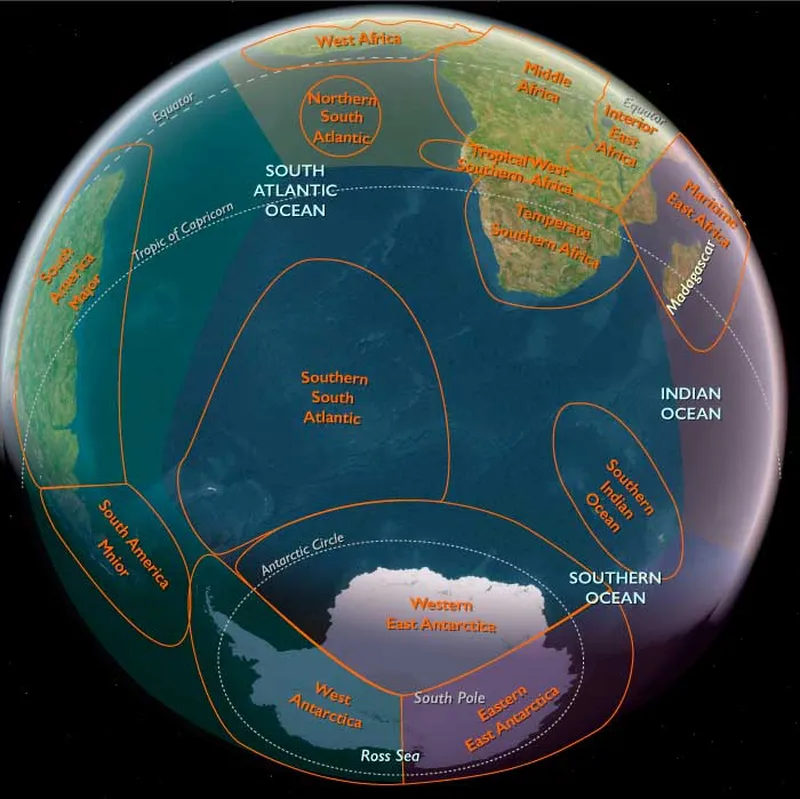
Antarctica during this age consisted of three great ice domains:
-
Eastern East Antarctica, stretching from Wilkes Land and the Aurora Subglacial Basin to Totten Glacier and the Amery Ice Shelf, sloping toward the Indian and Pacific oceans;
-
Western East Antarctica, encompassing Queen Maud Land, Enderby Land, and the coastal shelves of Riiser-Larsen and Fimbul, facing Africa and the southern Atlantic;
-
and West Antarctica, including the Antarctic Peninsula, Ellsworth Mountains, Marie Byrd Land, and the floating shelves of the Weddell, Amundsen, and Bellingshausen Seas.
Here, glaciers thousands of meters thick radiated from inland domes toward the Southern Ocean. Ice shelves floated into stormy seas, calving icebergs that drifted northward into the Antarctic Circumpolar Current. Between them, narrow bands of rocky coast and exposed headland hosted seasonal life—penguins, seals, and seabirds—while the interior remained a vast desert of frozen light.
Climate and Environmental Shifts
The climate of these centuries stood in delicate balance, poised between late-Holocene stability and the first whispers of the Little Ice Age.
The interior plateau remained one of the coldest and driest environments on Earth, with mean annual temperatures far below freezing and precipitation no more than a few centimeters of snow per year.
Strong katabatic winds poured from the domes, carving sastrugi ridges into the snow.
Along the coasts, sea ice expanded widely each winter and receded partially in summer, maintaining a steady seasonal pulse.
Major glaciers—Amery, Totten, and Thwaites among them—held firm or advanced modestly under the sustained chill, while ash from distant volcanoes in the South Sandwich Islands and Marie Byrd Land occasionally dusted the ice with mineral nutrients.
The Antarctic Circumpolar Current (ACC), flowing eastward around the continent, acted as the planetary stabilizer: isolating the polar climate and circulating nutrients through the Southern Ocean. Under its influence, the polar environment remained a vast engine of cold equilibrium.
Ecosystems and Life at the Edge
No humans reached these latitudes, but along the coastlines life persisted in abundance.
Penguins—Adélie, emperor, gentoo, chinstrap—nested on ice-free ridges, their colonies synchronized with the waxing and waning of seasonal sea ice.
Seals—Weddell, crabeater, leopard, and elephant—hauled out on floes and beaches to rest and breed.
Beneath the sea ice, krill fed on under-ice algae, forming the foundation of a marine web that supported fish, seabirds, and migratory whales.
During the austral summer, polynyas (open-water oases) teemed with plankton blooms, drawing whales and seabirds into feeding swarms.
Inland, only microbial life occupied snow, rock, and the hidden subglacial lakes that lay sealed beneath kilometers of ice.
The entire ecosystem was governed by ice: its extent dictated breeding grounds, its retreat opened feeding zones, and its renewal each winter reset the rhythm of life.
Technology and Human Context
Across the human world, these were centuries of technological vigor—compasses, caravels, and gunpowder spreading from East Asia to the Atlantic.
Yet Antarctica remained untouched and unimagined in its true form.
Only faint echoes of its reality appeared in the cosmographies of medieval Europe, which pictured a southern landmass balancing the continents of the north.
To contemporary humanity, the south was purely theoretical—an idea of symmetry, not a place of knowledge.
Movement and Interaction Corridors
Though devoid of people, Antarctica pulsed with motion.
The ACC served as its great highway, distributing nutrients and sustaining migratory species around the continent.
Whales followed predictable circuits from tropical calving grounds to Antarctic feeding zones; seabirds rode the westerlies between subantarctic islands and the ice edge; seals moved between fast ice and open water in step with the seasons.
Even the glaciers flowed, slowly and ceaselessly, their ice grinding toward the sea to calve into drifting bergs—massive carriers of freshwater and sediment into the global ocean system.
Cultural and Symbolic Dimensions
For humankind, Antarctica existed only in imagination—a balancing continent invoked by scholars like Ptolemy and echoed in medieval mappaemundi.
Its symbolic role was cosmological: a counterweight of cold to the fiery deserts of the north.
For its native ecosystems, symbolism lay instead in biological recurrence—the unbroken ritual of breeding and migration, of krill blooms and whale songs, repeated each year like the chants of an unseen liturgy.
Adaptation and Resilience
Antarctic life endured through mobility, timing, and redundancy.
Penguins relocated colonies when snow or ice buried nesting sites; seals shifted haul-outs with pack-ice variability; whales altered migratory timing to match krill pulses.
Krill themselves thrived under thick ice, grazing on algae when the surface world lay frozen, then multiplying explosively in summer light.
The ice sheet remained broadly stable, its vast mass pressing outward but largely immune to short-term climate oscillations.
This resilience—anchored in cycles rather than stasis—defined the continent’s strength.
Transition and Long-Term Significance
By 1395 CE, Antarctica was at equilibrium: a cold, luminous expanse sustaining life along its margins and stabilizing the planet’s climate from afar.
-
In the east, glaciers and shelves of Wilkes and Enderby Lands pressed steadily toward the sea.
-
In the west, the Peninsula’s fjords and ice shelves nurtured some of Earth’s most productive marine ecosystems.
-
Around its perimeter, whales, penguins, and krill completed annual migrations that linked tropics to pole, north to south, unseen by any human observer.
As the Little Ice Age approached, the continent’s glaciers would advance slightly, sea ice would grow, and productivity would shift—but Antarctica’s essential equilibrium would persist.
While the rest of the world dreamed of a mysterious southern land, the real one endured in silence, embodying the planet’s cold heart and the eternal cycle of ice and life.
-
{# Image navigates to the detail page; the magnifying-glass chip is the only Fancybox lightbox trigger (kept a separate sibling — anchors can't nest). #}
 The Ends of the Earth
World
-
{# Image navigates to the detail page; the magnifying-glass chip is the only Fancybox lightbox trigger (kept a separate sibling — anchors can't nest). #}
 The African South
World
-
{# Image navigates to the detail page; the magnifying-glass chip is the only Fancybox lightbox trigger (kept a separate sibling — anchors can't nest). #}
 Southern Oceania
World
-
{# Image navigates to the detail page; the magnifying-glass chip is the only Fancybox lightbox trigger (kept a separate sibling — anchors can't nest). #}
 Antarctica
Region
-
{# Image navigates to the detail page; the magnifying-glass chip is the only Fancybox lightbox trigger (kept a separate sibling — anchors can't nest). #}
 Eastern East Antarctica
Subregion
-
{# Image navigates to the detail page; the magnifying-glass chip is the only Fancybox lightbox trigger (kept a separate sibling — anchors can't nest). #}
 Western East Antarctica
Subregion
-
{# Image navigates to the detail page; the magnifying-glass chip is the only Fancybox lightbox trigger (kept a separate sibling — anchors can't nest). #}
 West Antarctica
Subregion