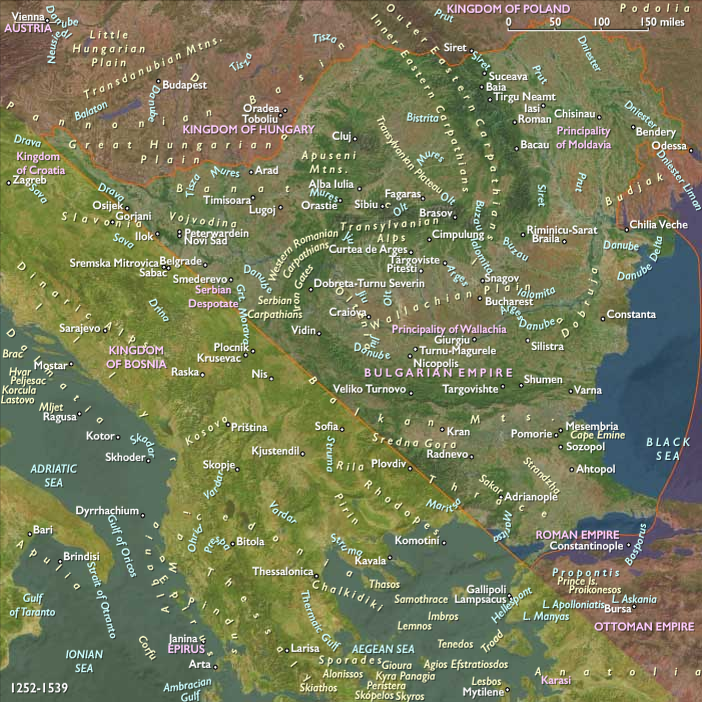
Eastern Southeast Europe (1444–1455 CE): Fall of…
1444 CE to 1455 CE
Eastern Southeast Europe (1444–1455 CE): Fall of Constantinople and Ottoman Consolidation
Settlement and Migration Patterns
Ottoman Capture of Constantinople
The defining event of this era, the Ottoman conquest of Constantinople in 1453, dramatically altered settlement patterns in Eastern Southeast Europe. Following the city's fall to Sultan Mehmed II ("the Conqueror"), Constantinople transitioned from a Christian Byzantine capital into a predominantly Muslim city, renamed Istanbul and rapidly repopulated by Ottoman settlers, merchants, soldiers, and administrative officials from across the empire.
Post-Byzantine Population Shifts
The collapse of the Byzantine Empire triggered migrations as many Byzantine Greeks, Latins, and Slavs fled Ottoman rule, relocating toward Western Europe, Italy, and territories still resisting Ottoman domination, notably Hungary, Venice-controlled coastal regions, and the Serbian Despotate. These migrations significantly reshaped the region’s demographic and cultural landscape.
Economic and Technological Developments
Istanbul as Imperial Economic Center
Under Ottoman rule, Istanbul swiftly reemerged as a vibrant economic hub, linking European and Asian trade networks. The city’s strategic location enhanced its role as a commercial nexus for silk, spices, grain, and luxury goods, significantly benefiting from imperial investments in ports, caravanserais, bazaars, and infrastructure.
Military Innovation and Siege Warfare
The 1453 siege of Constantinople exemplified Ottoman advancements in military technology and strategy, including the deployment of massive siege artillery, most notably the great bombard designed by Hungarian engineer Orban. Ottoman mastery in artillery and siegecraft thereafter became legendary, greatly influencing European military practices.
Cultural and Artistic Developments
Ottoman Cultural Renaissance
The conquest of Constantinople provided significant cultural momentum for the Ottomans. Under Mehmed II’s patronage, the city underwent extensive reconstruction, blending classical Byzantine architecture with Islamic art and design. The transformation of the Hagia Sophia from a church into a mosque symbolized this new cultural synthesis, influencing architecture throughout the empire.
Byzantine Legacy and Diaspora
Despite the political collapse, Byzantine scholars and intellectuals fleeing westward contributed profoundly to the Italian Renaissance, bringing with them classical manuscripts, philosophical treatises, and scientific knowledge. This diaspora preserved significant elements of Byzantine heritage in Western Europe, enriching European intellectual and cultural life.
Social and Religious Developments
Establishment of Islamic Dominance
Islam rapidly established dominance as the primary faith and administrative system in newly conquered territories. Mosques, medreses, and Islamic institutions proliferated in Istanbul and other captured cities, profoundly reshaping social structures and religious identities across Eastern Southeast Europe.
Status of Christian Populations
Under Ottoman rule, non-Muslim populations, primarily Christians and Jews, received protected yet subordinate status (dhimmi). Christians were allowed religious autonomy but faced taxation (jizya) and periodic forced conscription through the devshirme system. The Fall of Constantinople deepened religious divides, significantly altering regional interfaith relations.
Political Dynamics and Regional Rivalries
End of the Byzantine Empire
The capture of Constantinople by Mehmed II in 1453 conclusively ended the Byzantine Empire, marking a seismic shift in regional power dynamics. Ottoman expansion rapidly subsumed remaining Byzantine, Latin, and Slavic territories across the Balkans and Anatolia, asserting uncontested political dominance.
Crusade of Varna and Christian Resistance
The era began with the catastrophic Crusade of Varna (1443–1444), where Hungarian, Serbian, and Wallachian forces, allied in resistance against Ottoman expansion, suffered a decisive defeat at the Battle of Varna in November 1444. This defeat crippled organized Christian resistance, facilitating subsequent Ottoman advances throughout Eastern Europe.
Long-Term Consequences and Historical Significance
From 1444 to 1455 CE, Eastern Southeast Europe underwent transformative changes epitomized by the Fall of Constantinople and subsequent Ottoman consolidation. This era decisively ended Byzantine civilization, reshaped regional demographics, and established Istanbul as the Ottoman Empire's enduring political, cultural, and economic capital. The events of this period profoundly influenced European history, marking a pivotal transition between medieval and early modern eras.
People
Groups
Topics
Subjects
Regions
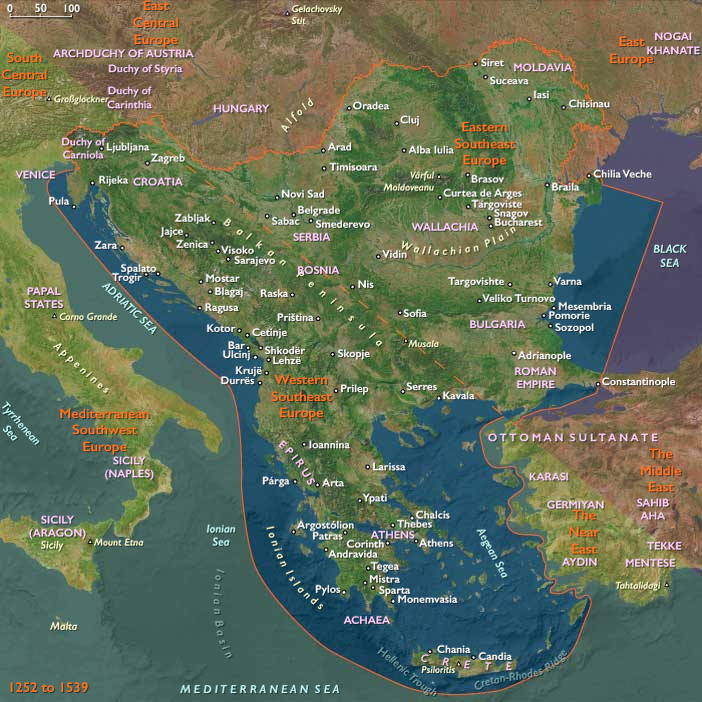
Southeast Europe
View →Subregions