
Eastern Southeast Europe (1492–1503 CE): Ottoman Centralization, …
Years: 1492 - 1503
Eastern Southeast Europe (1492–1503 CE): Ottoman Centralization, Cultural Resurgence, and Refugee Integration
Settlement and Migration Patterns
Integration of Spanish Refugees
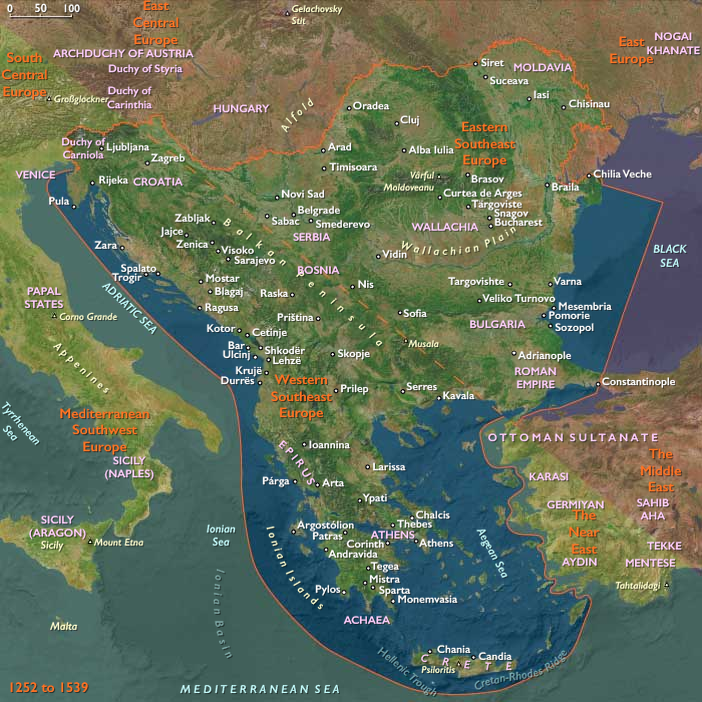
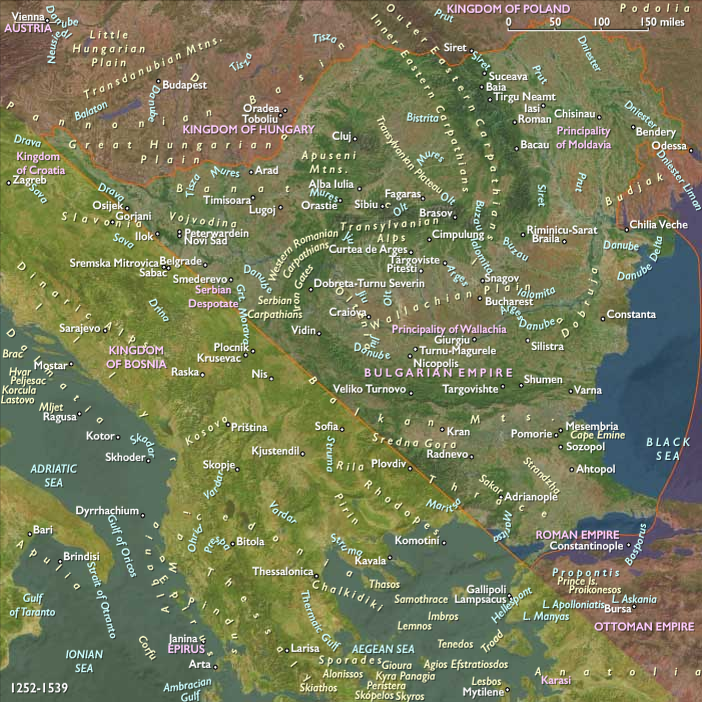
Between 1492 and 1503 CE, Eastern Southeast Europe experienced significant demographic shifts, notably due to the influx of Sephardic Jewish and Muslim refugees expelled from Spain following the Reconquista. Responding swiftly, Sultan Bayezid II sent Admiral Kemal Reis to facilitate their safe evacuation, actively encouraging their settlement across the empire. Large numbers of Sephardic Jews settled particularly in Constantinople and Adrianople, enriching regional urban and cultural landscapes.
Economic and Technological Developments
Stabilization and Economic Growth
Under Bayezid II, the Ottoman economy stabilized markedly. The sultan successfully restored the value of Ottoman coinage and implemented plans originally envisioned by his father, Mehmed II, fostering economic expansion. The establishment of the first printing press in Constantinople in 1493 by the Sephardim introduced a crucial technological advancement, significantly influencing Ottoman intellectual and cultural life.
Cultural and Artistic Developments
Cultural Reorientation and Revival
Bayezid II stimulated a robust cultural revival emphasizing Turkish language and Muslim traditions, reversing earlier trends that leaned toward Christianizing influences. His mystical inclinations infused orthodox Islamic practices with mystic rituals, countering growing heterodox Shi'ism, especially among eastern Anatolian tribes. The Sephardic and Andalusian refugees notably contributed new artistic, intellectual, and technological methods, greatly enriching Ottoman culture.
Social and Religious Developments
Integration and Religious Tolerance
Bayezid’s policies regarding religious minorities were progressive and compassionate. He issued firmans explicitly directing governors to welcome Jewish refugees from Spain warmly, threatening severe punishments for mistreatment or rejection. This humanitarian approach significantly enhanced social cohesion, fostering religious tolerance and enabling Jewish communities to flourish, exemplified by the energetic leadership of Chief Rabbi Moses Capsali, who actively assisted and integrated the newcomers.
Political Dynamics and Regional Rivalries
Ottoman Centralization and Regional Conflicts
Bayezid II successfully completed the administrative transition begun by Mehmed II, replacing vassalage systems with direct Ottoman governance across the empire. His reign was initially complicated by internal strife due to his brother Cem’s rebellion, supported by European powers aiming to destabilize Ottoman rule. Peace treaties, such as a ten-year agreement with Hungary in 1484, momentarily curtailed direct confrontation in Europe, despite occasional conflicts like the Ottoman defeat at Villach in 1493. By 1501, Bayezid decisively secured control over the Peloponnese, effectively eliminating Venetian influence and solidifying Ottoman dominance in the Eastern Mediterranean.
Threats from the East
Persistent rebellions, notably the Qizilbash uprising, seriously challenged Ottoman authority in Anatolia. These revolts, frequently supported by Shah Ismail of Persia, a fervent promoter of Shi'ism, posed significant internal threats, leading to severe setbacks including the battlefield death of Ali Pasha, Bayezid’s grand vizier.
Long-Term Consequences and Historical Significance
The period from 1492 to 1503 CE marked a crucial era of Ottoman administrative centralization, economic revitalization, cultural rejuvenation, and humanitarian policy towards refugees. These developments significantly enhanced Ottoman cultural diversity, religious tolerance, and political cohesion, solidifying the empire’s internal foundations even as external threats and internal rebellions demanded vigilant and sustained administrative and military responses.
People
Groups
- Jews
- Islam
- Muslims, Sunni
- Muslims, Shi'a
- Papal States (Republic of St. Peter)
- Christians, Roman Catholic
- Christians, Eastern Orthodox
- Hungary, Kingdom of
- Wallachia, Principality of
- Ottoman Empire
- Moldavia, Principality of
- Egypt and Syria, Mamluk Burji Sultanate of
- Poland of the Jagiellonians, Kingdom of
- Transylvania (Hungarian governate)
- Qizilbash or Kizilbash, (Ottoman Turkish for "Crimson/Red Heads")
- Spanish Empire
Topics
Commodoties
Subjects
Regions
Subregions
Years: 1492 - 1503
People
Groups
- Jews
- Islam
- Muslims, Sunni
- Muslims, Shi'a
- Papal States (Republic of St. Peter)
- Christians, Roman Catholic
- Christians, Eastern Orthodox
- Hungary, Kingdom of
- Wallachia, Principality of
- Ottoman Empire
- Moldavia, Principality of
- Egypt and Syria, Mamluk Burji Sultanate of
- Poland of the Jagiellonians, Kingdom of
- Transylvania (Hungarian governate)
- Qizilbash or Kizilbash, (Ottoman Turkish for "Crimson/Red Heads")
- Spanish Empire
Topics
Commodoties
Subjects
Regions
Subregions