
Eastern Southeast Europe (1504–1515 CE): Ottoman Expansion, …
Years: 1504 - 1515
Eastern Southeast Europe (1504–1515 CE): Ottoman Expansion, Cultural Flourishing, and Regional Struggles
Settlement and Migration Patterns
Urban Growth and Capital Relocations
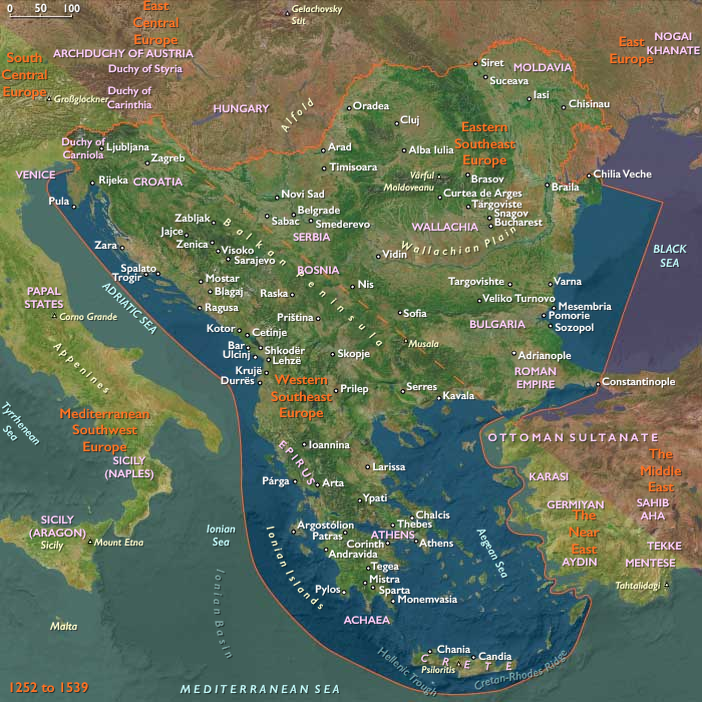
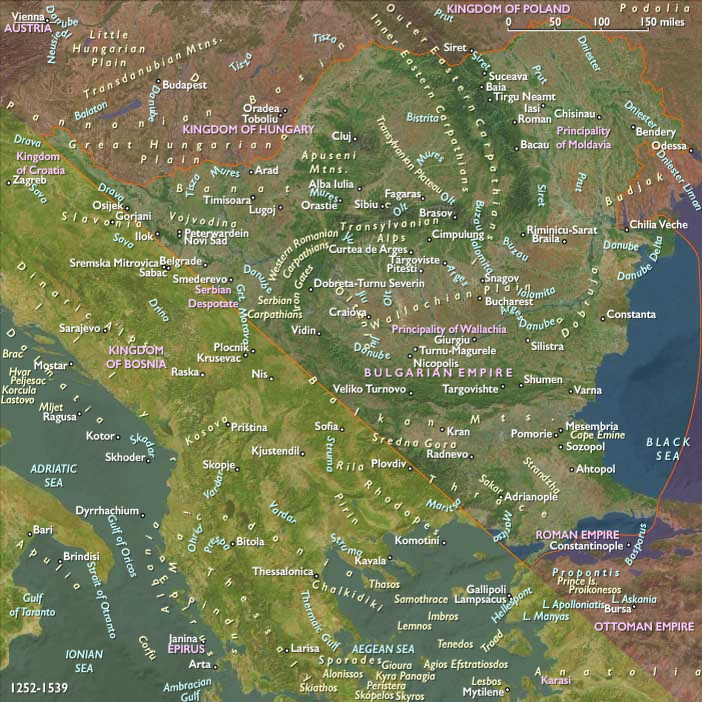
Between 1504 and 1515 CE, Eastern Southeast Europe saw continued urban development and shifting political centers. In Wallachia, the capital transitioned from Curtea de Argeș to Târgoviște, reflecting changing political alliances, particularly with the Kingdom of Hungary. Throughout the fifteenth and sixteenth centuries, Târgoviște evolved into a significant trade hub, notably interacting with Poland, Brașov, and Sibiu. By this period, Romanians had become the majority in the city, joined by Greek merchants and monks, enriching its cultural fabric.
Economic and Technological Developments
Economic Continuity and Technological Innovation
The regional economy remained stable and resilient, particularly in urban centers like Târgoviște, where a Cyrillic printing press was established in 1508, producing Slavonic liturgical texts. This innovation marked significant technological and cultural progress, bolstering literacy and cultural cohesion. Urban workshops continued to thrive, contributing tools, weaponry, and everyday goods vital to regional commerce.
Cultural and Artistic Developments
Flourishing of Jewish and Ottoman Culture
Jewish communities, particularly the Sephardic population established in Constantinople since the late fifteenth century, continued their vibrant cultural life. The era under Bayezid II witnessed significant Jewish cultural flourishing, exemplified by scholarly and commercial successes. Architecturally, Bayezid II commissioned a major imperial mosque complex in Istanbul, continuing his father's legacy of grand construction projects. This architectural landmark symbolized the integration of Ottoman and Western artistic influences, as the mosque's architect was closely associated with earlier Greek architectural traditions.
Social and Religious Developments
Religious Integration and Community Cohesion
The inclusive policies of Bayezid II persisted, fostering religious harmony and community integration. Jewish and Muslim refugees continued contributing significantly to Ottoman society, particularly in commerce, crafts, and intellectual endeavors. Jewish cultural life, energized by figures like Chief Rabbi Moses Capsali, thrived under Ottoman protection and patronage.
Political Dynamics and Regional Rivalries
Moldavian Turmoil and Ottoman Influence
Regional politics during this period were complex and volatile, particularly in Moldavia. Under Prince Bogdan III, Moldavia confronted significant external threats, including repeated invasions by the Crimean Tatars. After a devastating defeat in 1509 and further invasions in 1511, Bogdan sought Ottoman protection in 1514, negotiating vassalage terms with Sultan Selim I. This agreement entailed annual tribute payments and military support in exchange for considerable autonomy, underscoring the nuanced nature of Ottoman suzerainty.
Internal and External Challenges to Ottoman Rule
Internally, the Ottoman Empire grappled with persistent revolts, notably the Qizilbash rebellions, often backed by Shah Ismail of Persia, whose promotion of Shi'ism undermined Ottoman authority in Anatolia. These rebellions caused significant disruptions, including the battlefield death of Ali Pasha, highlighting the ongoing vulnerabilities and internal divisions within the empire.
Long-Term Consequences and Historical Significance
The period 1504–1515 CE was marked by sustained urban growth, significant technological and cultural achievements, and complex political realignments. Ottoman governance strategies fostered cultural diversity and religious tolerance, bolstering regional stability despite persistent external threats and internal rebellions. The foundation laid during these years significantly influenced the socio-political landscape of Eastern Southeast Europe, solidifying Ottoman administrative effectiveness and cultural vibrancy.
People
Groups
- Jews
- Islam
- Muslims, Sunni
- Muslims, Shi'a
- Papal States (Republic of St. Peter)
- Romanians
- Christians, Roman Catholic
- Christians, Eastern Orthodox
- Hungary, Kingdom of
- Wallachia, Principality of
- Ottoman Empire
- Moldavia, Principality of
- Egypt and Syria, Mamluk Burji Sultanate of
- Poland of the Jagiellonians, Kingdom of
- Transylvania (Hungarian governate)
- Greeks (Modern)
- Qizilbash or Kizilbash, (Ottoman Turkish for "Crimson/Red Heads")
Topics
Commodoties
Subjects
Regions
Subregions
Years: 1504 - 1515
People
Groups
- Jews
- Islam
- Muslims, Sunni
- Muslims, Shi'a
- Papal States (Republic of St. Peter)
- Romanians
- Christians, Roman Catholic
- Christians, Eastern Orthodox
- Hungary, Kingdom of
- Wallachia, Principality of
- Ottoman Empire
- Moldavia, Principality of
- Egypt and Syria, Mamluk Burji Sultanate of
- Poland of the Jagiellonians, Kingdom of
- Transylvania (Hungarian governate)
- Greeks (Modern)
- Qizilbash or Kizilbash, (Ottoman Turkish for "Crimson/Red Heads")
Topics
Commodoties
Subjects
Regions
Subregions