
Eastern Southeast Europe (1516–1527 CE): Ottoman Dominance …
Years: 1516 - 1527
Eastern Southeast Europe (1516–1527 CE): Ottoman Dominance and Regional Transformations
Settlement and Migration Patterns
Expansion and Consolidation
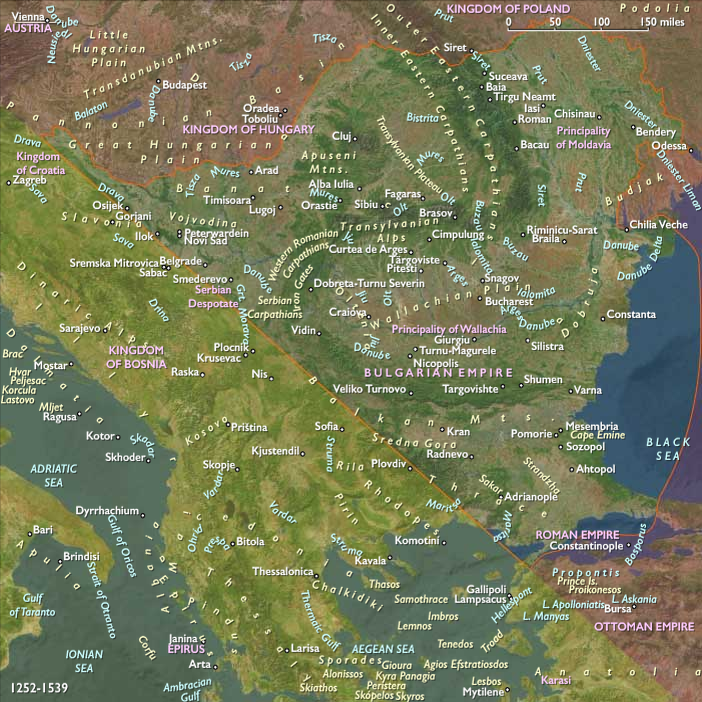
Between 1516 and 1527 CE, the Ottoman Empire solidified its dominion over Eastern Southeast Europe, completing major territorial expansions into the Arab lands, including the conquest of Egypt, Syria, Palestine, and the Hejaz by 1517. This era saw increased migrations within Ottoman territories, including the movement of administrative personnel, soldiers, and merchants, further integrating regional populations and enhancing urban development in cities like Constantinople.
Economic and Technological Developments
Economic Integration and Trade Expansion
The Ottoman Empire fostered economic stability through effective trade networks that spanned from Eastern Europe to the Middle East. The conquest of Egypt in 1517 gave the Ottomans control over vital trade routes connecting the Mediterranean and the Red Sea, significantly boosting commerce and the empire’s economic strength. Regional cities like Constantinople continued to thrive economically, benefiting from increased trade and commercial activity.
Cultural and Artistic Developments
Continuation of Cultural Flourishing
Cultural prosperity persisted throughout this period, characterized by artistic and architectural patronage, particularly in major urban centers. Ottoman cultural life was enriched by continued support for scholars, artisans, and merchants, fostering a diverse and vibrant cultural landscape. The influx of populations, including Jewish and Muslim communities from Iberia, continued to enhance cultural diversity and intellectual vibrancy within the empire.
Social and Religious Developments
Religious Diversity and Imperial Tolerance
Ottoman policies of religious tolerance and integration remained robust, facilitating the continued prosperity of diverse religious communities, notably Jews and Christians, alongside the Muslim majority. The communities established earlier, such as the Sephardic Jews who had settled in Constantinople, continued to flourish, contributing significantly to the empire’s economic and intellectual life.
Political Dynamics and Regional Rivalries
Ottoman Territorial Consolidation
Under Sultan Selim I and his successor, Suleiman the Magnificent, the Ottoman Empire achieved significant military and territorial gains. The decisive defeat and absorption of the Mamluk Sultanate in 1517 granted the Ottomans critical control over key Islamic holy sites and trade routes. Concurrently, Moldavia, under Prince Bogdan III, became increasingly enmeshed in Ottoman politics, negotiating terms of vassalage that balanced autonomy with obligations such as tribute payments and military assistance.
Continued Internal and External Pressures
Despite considerable territorial and political successes, the Ottomans continued to face internal challenges, notably from the Qizilbash rebels, who were supported by Persian Shah Ismail. These ongoing rebellions highlighted persistent internal vulnerabilities, requiring sustained military and administrative attention.
Long-Term Consequences and Historical Significance
The period 1516–1527 CE marked a pivotal phase of Ottoman territorial consolidation, economic expansion, and cultural diversity. These developments significantly shaped the region's socio-political landscape, cementing Ottoman power and influence in Eastern Southeast Europe and beyond, while laying the groundwork for the empire's cultural and administrative practices in subsequent eras.
People
Groups
- Jews
- Islam
- Muslims, Sunni
- Muslims, Shi'a
- Romanians
- Christians, Roman Catholic
- Christians, Eastern Orthodox
- Hungary, Kingdom of
- Wallachia, Principality of
- Ottoman Empire
- Moldavia, Principality of
- Egypt and Syria, Mamluk Burji Sultanate of
- Poland of the Jagiellonians, Kingdom of
- Transylvania (Hungarian governate)
- Greeks (Modern)
- Qizilbash or Kizilbash, (Ottoman Turkish for "Crimson/Red Heads")
Topics
Commodoties
Subjects
Regions

Subregions
Years: 1516 - 1527
People
Groups
- Jews
- Islam
- Muslims, Sunni
- Muslims, Shi'a
- Romanians
- Christians, Roman Catholic
- Christians, Eastern Orthodox
- Hungary, Kingdom of
- Wallachia, Principality of
- Ottoman Empire
- Moldavia, Principality of
- Egypt and Syria, Mamluk Burji Sultanate of
- Poland of the Jagiellonians, Kingdom of
- Transylvania (Hungarian governate)
- Greeks (Modern)
- Qizilbash or Kizilbash, (Ottoman Turkish for "Crimson/Red Heads")
Topics
Commodoties
Subjects
Regions
Subregions