
Eastern Southeast Europe (45 BCE–99 CE): Roman …
Years: 45BCE - 99
Eastern Southeast Europe (45 BCE–99 CE): Roman Consolidation and Provincial Integration
Settlement and Migration Patterns
Full Integration into the Roman Empire
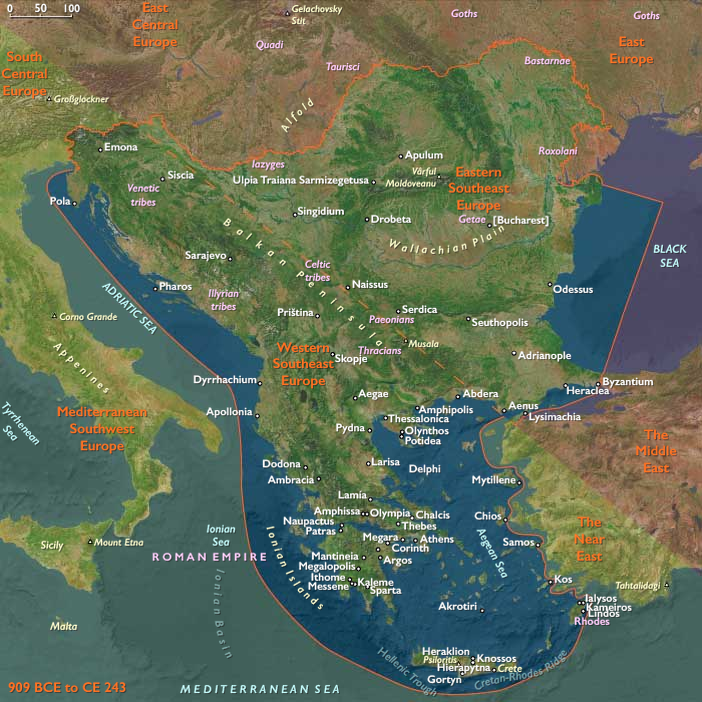
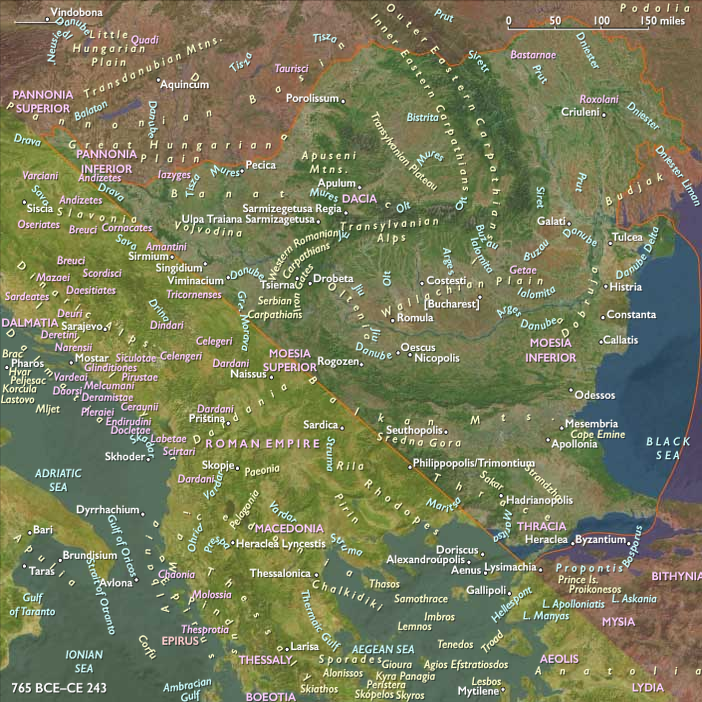
Between 45 BCE and 99 CE, Eastern Southeast Europe became thoroughly integrated into the Roman Empire, encompassing present-day Greece, Bulgaria, Romania, and the European part of modern-day Turkey. Roman settlement policies promoted urbanization, establishing new cities and significantly expanding existing urban centers, such as Byzantium and Philippopolis (modern-day Plovdiv). Emperor Octavian expelled the Getae from lands south of the Danube, although they continued to periodically interfere in Roman affairs.
Stability and Population Growth
Roman rule fostered regional stability, encouraging population growth, agricultural expansion, and economic prosperity. Settlements flourished along well-developed road networks, ports, and urban administrative centers, facilitating the integration of local populations into the imperial economy and culture.
Economic and Technological Developments
Roman Infrastructure and Economic Expansion
Extensive Roman infrastructure projects, including roads, aqueducts, and ports, substantially enhanced trade efficiency and economic integration. The establishment of agricultural estates (latifundia) and expanded mining operations, particularly gold and silver mines in the territories controlled by the Getae, further increased economic productivity and imperial revenue.
Technological Innovation
Roman technological advancements significantly influenced regional productivity and infrastructure development. Innovations in agricultural tools, including iron plowshares and implements first developed by the Getae, construction techniques, and hydraulic engineering improved agricultural yields, urban amenities, and overall economic resilience.
Cultural and Artistic Developments
Flourishing of Roman-Hellenistic Culture
This era marked the flourishing of cultural synthesis between Roman and Hellenistic traditions. Artistic expression, architecture, and public monuments exhibited sophisticated combinations of Roman practicality and Hellenistic aesthetic traditions, exemplified by civic structures, temples, and amphitheaters.
Indigenous Cultural Adaptation
Indigenous Thracian, Dacian, and local Balkan traditions continued alongside Roman cultural practices. Traditional crafts, such as pottery, metalwork, and textile production, persisted, incorporating Roman techniques and motifs, thus reflecting cultural resilience and adaptive integration.
Social and Religious Developments
Provincial Governance and Social Structure
Roman administrative organization transformed regional governance, establishing provinces governed by appointed Roman officials. Local elites, including leaders among the Getae, were increasingly integrated into imperial structures, adopting Roman citizenship, customs, and public duties, significantly reshaping societal structures.
Religious Syncretism and Imperial Cult
Religious life continued to diversify, blending traditional local, Greek, and Roman religious practices. The imperial cult emerged prominently, with widespread veneration of Roman emperors as deities alongside existing religious traditions, exemplifying cultural and religious syncretism.
Long-Term Consequences and Historical Significance
The period from 45 BCE to 99 CE was pivotal in consolidating Roman rule and integrating Eastern Southeast Europe into the broader imperial framework. These developments established enduring administrative structures, economic systems, and cultural traditions that profoundly influenced regional identities and historical trajectories well into subsequent centuries. The military ambitions of figures such as Emperor Trajan, who ascended in 98 CE with a determination to subdue the Getae and exploit their rich gold and silver mines, exemplified the strategic significance of the region within the Roman Empire.
People
Groups
- Thracians
- Dacians, or Getae, or Geto-Dacians
- Roman Republic
- Odrysian kingdom
- Dacia, Kingdom of
- Roman Principate (Rome)
- Roman Empire (Rome): Julio-Claudian dynasty
- Roman Empire (Rome): Flavian dynasty
- Roman Empire (Rome): Nerva-Antonine dynasty
Topics
Commodoties
- Weapons
- Oils, gums, resins, and waxes
- Grains and produce
- Ceramics
- Strategic metals
- Slaves
- Beer, wine, and spirits
- Lumber
Subjects
Regions
Subregions
Related Events
Showing 4 events out of 4 total
Years: 45BCE - 99
People
Groups
- Thracians
- Dacians, or Getae, or Geto-Dacians
- Roman Republic
- Odrysian kingdom
- Dacia, Kingdom of
- Roman Principate (Rome)
- Roman Empire (Rome): Julio-Claudian dynasty
- Roman Empire (Rome): Flavian dynasty
- Roman Empire (Rome): Nerva-Antonine dynasty
Topics
Commodoties
- Weapons
- Oils, gums, resins, and waxes
- Grains and produce
- Ceramics
- Strategic metals
- Slaves
- Beer, wine, and spirits
- Lumber
Subjects
Regions
Subregions