
Eastern Southeast Europe (100–243 CE): Stability, Crisis, …
Years: 100 - 243
Eastern Southeast Europe (100–243 CE): Stability, Crisis, and Regional Transformation
Settlement and Migration Patterns
Continued Roman Urbanization and Development
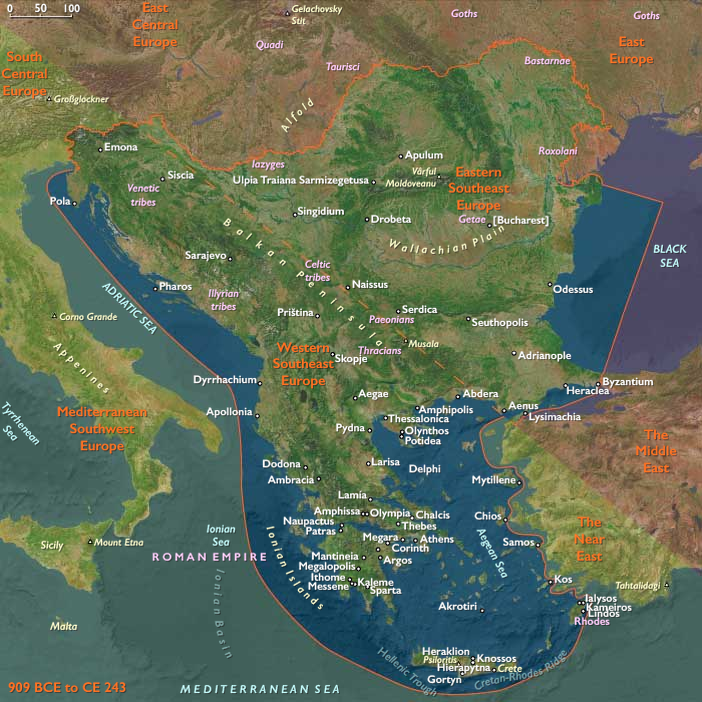
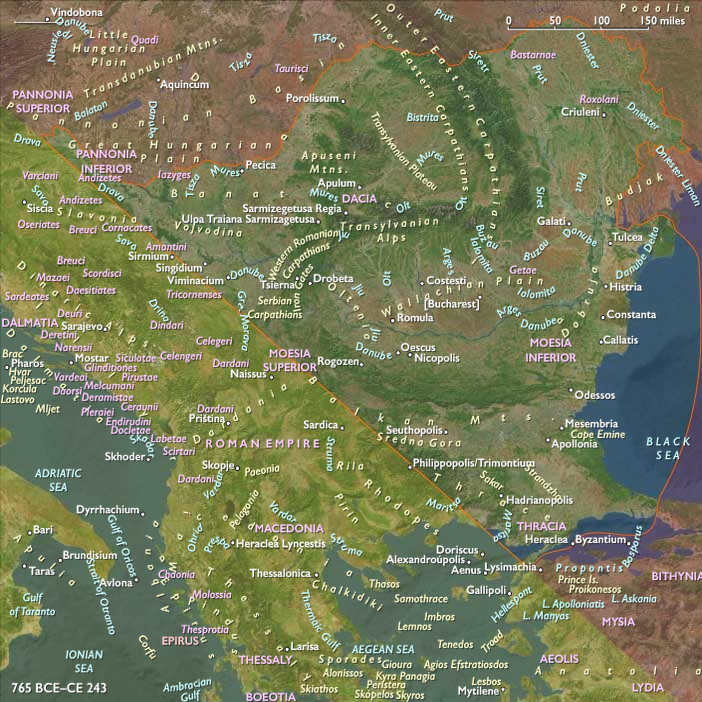
Between 100 and 243 CE, Eastern Southeast Europe experienced sustained urban growth under Roman administration. Cities such as Byzantium and Philippopolis (modern-day Plovdiv) thrived as key regional hubs, featuring monumental architecture, forums, temples, water systems, coliseums, and public baths. Urban centers expanded with robust infrastructure, attracting diverse populations and fostering economic and cultural vitality.
Establishment of Roman Provinces
Significant Roman administrative reorganizations occurred, leading to the creation of new provinces, notably Roman Dacia (106 CE), Moesia Inferior, and Thracia. Emperor Trajan organized Dacia following his victory over the Getae, establishing the provincial capital at Ulpia Trajana on the site of Sarmizegetusa. The province attracted colonists from various parts of the Roman Empire, including Gaul, Spain, and Syria, contributing to regional stability and economic integration.
Increasing Migration and Border Pressures
This era witnessed increasing pressures from migrating groups along the empire's northern borders, notably Goths and other Germanic tribes, impacting regional stability. These movements foreshadowed later significant migrations and conflicts, influencing settlement patterns and military strategies.
Economic and Technological Developments
Economic Prosperity and Regional Trade
Economic activities flourished, supported by Roman trade networks, agricultural productivity, and mining industries, notably gold and silver mining in Dacia. The region benefited significantly from its strategic geographic position, facilitating trade connections between Europe, Asia Minor, and the broader Mediterranean.
Technological Continuity and Infrastructure Maintenance
Roman technological innovations supported economic stability, particularly in agricultural efficiency, mining, and infrastructure management. Aqueducts, roads, and ports were actively maintained and expanded, ensuring regional prosperity and connectivity. The introduction of viticulture in regions like Dalmatia and the development of iron metallurgy with iron plowshares and other agricultural implements enhanced productivity.
Cultural and Artistic Developments
Cultural Continuity and Artistic Expression
Artistic traditions reflected sustained cultural synthesis, blending Roman, Greek, and indigenous Thracian elements. Public monuments, statues, mosaics, frescoes, and ceremonial artifacts decorated urban spaces, demonstrating cultural pride and regional identity.
Literary and Intellectual Growth
Urban centers became hubs of intellectual and literary activities, reflecting Roman educational standards and Greek philosophical traditions. Schools, libraries, and theaters fostered cultural vitality, intellectual exchanges, and literary production, promoting widespread literacy and the gradual adoption of Latin in daily and administrative life.
Social and Religious Developments
Provincial Administration and Social Integration
Roman governance structures integrated local elites into imperial administration, strengthening societal coherence. Roman citizenship expanded, assimilating indigenous populations into Roman social and political frameworks. Notably, the Roman army recruited natives from conquered regions, and five Illyrian-born individuals rose through military ranks to become emperors.
Religious Diversity and Emergence of Christianity
Religious diversity characterized the region, with traditional Roman, Greek, and local religious practices coexisting. The mystic cult of Mithras, introduced by Roman legionnaires from Persia, gained popularity alongside existing local beliefs. Christianity also spread notably throughout Eastern Southeast Europe, establishing early communities and becoming increasingly influential in urban and provincial areas.
Long-Term Consequences and Historical Significance
The period from 100 to 243 CE was marked by urbanization, economic prosperity, and increasing regional pressures from migrations. The establishment of Roman Dacia and other provinces significantly impacted local societies, economy, and culture. The Roman influence decisively shaped the evolution of indigenous populations such as the Getae, resulting in a distinct Dacian ethnic group as Roman colonists intermingled with local and Greek coastal populations. These developments laid foundations for future transformations, particularly the rise of Christianity and increasing border challenges, profoundly influencing regional historical trajectories.
People
Groups
- Thracians
- Dacians, or Getae, or Geto-Dacians
- Illyrians
- Dacia, Kingdom of
- Thrace, Theme of
- Mithraic Mysteries
- Germans
- Goths (East Germanic tribe)
- Christians, Early
- Thracia (Roman province)
- Moesia Inferior (Roman province)
- Roman Empire (Rome): Nerva-Antonine dynasty
- Dacia, Roman
- Roman Empire (Rome): Severan dynasty
- Roman Empire (Rome): Non-dynastic
Topics
Commodoties
- Weapons
- Oils, gums, resins, and waxes
- Grains and produce
- Ceramics
- Strategic metals
- Slaves
- Beer, wine, and spirits
- Lumber
Subjects
- Commerce
- Decorative arts
- Conflict
- Faith
- Government
- Scholarship
- Custom and Law
- Human Migration
- Philosophy and logic
Regions
Subregions
Years: 100 - 243
People
Groups
- Thracians
- Dacians, or Getae, or Geto-Dacians
- Illyrians
- Dacia, Kingdom of
- Thrace, Theme of
- Mithraic Mysteries
- Germans
- Goths (East Germanic tribe)
- Christians, Early
- Thracia (Roman province)
- Moesia Inferior (Roman province)
- Roman Empire (Rome): Nerva-Antonine dynasty
- Dacia, Roman
- Roman Empire (Rome): Severan dynasty
- Roman Empire (Rome): Non-dynastic
Topics
Commodoties
- Weapons
- Oils, gums, resins, and waxes
- Grains and produce
- Ceramics
- Strategic metals
- Slaves
- Beer, wine, and spirits
- Lumber
Subjects
- Commerce
- Decorative arts
- Conflict
- Faith
- Government
- Scholarship
- Custom and Law
- Human Migration
- Philosophy and logic
Regions
Subregions