Hungarian public opinion is split over the…
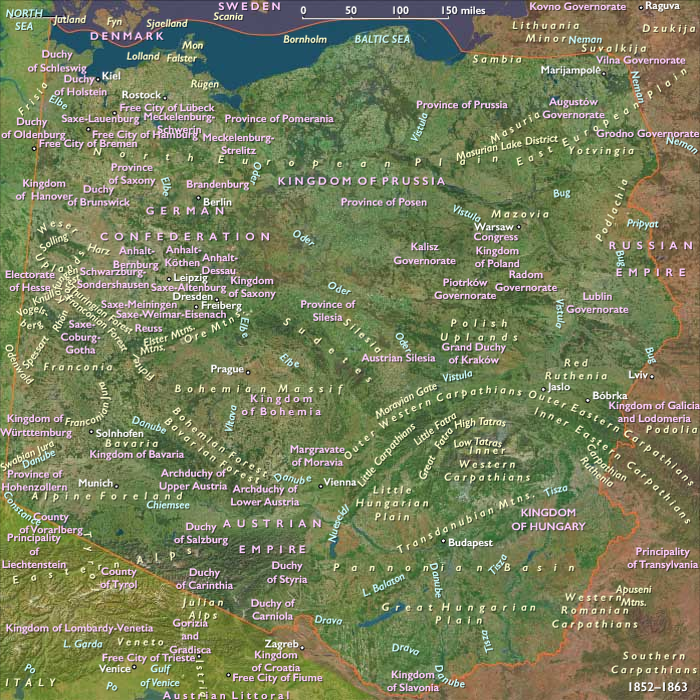
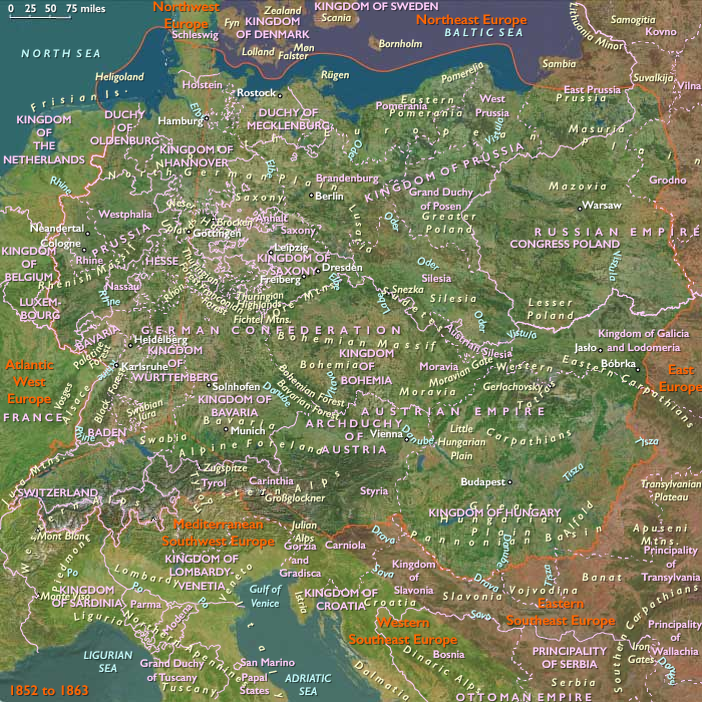
1852 CE to 1863 CE
Some Hungarians hold out hope for full separation from Austria; others want an accommodation with the Habsburgs, provided that they respect Hungary's constitution and laws.
Ferenc Deák becomes the main advocate for accommodation.
Deák upholds the legality of the April Laws and argues that their amendment requires the Hungarian Diet's consent.
He also holds that the dethronement of the Habsburgs is invalid.
As long as Austria rules absolutely, Deák argues, Hungarians should do no more than passively resist illegal demands.
The first crack in Franz Joseph's neo-absolutist rule develops in 1859, when the forces of Sardinia and France defeat Austria at Solferino.
The defeat persuades Franz Joseph that national and social opposition to his government is too strong to be managed by decree from Vienna.
Gradually he recognizes the necessity of concessions toward Hungary, and Austria and Hungary thus move toward a compromise.
Locations
Groups
Transylvania, region of
View →
Jews
View →
Germans
View →
Hungarian people
View →
Vlachs
View →
Serbs (South Slavs)
View →
Croats (South Slavs)
View →
Romanians
View →
Slovaks (West Slavs)
View →
Christians, Eastern Orthodox
View →
Christians, Roman Catholic
View →
Austria, Archduchy of
View →
Hungary, Kingdom of
View →
Holy Roman Empire
View →
Union of Three Nations
View →
Lutheranism
View →
Protestantism
View →
Croatia, (Habsburg) Kingdom of
View →
Calvinists
View →
Unitarians
View →
Slavonia, (Habsburg) Kingdom of
View →
Transylvania, (Austrian) Grand Principality of
View →
Austrian Empire
View →
Vojvodina (Voivodship) of Serbia and Tamis Banat
View →
Topics
Regions
Central Europe
View →Subregions