
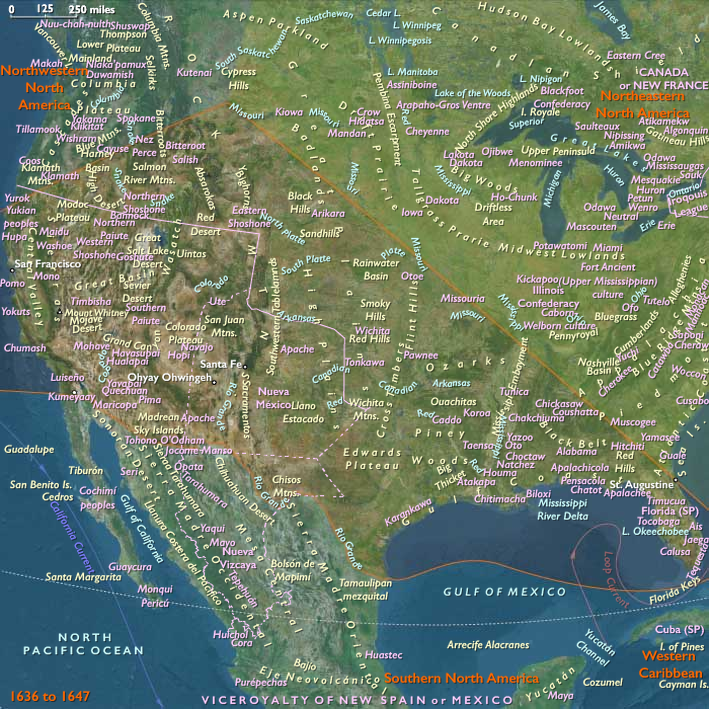
Gulf and Western North America (1636 to …
Years: 1636 - 1647
Gulf and Western North America (1636 to 1647 CE): Intensifying Conflicts and Cultural Transformations
Apalachee Resistance and Spanish Control
The establishment of Spanish missions in Apalachee Province intensified during this period, prompting a blend of acceptance and resistance among the indigenous populations. While many Apalachee continued to integrate Catholic practices into their cultural life, others grew increasingly resistant to the Spanish demands for labor and resources. The resulting tensions occasionally erupted into open conflict, reflecting the complexities of colonial-imposed changes upon the region's indigenous societies.
Expanding Apache Raids and Equestrian Dominance
The Apache continued expanding their equestrian capabilities, increasingly conducting successful horse raids against Spanish settlements and Pueblo communities. These horses dramatically increased Apache mobility and effectiveness in warfare, further shifting regional power dynamics. Apache bands expanded their territorial control, exerting influence over trade routes and hunting grounds, marking a significant evolution in their societal structure and military prowess.
Pueblo Cultural Persistence and Adaptation
Despite ongoing pressures from Spanish colonial authorities, the Pueblo peoples discreetly continued enhancing their horse-breeding practices. Simultaneously, they preserved their cultural and religious traditions, often blending them with elements of Catholicism to maintain social cohesion and identity. Their careful balancing act of outward compliance with inward preservation set the stage for future resistance movements.
California Tribes' Stability and Continuity
Tribes along the coastal regions of California, including the Chumash, Luiseño, and Yokuts, remained relatively isolated from direct European incursions during this era. These communities maintained established maritime trading networks and sustained stable economic practices focused on fishing and local resource management. Their continued isolation allowed them to preserve traditional cultural structures and maintain relative autonomy.
Ecological Management in the Mississippi Valley
Indigenous groups in the Mississippi Valley continued adapting their agricultural systems to counteract disruptions from European-introduced species, such as pigs and cattle. They developed sophisticated agricultural practices and ecological management strategies, allowing them to sustain robust food supplies and maintain societal stability amidst increasing pressures from invasive livestock.
Territorial Consolidation and Resource Management
Along the Colorado River, the Yavapai and Mohave tribes continued to solidify their territories and resource management systems. Their advanced agricultural practices, combined with strategic resource allocation, ensured the sustainability of their communities and allowed for population growth and stability.
Key Historical Developments
-
Growing tensions and occasional resistance among the Apalachee toward Spanish missionary demands.
-
Increasingly successful Apache horse raids, enhancing their territorial dominance and military strength.
-
Discreet Pueblo advancements in horse breeding, balanced with preservation of traditional cultural and religious practices.
-
Ongoing cultural and economic autonomy of California coastal tribes such as the Chumash, Luiseño, and Yokuts.
-
Indigenous ecological adaptations in the Mississippi Valley to manage invasive European livestock.
-
Continued territorial consolidation and sustainable practices by the Yavapai and Mohave along the Colorado River.
Long-Term Consequences and Historical Significance
Between 1636 and 1647, Gulf and Western North America witnessed intensified indigenous adaptations and resistance amid increasing colonial pressures. The era laid critical groundwork for heightened cultural resilience, military strength, and territorial control by indigenous societies, profoundly shaping the dynamics of colonial interactions for generations to come.
Groups
- Chumash people
- Mississippian culture
- Christians, Roman Catholic
- Spanish Empire
- Navajo people (Na-Dené tribe)
- Lipan Apache people (Amerind tribe)
- Plains Apache, or Kiowa Apache; also Kiowa-Apache, Naʼisha, Naisha (Amerind tribe)
- Yavapai (Amerind tribe)
- Acoma Pueblo
- Eight Northern Pueblos (Amerind tribal confederation)
- Apache (Na-Dené tribe)
- Chiricahua
- Western Apache
- Luiseño
- Yokuts
- Mohave people
- Jicarilla Apache
- Mescalero
- Spanish Florida
- Apalachee Province
- Santa Fe de Nuevo México (Spanish Colony)
Topics
Commodoties
Subjects
Regions

Subregions
Related Events
Showing 10 events out of 32410 total
Years: 1636 - 1647
Groups
- Chumash people
- Mississippian culture
- Christians, Roman Catholic
- Spanish Empire
- Navajo people (Na-Dené tribe)
- Lipan Apache people (Amerind tribe)
- Plains Apache, or Kiowa Apache; also Kiowa-Apache, Naʼisha, Naisha (Amerind tribe)
- Yavapai (Amerind tribe)
- Acoma Pueblo
- Eight Northern Pueblos (Amerind tribal confederation)
- Apache (Na-Dené tribe)
- Chiricahua
- Western Apache
- Luiseño
- Yokuts
- Mohave people
- Jicarilla Apache
- Mescalero
- Spanish Florida
- Apalachee Province
- Santa Fe de Nuevo México (Spanish Colony)
Topics
Commodoties
Subjects
Regions
Subregions