
Gulf and Western North America (1648–1659 CE): …
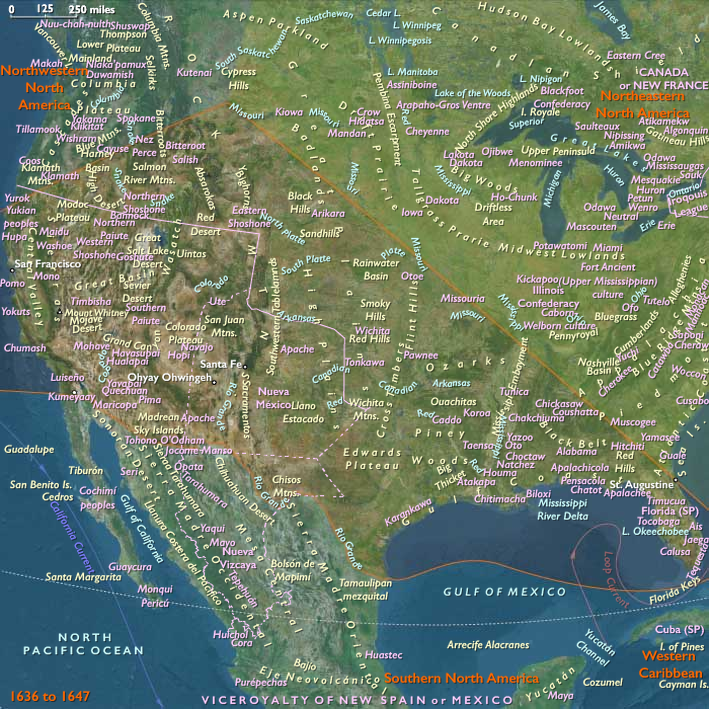
Years: 1636 - 1647
Gulf and Western North America (1648–1659 CE): Intensified Spanish Missions and Indigenous Adaptations
Expansion and Consolidation of Spanish Missions in Florida
Spanish missionary activity continued to expand in Florida, notably among the Apalachee and Timucua peoples. The mission system in the Apalachee Province reached its zenith, deeply influencing indigenous agricultural practices, social organization, and religious customs. This era marked growing Spanish dependency on the fertile lands and agricultural productivity of the Apalachee, who increasingly provided food and labor essential to sustaining the Spanish colony at St. Augustine. Despite their growing integration into Spanish colonial systems, indigenous communities continued to suffer devastating epidemics, significantly reducing their populations and reshaping local societies.
Heightened Apache Raiding and Equestrian Adaptations
During this period, the Apache peoples intensified their raids against Spanish settlements and indigenous Pueblo communities to acquire horses and other livestock. These raids significantly enhanced Apache mobility, economic independence, and military prowess, further transforming them into a formidable presence in the Southwest. This expansion of Apache equestrian culture directly increased pressure on neighboring indigenous groups, prompting defensive adjustments and new alliances.
Pueblo Resistance and Secret Adaptations
While outwardly compliant with Spanish demands, the Pueblo peoples increasingly resented colonial impositions, including forced labor and religious conversion efforts. Secretly, Pueblo communities strengthened their equestrian knowledge, quietly breeding and managing horse populations despite prohibitions on indigenous ownership. This clandestine equestrian expertise prepared the Pueblo for greater resistance in the decades ahead.
Continued Autonomy of California Coastal Tribes
On the Pacific coast, indigenous communities such as the Chumash, Luiseño, and Yokuts maintained their autonomy and robust trade networks, largely insulated from direct Spanish intervention. Their thriving maritime economies continued to flourish, preserving cultural traditions and social stability. This period saw these groups further refining their fishing and trading practices, consolidating their long-term economic independence.
Agricultural and Ecological Innovations in the Mississippi Valley
Indigenous communities along the Mississippi Valley sustained and refined their innovative agricultural practices to counter ecological disruptions from introduced European livestock. These communities increasingly adopted diversified crop cultivation and advanced land management techniques, securing food resources and ecological stability in the face of ongoing European incursions.
Territorial Dynamics of the Yavapai, Mohave, and Navajo
In the Colorado River basin and surrounding regions, the Yavapai and Mohave peoples further solidified their territorial strength through sophisticated agricultural strategies and efficient resource management. Concurrently, the Navajo adapted to regional pressures by refining diplomatic strategies and selectively conducting livestock raids, consolidating their position amidst shifting territorial dynamics.
Key Historical Developments
-
Further expansion of the Spanish mission system in Florida, deepening dependency on indigenous agricultural production, particularly among the Apalachee and Timucua peoples.
-
Intensified Apache raids and expansion of equestrian culture, reshaping the balance of power in the American Southwest.
-
Ongoing clandestine development of horse management skills by Pueblo communities, subtly preparing for future resistance.
-
Continued autonomy and economic stability of California coastal tribes, including the Chumash, Luiseño, and Yokuts.
-
Persistent ecological and agricultural innovations in indigenous communities along the Mississippi Valley to mitigate impacts from European livestock.
-
Territorial and political strengthening among the Yavapai, Mohave, and Navajo, highlighting increasing regional complexities.
Long-Term Consequences and Historical Significance
The era from 1648 to 1659 saw intensified cultural interactions, resistance strategies, and ecological adaptations across Gulf and Western North America. Indigenous societies skillfully navigated the pressures of Spanish colonial expansion, ecological disruptions, and internal conflicts. The gradual consolidation of equestrian practices among the Apache and Pueblo set critical foundations for future resistance movements, profoundly influencing the region's political and cultural landscape in subsequent decades.
Groups
- Chumash people
- Christians, Roman Catholic
- Apalachee (Amerind tribe)
- Western Apache
- Eight Northern Pueblos (Amerind tribal confederation)
- Apache (Na-Dené tribe)
- Navajo people (Na-Dené tribe)
- Timucua (Amerind tribe)
- Lipan Apache people (Amerind tribe)
- Plains Apache, or Kiowa Apache; also Kiowa-Apache, Naʼisha, Naisha (Amerind tribe)
- Luiseño
- Yavapai (Amerind tribe)
- Acoma Pueblo
- Yokuts
- Mohave people
- Jicarilla Apache
- Mescalero
- Chiricahua
- Spanish Florida
- Apalachee Province
- Santa Fe de Nuevo México (Spanish Colony)
Topics
Commodoties
Subjects
Regions

Subregions
Related Events
Showing 10 events out of 32410 total
Years: 1636 - 1647
Groups
- Chumash people
- Christians, Roman Catholic
- Apalachee (Amerind tribe)
- Western Apache
- Eight Northern Pueblos (Amerind tribal confederation)
- Apache (Na-Dené tribe)
- Navajo people (Na-Dené tribe)
- Timucua (Amerind tribe)
- Lipan Apache people (Amerind tribe)
- Plains Apache, or Kiowa Apache; also Kiowa-Apache, Naʼisha, Naisha (Amerind tribe)
- Luiseño
- Yavapai (Amerind tribe)
- Acoma Pueblo
- Yokuts
- Mohave people
- Jicarilla Apache
- Mescalero
- Chiricahua
- Spanish Florida
- Apalachee Province
- Santa Fe de Nuevo México (Spanish Colony)
Topics
Commodoties
Subjects
Regions
Subregions