
Gulf and Western North America (909 BCE …
Years: 909BCE - 819
Gulf and Western North America (909 BCE – CE 819): Desert Cultures, Coastal Fisheries, and Trade Corridors
Geographic and Environmental Context
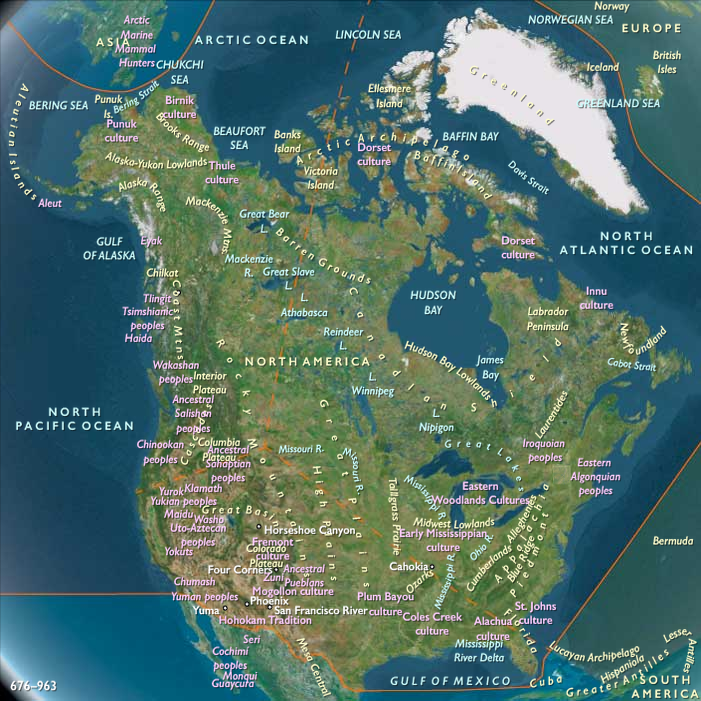
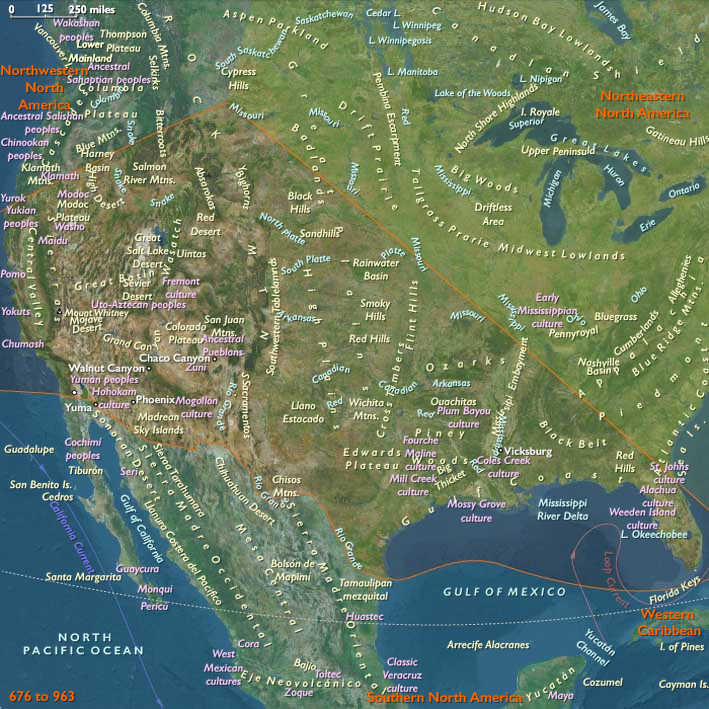
Gulf and Western North America includes Mississippi, Louisiana, Arkansas, Texas, Oklahoma, Kansas, New Mexico, Colorado, Wyoming, Arizona, Utah, Nevada, all of California except the far northwest, all of Florida except the extreme northeast, southwestern Georgia, most of Alabama except the far northeast, southwestern Tennessee, Little Egypt in Illinois, southwestern Missouri, most of Nebraska except the far northeast, southeastern South Dakota, southern Montana, southern Idaho, and southeastern Oregon.
-
The subregion encompasses deserts such as the Sonoran and Chihuahuan, fertile river basins like the Lower Mississippi and Rio Grande, the Gulf of Mexico coastline, and Pacific coastal zones in California.
-
Diverse environments supported equally diverse cultural adaptations.
Climate and Environmental Shifts
-
Climates ranged from humid subtropical along the Gulf Coast to arid and semi-arid in the interior deserts, with Mediterranean conditions in coastal California.
-
Seasonal rainfall patterns shaped agricultural and foraging cycles.
-
Droughts, floods, and hurricanes influenced settlement patterns and subsistence strategies.
Societies and Political Developments
-
In the Lower Mississippi Valley, mound-building cultures such as those ancestral to the Coles Creek and later Mississippian traditions were emerging.
-
The Southwest was home to Ancestral Puebloan (Anasazi) forebears in upland zones and Hohokam precursors in desert river valleys.
-
Along the Pacific coast, maritime-oriented communities relied on fishing, shellfish gathering, and trade.
-
Plains-adjacent areas saw mobile hunting and foraging peoples with seasonal camps.
Economy and Trade
-
Agriculture in river valleys produced maize, squash, and beans, supplemented by wild plant gathering and hunting.
-
Gulf Coast communities engaged in fishing, shellfish collection, and the production of shell ornaments.
-
California coastal peoples exploited rich fisheries and traded acorns, shell beads, and stone tools.
-
Inland trade moved obsidian, turquoise, shells, and foodstuffs between ecological zones.
Subsistence and Technology
-
Irrigation canals supported agriculture in desert areas such as the lower Gila River region.
-
Dugout and plank canoes were used for fishing and transport along coasts and large rivers.
-
Ground stone tools, pottery, and woven textiles were produced for daily use and exchange.
Movement and Interaction Corridors
-
The Mississippi River and its tributaries linked Gulf Coast communities to inland markets.
-
The Rio Grande and Colorado River provided access between uplands and lowlands.
-
Coastal routes along both the Gulf and Pacific shores facilitated trade between settlements and with distant regions.
Belief and Symbolism
-
Ritual life often centered on mound complexes, rock art sites, and ceremonial plazas.
-
Symbolic representations of animals, celestial bodies, and fertility themes appeared in pottery and carvings.
-
Ceremonial gatherings reinforced alliances and redistributed surplus resources.
Adaptation and Resilience
-
Communities combined farming, foraging, and fishing to buffer against environmental uncertainty.
-
Seasonal mobility allowed access to varied resource zones.
-
Interregional trade ensured availability of essential and prestige goods even during local shortages.
Long-Term Significance
By CE 819, Gulf and Western North America was a mosaic of interconnected cultures ranging from agricultural chiefdoms to mobile hunter-gatherers, linked by complex trade and communication networks spanning coasts, deserts, and river valleys.
Groups
- Chumash people
- Poverty Point culture
- Basket Maker II culture, Early
- Hohokam
- Basket Maker II culture, Late
- Calusa
- Mogollon culture
- Fourche Maline culture
- Basket Maker III culture
- Ancestral Puebloans
- Coles Creek culture
- Mississippian culture
- Caddoan Mississippian culture
Commodoties
Subjects
Regions
Subregions
Related Events
Showing 10 events out of 66848 total
Years: 909BCE - 819
Groups
- Chumash people
- Poverty Point culture
- Basket Maker II culture, Early
- Hohokam
- Basket Maker II culture, Late
- Calusa
- Mogollon culture
- Fourche Maline culture
- Basket Maker III culture
- Ancestral Puebloans
- Coles Creek culture
- Mississippian culture
- Caddoan Mississippian culture
Commodoties
Subjects
Regions
Subregions