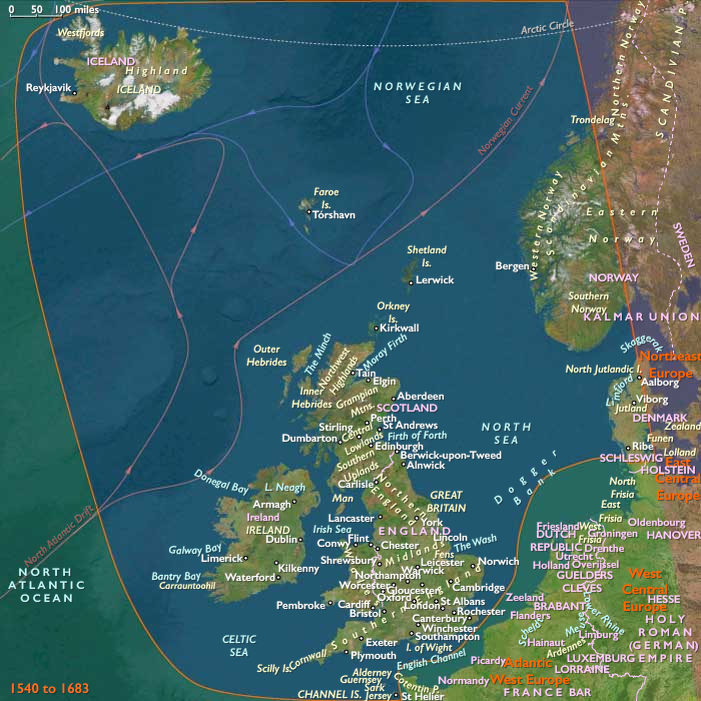
Knox's powers as a preacher come to…
May 1547 CE
Knox's powers as a preacher come to the attention of the chaplain of the garrison, John Rough.
While Rough is preaching in the parish church on the Protestant principle of the popular election of a pastor, he proposes Knox to the congregation for that office.
Knox does not relish the idea.
According to his own account, he burst into tears and fled to his room.
Within a week, however, he is giving his first sermon to a congregation that includes his old teacher, John Major, one of the era’s greatest scholars.
He expounds on the seventh chapter of the Book of Daniel, comparing the pope with the Antichrist.
His sermon is marked by his consideration of the Bible as his sole authority and the doctrine of justification by faith alone, two elements that are to remain in his thoughts throughout the rest of his life.
A few days later, a debate is staged that allows him to lay down additional theses including the rejection of the mass, purgatory, and prayers for the dead.
Knox's chaplaincy of the castle garrison is not to last long.
While Beaton’s successor, Archbishop John Hamilton, is willing to negotiate with England to stop their support of the rebels and bring the castle back under his control, Mary of Guise decides that it can only be taken by force and requests the king of France, Henry II, to intervene.
Locations
Groups
Topics
Subjects
Regions
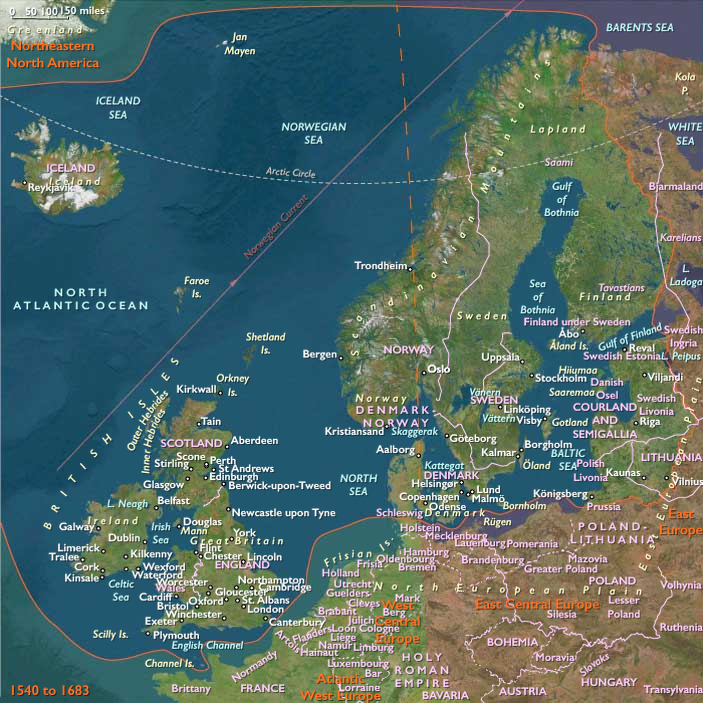
North Europe
View →Subregions