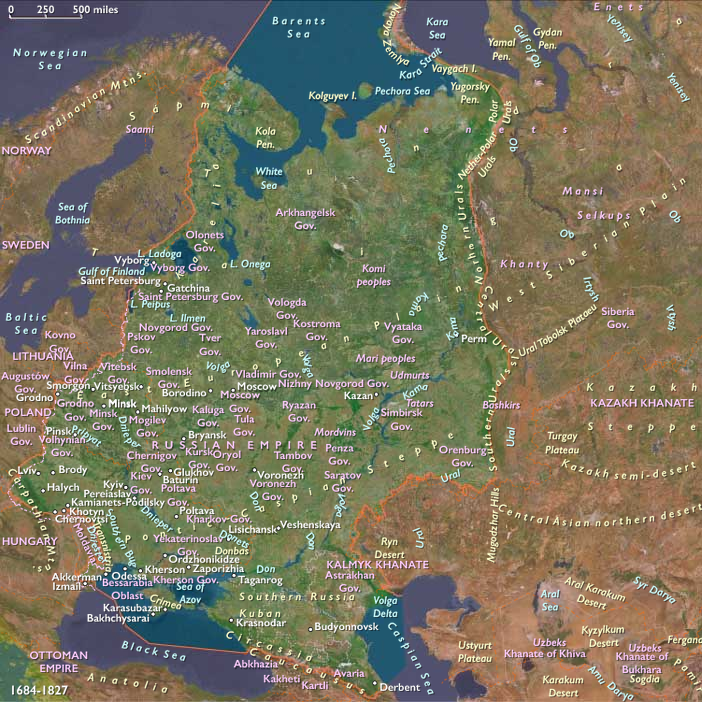
Supplying the army has become an impossibility.…
November 1812 CE
The lack of grass and feed has weakened the remaining horses, almost all of which have died or been killed for food by starving soldiers.
Without horses, the French cavalry ceases to exist; cavalrymen have to march on foot.
Lack of horses means many cannons and wagons have to be abandoned.
Much of the artillery lost will be replaced in 1813, but the loss of thousands of wagons and trained horses will weaken Napoleon's armies for the remainder of his wars.
Starvation and disease are taking their toll, and desertion soars.
Many of the deserters are taken prisoner or killed by Russian peasants.
Badly weakened by these circumstances, the French military position collapses.
Further defeats had been inflicted on elements of the Grande Armée at Vyazma, Krasny, and Polotsk.
The crossing of the river Berezina is a final French calamity; two Russian armies inflict heavy casualties on the remnants of the Grande Armée as it struggles to escape across pontoon bridges.
People
Groups
Portuguese people
View →
Poles (West Slavs)
View →
Austria, Archduchy of
View →
Baltic Germans
View →
Russians (East Slavs)
View →
Cossacks
View →
Spaniards (Latins)
View →
Denmark-Norway, Kingdom of
View →
Portugal, Bragança Kingdom of
View →
Russian Empire
View →
Britain (United Kingdom of Great Britain and Ireland)
View →
Switzerland
View →
France, (first) Empire of
View →
Italy, Bonapartist Kingdom of
View →
Rhine, Confederation of the (Rhine Confederation)
View →
Naples, Bonapartist Kingdom of
View →
Warsaw, Duchy of
View →
Spain, Bonapartist Kingdom of
View →
Commodities
Regions
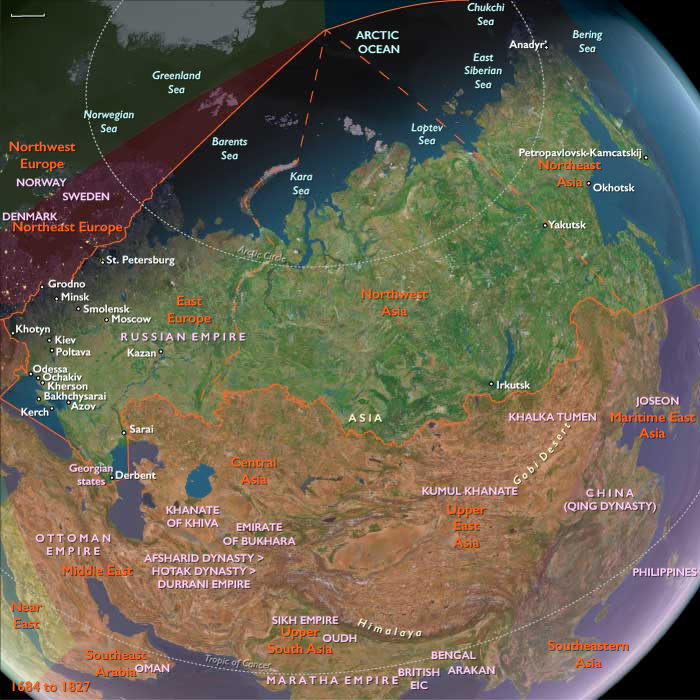
Northeastern Eurasia
View →Subregions