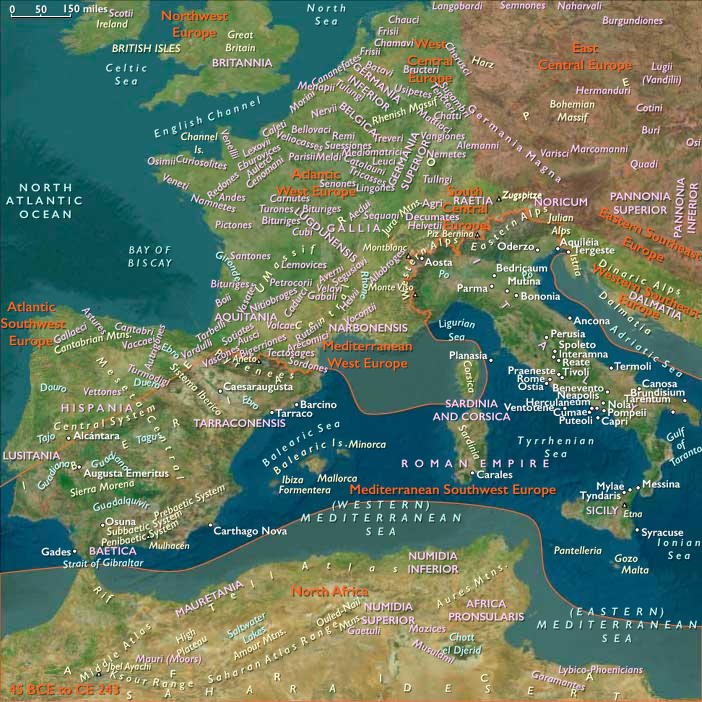
Mediterranean Southwest Europe (64–75 CE): Artistic Evolution…
64 CE to 75 CE
Mediterranean Southwest Europe (64–75 CE): Artistic Evolution and Nero’s Controversial Reign
The era 64–75 CE is distinguished by significant artistic developments, particularly in Roman wall decoration, and by profound political upheavals, notably during Nero's increasingly tumultuous reign and its dramatic aftermath.
Fourth Style Roman Wall Decoration
During the 60s CE, the "fourth style" of Roman wall decoration emerges, becoming highly fashionable. This artistic innovation integrates aspects of previous styles, retaining elements of the third style’s two-dimensional motifs while reintroducing depth through carefully arranged, narrow illusionistic windows in the upper wall zones. The new style showcases increased sophistication and complexity, reflecting the refined tastes and cultural sophistication prevalent during Nero's reign.
Great Fire of Rome and Nero’s Controversial Leadership
In 64 CE, the devastating Great Fire of Rome occurs, significantly reshaping the city and Nero’s legacy. While Nero reportedly organizes effective relief efforts, he also exploits the disaster to construct his extravagant palace complex, the Domus Aurea, intensifying public resentment. His lavish spending and extravagant lifestyle increasingly antagonize the political elite and general populace.
Political Instability and Nero’s Downfall
Nero’s reign grows progressively autocratic and unstable, culminating in widespread revolts and conspiracies, most notably the Pisonian conspiracy of 65 CE. Continued unrest and dissatisfaction eventually lead to Nero’s forced suicide in 68 CE, precipitating a turbulent political transition known as the "Year of the Four Emperors."
Year of the Four Emperors (69 CE)
Following Nero’s demise, Rome plunges into political chaos, witnessing rapid succession and violent struggles among four emperors—Galba, Otho, Vitellius, and finally Vespasian. This period underscores Rome’s vulnerability to internal strife and the inherent instability in its imperial succession system.
Vespasian’s Rise and Restoration of Stability
In 69 CE, Vespasian emerges victorious, establishing the Flavian dynasty and restoring stability after a year of intense conflict. His pragmatic governance, military competence, and administrative reforms help reestablish order and confidence throughout the Roman Empire, notably in Mediterranean Southwest Europe.
Cultural Continuity Amid Political Unrest
Despite political upheaval, cultural and artistic activities continue to flourish, exemplified by the fourth style wall decorations and ongoing developments in architecture, theater, and public life. These cultural pursuits reflect Rome’s resilience and adaptability amidst political and social challenges.
Legacy of the Era
The period 64–75 CE significantly impacts Roman society through both profound artistic achievements and major political upheavals. The transition from Nero’s controversial reign to the stabilizing rule of Vespasian underscores the empire’s complexity and resilience, leaving a lasting legacy on Rome's artistic and political landscapes.
Groups
Subjects
Regions
Southwest Europe
View →Subregions