
Mediterranean West Europe (1252 – 1395 CE): …
Years: 1252 - 1395
Mediterranean West Europe (1252 – 1395 CE): Avignon Papacy, Angevin Provence, and Rhone–Mediterranean Finance
Geographic and Environmental Context
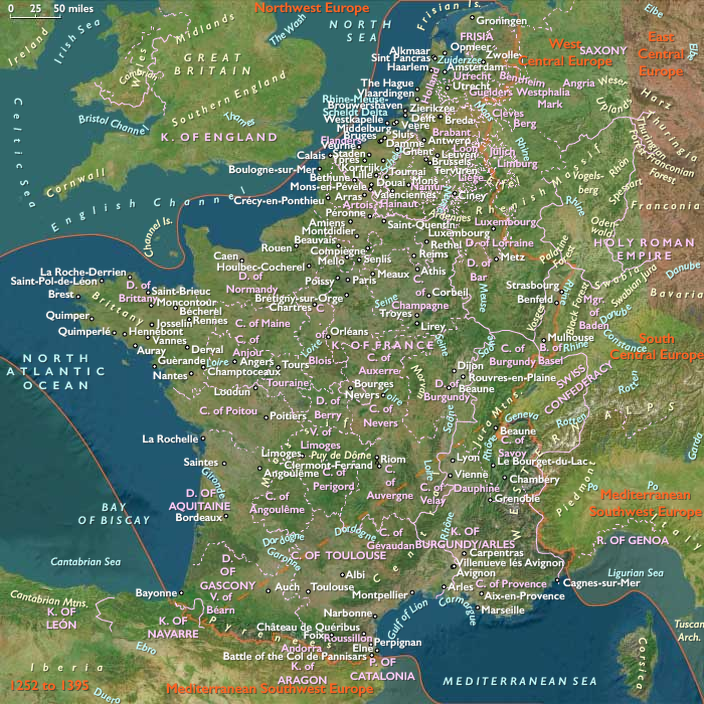
Mediterranean West Europe includes southern France (from the Rhône valley to the Pyrenees, plus Languedoc, Provence, and Roussillon), Monaco, and the island of Corsica.
-
Anchors: the Rhône Valley (Avignon Papal Palace, Lyon fairs, Arles/Marseille trade), the southern Jura corridors toward Burgundy and Swiss Confederation, the Provençal littoral (Marseille, Toulon, Nice, Monaco), the Languedoc plain (Narbonne, Montpellier, Carcassonne, Toulouse’s southern marches), the Roussillon/Catalan marches (Perpignan, Pyrenean passes to Aragon/Andorra), and Corsica under Genoese authority but contested by Aragon.
Climate and Environmental Shifts
-
Little Ice Age onset (~1300): cooler winters, wetter harvests; viticulture resilient, cereals stressed.
-
Black Death (1348–1352): devastated ports like Marseille and Montpellier; Lyon recovered faster due to inland trade.
Societies and Political Developments
-
Avignon Papacy (1309–1377): Popes resided in Avignon, transforming the Rhône valley into Christendom’s financial center.
-
Great Schism (1378): divided allegiance between Avignon and Rome, politicizing Provençal towns.
-
Provence: Angevin dynasty (counts also kings of Naples) ruled.
-
Roussillon integrated with Crown of Aragon.
-
Lyon hosted church councils, grew as financial hub, controlling fairs and credit.
-
Southern Jura linked Rhône corridor to Swiss Confederation and Burgundy.
-
Corsica: Genoese control consolidated, though Aragonese claimed suzerainty.
-
Monaco: seized by Grimaldi family (1297), developing as fortress–port under Genoese shadow.
Economy and Trade
-
Rhone trade: Lyon’s fairs tied north Europe to Mediterranean goods.
-
Ports (Marseille, Montpellier, Narbonne, Nice): exported wine, salt, wool; imported Levantine silks, spices, alum.
-
Agriculture: vineyards, olives, cereals in Provence/Languedoc; Jura dairying.
-
Finance: Papal Avignon drew Lombard and Provençal bankers; Marseille shipyards thrived.
Belief and Symbolism
-
Catholic orthodoxy: Avignon Papacy emphasized papal authority.
-
Mendicant friars: Franciscans and Dominicans flourished in towns.
-
Schism: divided local piety; civic cults of saints anchored resilience during plague.
Long-Term Significance
By 1395, Mediterranean West Europe was a papal and mercantile hinge:
-
Avignon symbolized papal finance and conflict.
-
Lyon controlled Rhône trade and fairs.
-
Marseille, Montpellier, Narbonne remained Mediterranean entrepôts.
-
Corsica tied to Genoa, Roussillon to Aragon, and Provence to Angevin Naples.
Despite plague and war, the region bound northern Europe, Iberia, and Italy into a shared economic system.

Mediterranean West Europe (with civilization) ©2024-25 Electric Prism, Inc. All rights reserved.
People
Groups
- Corsica, Medieval
- Toulouse, County of
- Aquitaine, (Angevin) Duchy of
- France, (Capetian) Kingdom of
- Pisa, (first) Republic of
- Savoy, County of
- Genoa, (Most Serene) Republic of
- Arles, Kingdom of
- Christians, Roman Catholic
- Provence, County of
- Aragón, Kingdom of
- England, (Plantagenet, Angevin) Kingdom of
- Aragon, Crown of
- Naples, Angevin Kingdom of
- Comtat Venaissin (Papal enclave)
- Monaco, Principality of
- Comtat Venaissin (Papal enclave)
- France, (Valois) Kingdom of
- Aquitaine, or Guyenne, (contested) Duchy of
Topics
- Little Ice Age, Warm Phase I
- Little Ice Age (LIA)
- Avignon Papacy
- Hundred Years' War
- Black Death, or Great Plague
- Tuchin revolt
Commodoties
- Glass
- Colorants
- Domestic animals
- Grains and produce
- Fibers
- Textiles
- Salt
- Beer, wine, and spirits
- Industrial chemicals
Subjects
- Commerce
- Architecture
- Watercraft
- Painting and Drawing
- Environment
- Public health
- Conflict
- Mayhem
- Faith
- Government
- Scholarship
- Custom and Law
- Catastrophe
Regions
Subregions

Years: 1252 - 1395
Mediterranean West Europe (with civilization) ©2024-25 Electric Prism, Inc. All rights reserved.
People
Groups
- Corsica, Medieval
- Toulouse, County of
- Aquitaine, (Angevin) Duchy of
- France, (Capetian) Kingdom of
- Pisa, (first) Republic of
- Savoy, County of
- Genoa, (Most Serene) Republic of
- Arles, Kingdom of
- Christians, Roman Catholic
- Provence, County of
- Aragón, Kingdom of
- England, (Plantagenet, Angevin) Kingdom of
- Aragon, Crown of
- Naples, Angevin Kingdom of
- Comtat Venaissin (Papal enclave)
- Monaco, Principality of
- Comtat Venaissin (Papal enclave)
- France, (Valois) Kingdom of
- Aquitaine, or Guyenne, (contested) Duchy of
Topics
- Little Ice Age, Warm Phase I
- Little Ice Age (LIA)
- Avignon Papacy
- Hundred Years' War
- Black Death, or Great Plague
- Tuchin revolt
Commodoties
- Glass
- Colorants
- Domestic animals
- Grains and produce
- Fibers
- Textiles
- Salt
- Beer, wine, and spirits
- Industrial chemicals
Subjects
- Commerce
- Architecture
- Watercraft
- Painting and Drawing
- Environment
- Public health
- Conflict
- Mayhem
- Faith
- Government
- Scholarship
- Custom and Law
- Catastrophe
Regions
Subregions