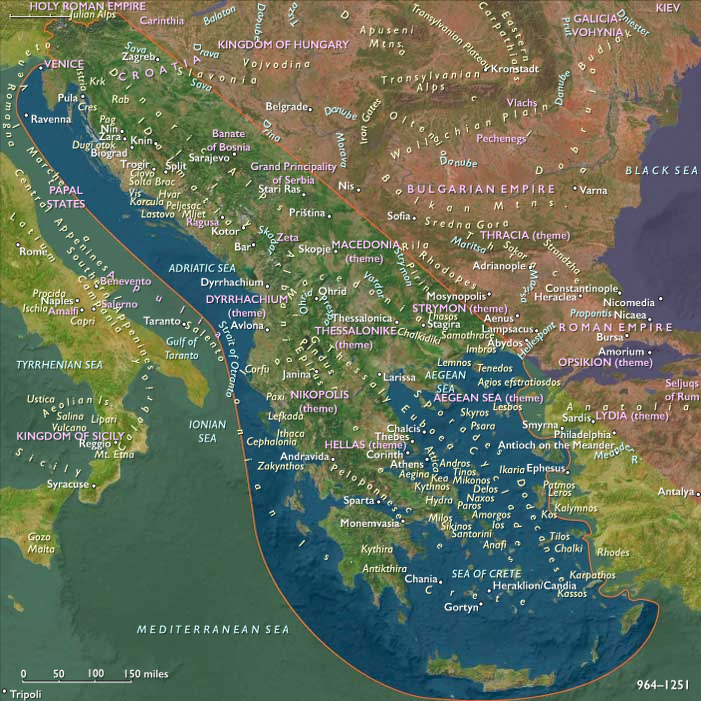
Croatia and Venice struggle to dominate Dalmatia…
964 CE to 1107 CE
After the Great Schism of 1054 splits the Roman and Byzantine churches, Normans (probably with papal support) besiege imperial cities in Dalmatia.
In 1075 a papal legate crowns Dmitrije Zvonimir (1076-89) king of Croatia.
A faction of nobles contesting the succession after the death of Zvonimir offers the Croatian throne to King Laszlo I of Hungary.
In 1091 Laszlo accepts, and in 1094 he founds the Zagreb bishopric, which later becomes the ecclesiastical center of Croatia.
Another Hungarian king, Kalman, crushes opposition after the death of Laszlo and wins the crown of Dalmatia and Croatia in 1102.
The crowning of Kalman forges a link between the Croatian and Hungarian crowns that will last until the end of the First World War.
Croats have maintained for centuries that Croatia remained a sovereign state despite the voluntary union of the two crowns, but Hungarians claim that Hungary annexed Croatia outright in 1102.
In either case, Hungarian culture will permeate Croatia, the Croatian-Hungarian border will shift often, and at times Hungary will treat Croatia as a vassal state.
Croatia, however, has its own local governor, or ban; a privileged landowning nobility; and an assembly of nobles, the Sabor.
Locations
Groups
Hungarian people
View →
Slavs, South
View →
Christianity, Chalcedonian
View →
Greeks, Medieval (Byzantines)
View →
Venice, Duchy of
View →
Croats (South Slavs)
View →
Dalmatia, Theme of
View →
Hungary, Principality of
View →
Normans
View →
Hungary, Kingdom of
View →
Christians, Roman Catholic
View →
Christians, Eastern Orthodox
View →
Capua, Norman Principality of
View →
Apulia, Norman Duchy of
View →
Dalmatia region
View →
Croatia, Kingdom of
View →
Italians (Latins)
View →
Regions
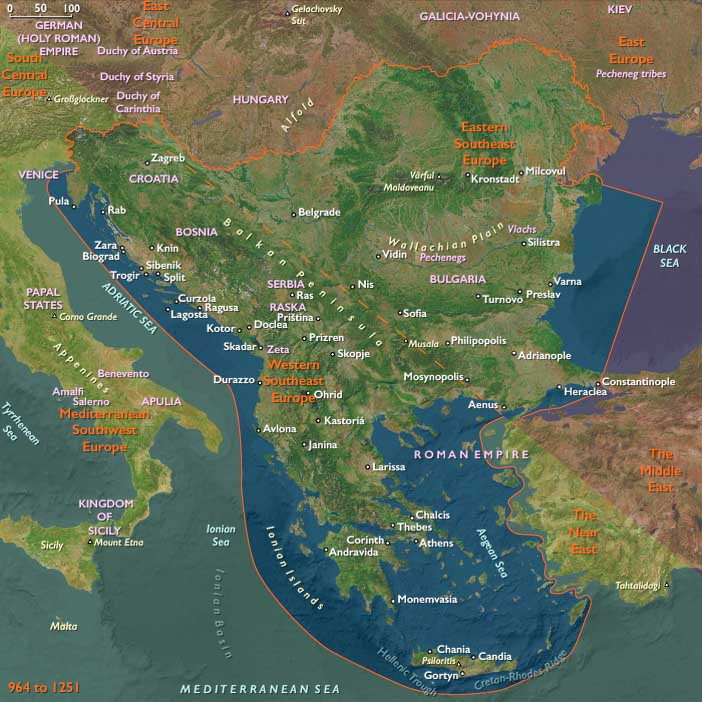
Southeast Europe
View →Subregions