Event
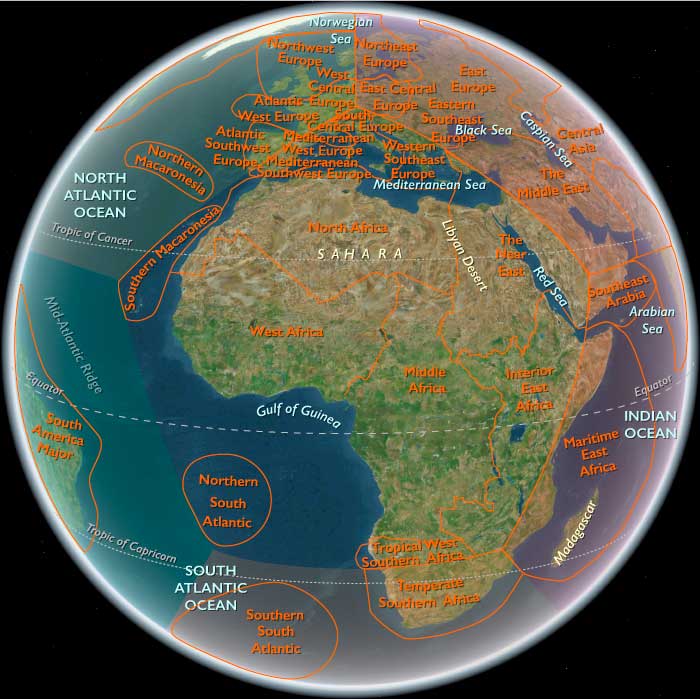
North Africa (333–190 BCE) The Punic Wars,…
North Africa (333–190 BCE)
The Punic Wars, Numidian Ascendancy, and the Reorganization of Mediterranean North Africa
Carthage and the Limits of Maritime Empire
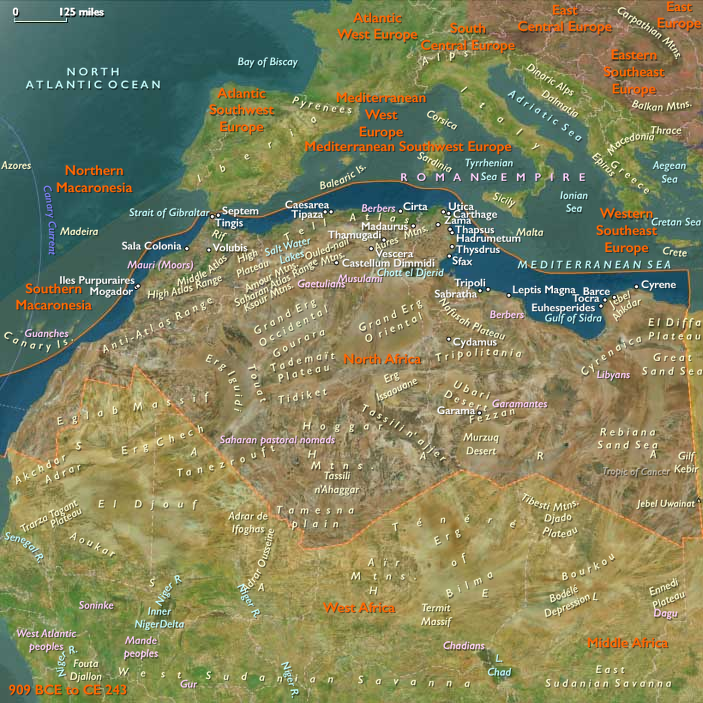
Between 333 and 190 BCE, Carthage reached both the height of its political influence and the beginning of its long decline. Its commercial network continued to dominate much of the western Mediterranean, linking North African agriculture with ports throughout Iberia, Sardinia, Sicily, and the central Mediterranean. Grain, olive oil, wine, livestock, timber, metals, ceramics, textiles, and manufactured goods moved through an increasingly sophisticated maritime economy centered on Carthage and its associated ports.
Yet the very scale of this interconnected system drew Carthage into prolonged conflict with the expanding Roman Republic. The Punic Wars transformed the western Mediterranean from a contest between maritime powers into a struggle over the organization of entire regional economies. While naval warfare disrupted commercial routes and military campaigns devastated parts of Sicily and Iberia, the productive agricultural landscapes of North Africa remained the essential foundation upon which Carthage attempted to sustain its recovery.
The Rise of Numidia
The most significant political development within North Africa itself was the emergence of Numidia as a major territorial kingdom. During the conflict between Rome and Carthage, the eastern and western Numidian peoples increasingly coalesced under the leadership of Masinissa, whose alliance with Rome reshaped the political balance of the Maghreb.
Numidian authority rested upon fertile uplands, extensive grazing lands, and highly mobile cavalry capable of operating across mountain, steppe, and cultivated landscapes. Rather than simply replacing tribal institutions, the kingdom integrated regional confederations into a broader political framework while preserving considerable local autonomy. Permanent agriculture expanded alongside pastoral production, strengthening both royal authority and rural prosperity.
By the close of the period, Numidia had become the largest indigenous kingdom ever established in the Maghreb, fundamentally altering the relationship between coastal cities and the inland world.
Carthage After Zama
The defeat of Hannibal at the Battle of Zama in 202 BCE marked the end of Carthaginian military predominance but not the end of Carthaginian society. Roman restrictions curtailed overseas expansion and naval power, yet the agricultural wealth of the Carthaginian hinterland proved remarkably resilient.
Farmers, merchants, artisans, and landowners redirected their efforts toward intensive cultivation, local manufacture, and commercial recovery. Olive groves, vineyards, orchards, grain fields, and market gardens continued to sustain one of the Mediterranean's richest agricultural regions, demonstrating that North Africa's prosperity rested ultimately upon its environmental productivity rather than military conquest.
Cyrenaica Under the Ptolemies
In the east, Cyrenaica became firmly integrated into the Ptolemaic kingdom centered on Alexandria. Although governed within a larger Hellenistic monarchy, the cities of Cyrene, Apollonia, Barce, Euhesperides, and Teuchira retained their distinctive civic traditions and continued to prosper through agriculture and maritime commerce.
The fertile uplands of the Jebel Akhdar remained among North Africa's most productive environments. Grain, wine, livestock, horses, and silphium supported regional prosperity, while intellectual life continued to flourish through schools, physicians, and philosophers whose influence extended across the Hellenistic Mediterranean.
Mauretania and the Western Maghreb
Farther west, the communities of present-day Morocco and western Algeria experienced increasing political consolidation. Although still organized through regional confederations and local rulers rather than a unified kingdom, the foundations of Mauretania became increasingly visible as Atlantic, Mediterranean, and inland exchange networks grew more closely connected.
Mountain agriculture, seasonal pastoralism, forestry, fishing, and coastal commerce together supported an increasingly integrated western Maghreb whose political importance would continue to grow during the following centuries.
The Garamantes and Expanding Desert Networks
The Garamantes reached the height of their regional influence during this period. Their oasis settlements in Fezzan supported growing populations through sophisticated groundwater management, while caravan routes became more regular and geographically extensive.
Garama functioned as an important political and commercial center linking Tripolitania with Saharan communities farther south. Although the later medieval trans-Saharan commercial system had not yet developed, increasingly reliable desert routes facilitated the exchange of salt, livestock, metals, textiles, manufactured goods, and other commodities across ecological zones that had long remained interconnected.
Landscapes of Production and Mobility
Across North Africa, environmental systems continued to determine political possibilities. Mediterranean plains remained the principal grain-producing regions; mountain valleys combined orchards, woodland, and livestock; steppe communities maintained seasonal mobility; and oasis settlements transformed limited water into productive agricultural landscapes.
Roads, caravan tracks, coastal shipping lanes, and mountain passes increasingly connected these complementary environments. Political authority shifted dramatically during the age, but the underlying systems of production, movement, and exchange remained remarkably resilient.
Religious and Cultural Landscapes
Punic religious traditions continued to shape Carthaginian territories even as Hellenistic culture flourished in Cyrenaica and indigenous Amazigh practices remained central throughout the uplands, steppe, and desert. Sanctuaries dedicated to Baal Hammon and Tanit remained prominent in Punic cities, while Greek temples, civic festivals, and philosophical traditions characterized the eastern cities.
Throughout the Maghreb, religious life remained embedded within local landscapes. Sacred mountains, springs, caves, ancestral burial grounds, and community sanctuaries continued to anchor Amazigh cultural life despite the growing influence of Mediterranean urban civilizations.
Legacy of the Age
By 190 BCE, North Africa had undergone its first great geopolitical transformation. Carthage had lost its maritime supremacy but retained its extraordinary agricultural wealth, while Numidia emerged as the dominant indigenous kingdom of the Maghreb. Cyrenaica had become an established Hellenistic province, Mauretania continued its gradual political consolidation, and the Garamantes presided over the ancient Sahara's most sophisticated oasis network. The balance of power had shifted decisively inland, foreshadowing the Roman reorganization that would soon integrate nearly all of Mediterranean North Africa into a single imperial system.

-
{# Image navigates to the detail page; the magnifying-glass chip is the only Fancybox lightbox trigger (kept a separate sibling — anchors can't nest). #}
 The Middle of The Earth
World
The Middle of The Earth
World
-
{# Image navigates to the detail page; the magnifying-glass chip is the only Fancybox lightbox trigger (kept a separate sibling — anchors can't nest). #}
 North Africa
Region
North Africa
Region
-
{# Image navigates to the detail page; the magnifying-glass chip is the only Fancybox lightbox trigger (kept a separate sibling — anchors can't nest). #}
 North Africa
Subregion
North Africa
Subregion