
North Africa (21–10 BCE) Roman Provincial …
Years: 21BCE - 10BCE
North Africa (21–10 BCE)
Roman Provincial Enhancement, Mauretanian Cultural Flourishing, Cyrenaic Stability, Berber Integration, and Saharan Connectivity
Roman Governance and Economic Consolidation
Between 21 and 10 BCE, Roman administrative control over Africa Proconsularis becomes increasingly robust, driven by enhanced investments in infrastructure, agricultural improvements, and urbanization. Cities such as Utica continue to thrive as central administrative and commercial hubs, deeply embedding North Africa within Rome’s expansive Mediterranean economic and administrative network.
Numidia: Continued Stability and Economic Growth
Numidia sustains its integration as a key Roman province, experiencing continued economic stability and growth. Structured Roman governance facilitates increased agricultural productivity, efficient regional trade, and infrastructure enhancements. Numidian society maintains its unique cultural identity within the broader Roman framework, contributing significantly to provincial cohesion and stability.
Mauretania: Cultural Prosperity under Juba II and Cleopatra Selene
Under the cultured and scholarly leadership of King Juba II, Mauretania continues its remarkable cultural and economic flourishing. Initially restored as the King of Numidia (29–27 BCE) by Augustus, Juba's loyalty and military service, notably in Spain, earn him the kingship of Mauretania. Augustus further solidifies Juba's rule by arranging his marriage between 26 BCE and 20 BCE to Cleopatra Selene II, daughter of Cleopatra VII, providing her with a substantial dowry and appointing her queen.
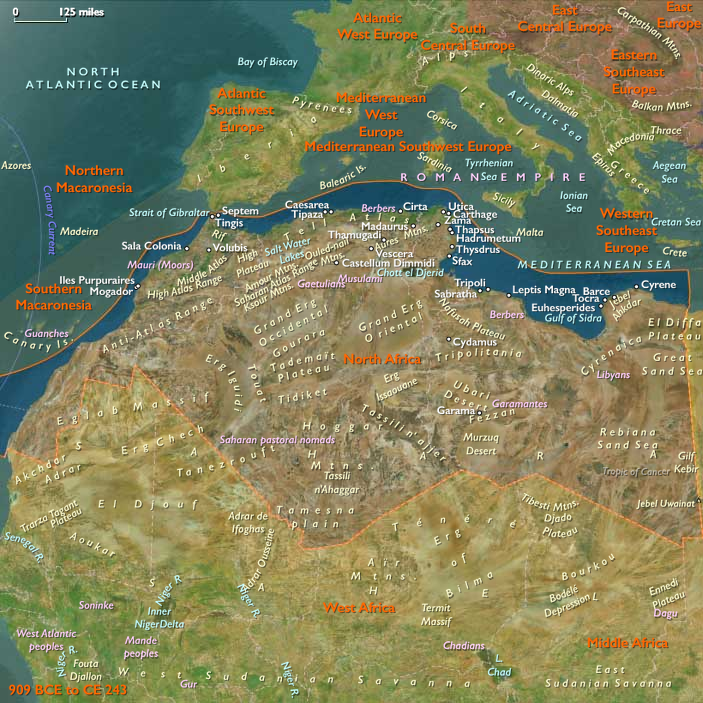
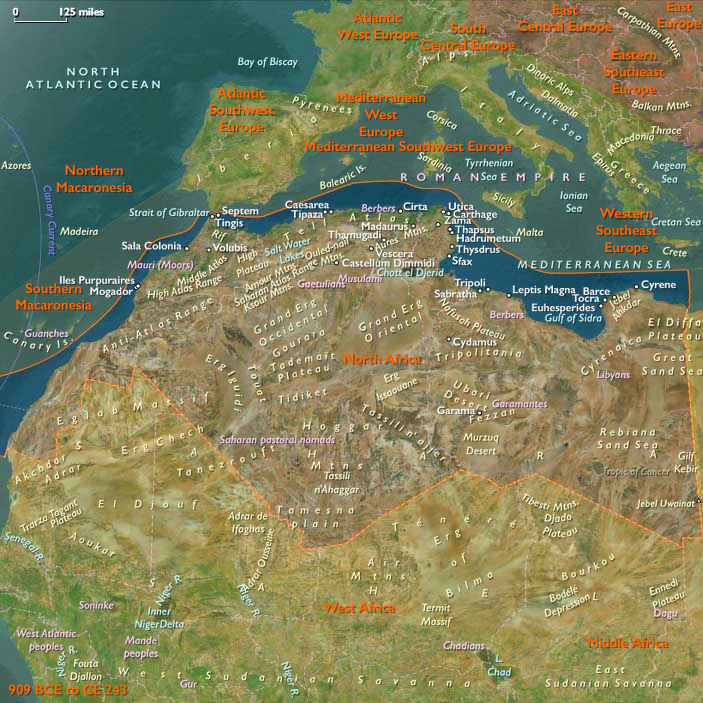
Unable to return to Numidia due to its provincialization in 46 BCE, Juba and Cleopatra Selene establish their residence in Mauretania, an unorganized territory requiring Roman oversight. They rename their capital Caesarea (modern Cherchell, Algeria) in honor of Augustus. The city, strategically located along vital Atlantic and Mediterranean trade routes, undergoes extensive cultural enhancement. Juba embellishes Caesarea and another city, Volubilis, with baths, theaters, and sophisticated architectural and sculptural projects combining Egyptian, Greek, and Roman styles.
Cleopatra Selene significantly influences Mauretanian policy, guiding the kingdom toward remarkable prosperity. The fertile lands produce valuable commodities such as grain and olive oil, which are exported extensively across the Mediterranean, contributing to Mauretania’s wealth and prominence as a vital client-kingdom within Rome's geopolitical landscape.
Cyrenaica: Sustained Economic and Intellectual Prosperity
Cyrenaica maintains its robust economic performance under stable governance. The Greek Pentapolis—Cyrene, Barce (Al Marj), Euhesperides (Benghazi), Teuchira (Tukrah), and Apollonia (Susah)—continues thriving economically, particularly through sustained trade in grain, wine, wool, livestock, and the highly valued medicinal herb Silphium.
Cyrene remains an esteemed center of learning, continually attracting prominent scholars, philosophers, and medical practitioners. Its educational, medical, and cultural institutions persist as influential nodes within broader Mediterranean intellectual and cultural networks.
Berber Communities: Continued Integration and Cultural Resilience
Berber communities remain deeply integrated economically within Roman and broader Mediterranean trade networks. Coastal economic hubs, particularly Oea (Tripoli), maintain vibrant trade activities, indirectly supporting inland Berber populations.
Inland Berber tribes sustain traditional governance and cultural practices, benefiting from thriving coastal economic exchanges. This ongoing interconnection ensures sustained regional stability, underpinning Berber resilience and economic continuity.
Garamantes and Saharan Trade Networks
The Garamantes persist as pivotal facilitators of trans-Saharan trade, significantly contributing to regional prosperity through extensive commerce. Their advanced agricultural techniques sustain major Saharan settlements, reinforcing the importance of their role in connecting sub-Saharan and Mediterranean markets through trade in gold, salt, ivory, slaves, and exotic goods.
Musulami, Gaetulians, Mauri (Moors), and Saharan Pastoral Nomads
The Musulami, situated between Numidia and the Sahara, actively participate in agriculture and pastoralism, fostering continued commercial and cultural interactions with Roman and Numidian communities.
The Gaetulians remain influential through their semi-nomadic pastoral lifestyle, significantly facilitating trade and cultural exchanges across inland and coastal territories.
The Mauri (Moors), inhabiting western regions adjacent to Mauretania, sustain their regional influence through ongoing diplomatic and commercial activities, contributing notably to local stability and economic vitality.
Saharan pastoral nomads persist as essential connectors of varied ecological and economic zones. Their transhumant practices enhance trade, cultural exchange, and knowledge dissemination, further strengthening North Africa’s interconnected communities.
Cultural Syncretism and Interaction
Continued interactions among Berber, Roman, Greek, Garamantian, Musulami, Gaetulian, Mauri, and Saharan pastoral populations enrich regional traditions in crafts, art, and artisanal production. Religious syncretism remains vibrant, harmoniously integrating indigenous beliefs with Roman, Greek, Phoenician, and Saharan practices, contributing to North Africa’s diverse cultural richness.
Stable Foundations and Sustained Prosperity
By 10 BCE, North Africa demonstrates continued prosperity and stability through strengthened Roman provincial governance, Juba II and Cleopatra Selene’s culturally vibrant Mauretania, sustained Cyrenaic prosperity, resilient Berber communities, and dynamic Saharan trade and pastoral networks. Collectively, these interconnected factors secure North Africa's long-term prominence within the evolving Mediterranean geopolitical context.
People
Groups
- Berber people (also called Amazigh people or Imazighen, "free men", singular Amazigh)
- Garamantes
- Gaetuli
- Tripolitania (Roman province)
- Africa proconsularis (Roman province)
- Mauretania, Kingdom of
- Crete and Cyrenaica (Roman province)
- Roman Principate (Rome)
Commodoties
- Fish and game
- Gem materials
- Grains and produce
- Fibers
- Textiles
- Ceramics
- Strategic metals
- Salt
- Slaves
- Beer, wine, and spirits
Subjects
- Commerce
- Architecture
- Sculpture
- Faith
- Government
- Scholarship
- Custom and Law
- Metallurgy
- Medicine
- Philosophy and logic
Regions
Subregions
Years: 21BCE - 10BCE
People
Groups
- Berber people (also called Amazigh people or Imazighen, "free men", singular Amazigh)
- Garamantes
- Gaetuli
- Tripolitania (Roman province)
- Africa proconsularis (Roman province)
- Mauretania, Kingdom of
- Crete and Cyrenaica (Roman province)
- Roman Principate (Rome)
Commodoties
- Fish and game
- Gem materials
- Grains and produce
- Fibers
- Textiles
- Ceramics
- Strategic metals
- Salt
- Slaves
- Beer, wine, and spirits
Subjects
- Commerce
- Architecture
- Sculpture
- Faith
- Government
- Scholarship
- Custom and Law
- Metallurgy
- Medicine
- Philosophy and logic
Regions
Subregions