North Africa (501–490 BCE) Carthaginian Influence, Cyrenaic…
501 BCE to 490 BCE
North Africa (501–490 BCE)
Carthaginian Influence, Cyrenaic Stability, and Maritime Exploration
Carthaginian Maritime Expansion and Consolidation
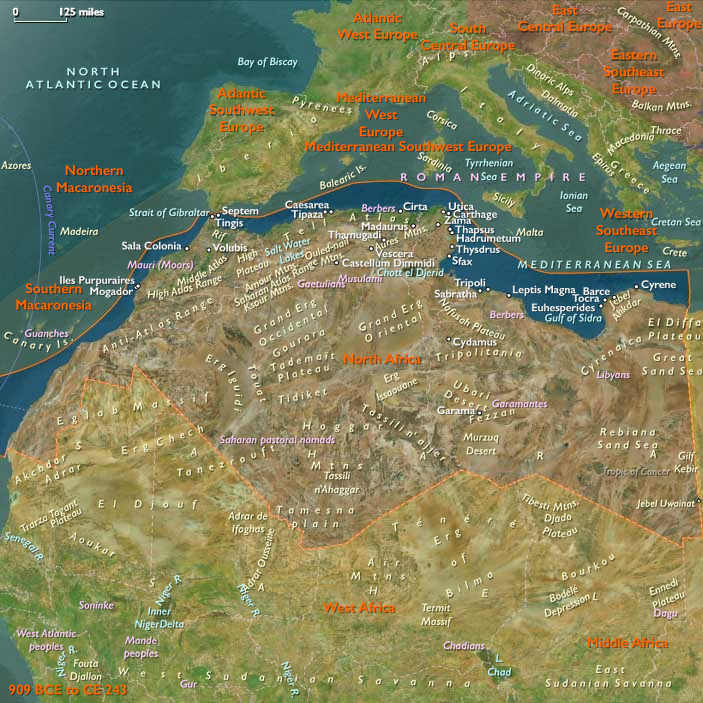
From 501 to 490 BCE, Carthage maintains robust expansion and consolidation across the Western Mediterranean, solidifying control over strategic territories in western Sicily, Sardinia, Iberia, and the Balearic Islands. Under continued Magonid leadership, the city's naval power and expansive trade network ensure ongoing economic prosperity and regional political influence.
Significantly, during this period, Carthage launches an ambitious expedition to explore the west coast of Africa. According to Herodotus, between 500 and 480 BCE, the navigator Hanno leads sixty ships carrying thirty thousand men and women, aiming to colonize and explore the northwestern African coast. Passing through the Straits of Gibraltar, Hanno founds or revitalizes seven colonies along Morocco's Atlantic coast, including a significant dye-manufacturing settlement at Mogador, utilizing local marine gastropods. This exploration likely aims to establish trade routes and consolidate access to valuable markets, notably the gold trade.
Ongoing Diplomatic Dynamics and Military Challenges
Diplomatic relations with regional powers remain strategically vital. In 509 BCE, Carthage notably secures a significant treaty with the fledgling Roman Republic, clearly dividing commercial and territorial interests and affirming Carthage's influence over Sicily, Sardinia, and Emporia in Africa. The city's strategic alliances extend across Sicily with Greek, Etruscan, and Punic cities.
Carthage simultaneously contends militarily with Greek incursions, reflecting an ongoing conflict primarily centered on Sicily. Historical records detail repeated confrontations, including battles in 580 BCE, 510 BCE, and notably a war resulting in the destruction of the city Heraclea. The Spartan prince Dorieus, attempting to colonize near Leptis Magna in Libya and subsequently in Sicily around 510 BCE, is defeated by Carthaginian forces. Gelo, the ruler of Gela and Syracuse, prominently participates in these conflicts, negotiating terms beneficial to Greek interests.
Cyrene’s Continued Economic Prosperity
Cyrene continues thriving economically and culturally, with exports such as grain, fruit, horses, and the medicinal plant Silphium fueling sustained wealth and extensive temple-building projects. The city's daughter cities—Barce (al-Marj), Taucheira (Tukrah), and Euhesperides (Benghazi)—collectively known as the Pentapolis, independently prosper and significantly enhance regional stability and economic vibrancy.
Berber Economic and Cultural Integration
Coastal Berber communities remain deeply integrated within Carthaginian trade networks, adopting sophisticated Phoenician agricultural methods, maritime techniques, and artisanal crafts. This economic integration bolsters regional prosperity while preserving cultural distinctiveness. Inland Berber populations retain substantial autonomy, benefiting indirectly from coastal trade expansion and maintaining traditional societal structures.
Dynamic Cultural Exchange and Syncretism
Cultural interactions among Berber, Carthaginian, and Greek communities flourish dynamically, producing hybrid artistic and artisanal expressions in pottery, textiles, and metalwork. Religious practices increasingly syncretize, blending indigenous Berber beliefs with Phoenician and Greek traditions, contributing to the region’s cultural richness and diversity.
Foundation for Continued Regional Influence
By 490 BCE, North Africa demonstrates sustained economic prosperity and political stability, underscored by Carthage’s maritime dominance, Cyrene’s robust economy, and integrated Berber communities. Diplomatic and military strategies effectively manage regional conflicts and secure trade routes, providing an enduring foundation for the region's continued geopolitical influence and cultural enrichment in the broader Mediterranean.
Groups
Commodities
Regions
North Africa
View →Subregions