North Africa (64–75 CE) Roman Expansion, Provincial…
64 CE to 75 CE
North Africa (64–75 CE)
Roman Expansion, Provincial Stability, Mauretanian Prosperity, Cyrenaic Continuity, and Saharan Integration
Roman Administration and Economic Development
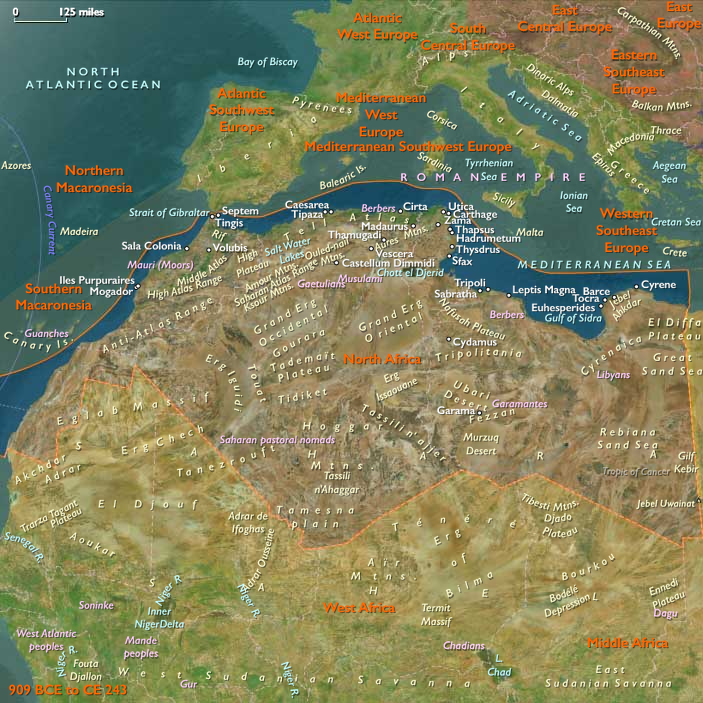
From 64 to 75 CE, Roman authority continues to consolidate administrative effectiveness and economic prosperity across Africa Proconsularis. Investment in infrastructure, agricultural improvements, and urban expansions further enhances regional stability. Urban centers such as Utica, Leptis Magna, and Caesarea (Cherchell) remain crucial hubs of commerce, benefiting from robust trade networks within the broader Roman Empire.
Numidia: Continued Economic Vitality and Cultural Integration
Numidia sustains economic growth under stable Roman governance. Agricultural productivity, trade, and infrastructure projects continue to flourish, enhancing provincial prosperity. Numidian society maintains its distinctive cultural heritage alongside Roman administrative structures, contributing significantly to North Africa's socio-economic integration and stability.
Mauretania: Economic Prosperity and Cultural Flourishing
Mauretania continues to thrive economically and culturally, fully integrated into the Roman provincial framework. Caesarea maintains its prominence as a leading economic and cultural center, benefiting from ongoing infrastructure development and vibrant trade in grain, olive oil, and luxury commodities. This sustained economic activity underscores Mauretania’s integral role within the Roman economic landscape.
Cyrenaica: Stability and Intellectual Continuity
Cyrenaica remains economically and culturally vibrant. The Greek Pentapolis—Cyrene, Barce (Al Marj), Euhesperides (Benghazi), Teuchira (Tukrah), and Apollonia (Susah)—continues to prosper through sustained commerce, notably in grain, wine, wool, and livestock. Cyrene's reputation as an intellectual and scholarly hub continues, drawing prominent philosophers and medical experts.
Berber Communities: Economic Engagement and Cultural Resilience
Berber communities continue their active involvement in regional commerce, particularly through coastal trade centers such as Oea (Tripoli). Inland Berber groups benefit indirectly from vibrant coastal commerce, maintaining traditional governance structures and cultural practices. This enduring economic and cultural relationship ensures regional stability and resilience.
Garamantes: Continued Strategic Influence in Saharan Trade
The Garamantes maintain their central role in facilitating trans-Saharan commerce, effectively linking sub-Saharan Africa with Mediterranean markets. Their advanced agricultural systems and efficient management of Saharan caravan routes reinforce regional prosperity and cultural exchanges.
Mauri (Moors) and Saharan Pastoral Nomads
The Mauri (Moors) uphold their influential status through diplomatic initiatives and ongoing commercial activities, supporting sustained stability and prosperity in western North Africa.
Saharan pastoral nomads persist as crucial connectors, promoting economic exchanges, cultural interactions, and the dissemination of knowledge across diverse regions, strengthening North Africa's interconnected communities.
Cultural Syncretism and Dynamic Interaction
Continuous cultural interactions among Berber, Roman, Greek, Garamantian, Musulami, Gaetulian, Mauri, and Saharan pastoral communities enhance regional traditions in arts, crafts, and religious practices. Religious syncretism continues to flourish, seamlessly blending indigenous Berber beliefs with Roman, Greek, Phoenician, and Saharan spiritual customs, significantly enriching North Africa’s diverse cultural fabric.
Foundations for Long-term Stability and Prosperity
By 75 CE, North Africa maintains robust economic prosperity and stability, supported by effective Roman provincial governance, sustained vitality in Mauretania and Cyrenaica, resilient Berber communities, and dynamic Saharan trade networks. These interconnected factors affirm North Africa’s ongoing strategic significance within the Mediterranean geopolitical context.
Groups
Commodities
Subjects
Regions
North Africa
View →Subregions