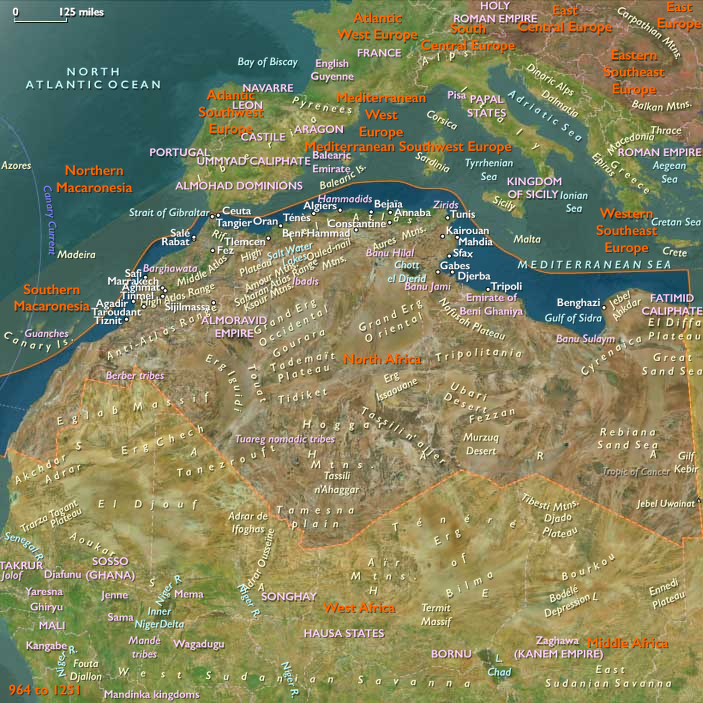
North Africa (964 – 1107 CE): Fatimid…
964 CE to 1107 CE
North Africa (964 – 1107 CE): Fatimid Zenith, Zirids, and Almoravid Expansion
Geographic and Environmental Context
North Africa includes the Maghreb littoral and inland from modern Morocco through Algeria, Tunisia, and Libya (west of Egypt and the Nile). It also includes Western Sahara.
-
Anchors: the Atlas Mountains, Tell coastlands, Sahara fringes, and Ifriqiya (Tunisia–eastern Algeria–western Libya).
Climate and Environmental Shifts
-
Continued warm conditions, with Mediterranean agriculture thriving.
-
Sahara margins remained crucial to caravan networks.
Societies and Political Developments
-
Fatimids moved capital from Mahdia to Cairo (969), leaving Ifriqiya to Zirid vassals (972).
-
Zirids later defied Fatimids, reasserting Sunni orthodoxy (1040s).
-
Fatimids retaliated by supporting Hilalian Bedouin invasions (1050s), devastating agriculture in Tunisia.
-
Almoravids (1040s–1140s), Sanhaja Berbers, founded Marrakesh and expanded across Morocco, western Algeria, and into al-Andalus.
Economy and Trade
-
Agriculture: olives, wheat, and irrigation in Morocco and coastal Algeria; decline in Tunisia post-Hilalian invasion.
-
Trans-Saharan trade: Almoravids secured gold and slave routes from Ghana to Morocco.
-
Mediterranean trade: Sicily (Kalbids under Fatimids) integrated into Ifriqiya networks.
Belief and Symbolism
-
Fatimid Ismailism flourished in Egypt but weakened in Maghreb.
-
Sunni revival under Zirids and Almoravids; Maliki law entrenched.
-
Islamic scholarship: Marrakesh and Kairouan thrived.
Long-Term Significance
By 1107, the Maghreb was dominated by Almoravids in the west and Zirids in the east, with Hilalian Bedouin reshaping demographics and ecology in central North Africa.
Images

North Africa (with civilization) ©2024-25 Electric Prism, Inc. All rights reserved.
Groups
Topics
Commodities
Subjects
Regions
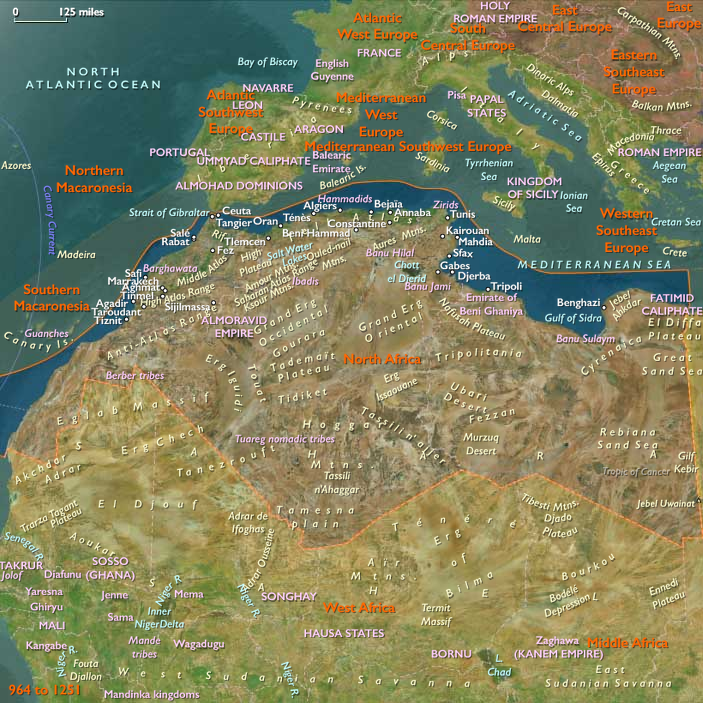
North Africa
View →Subregions