Polynesia (820 – 963 CE): Irrigated Valleys,…
820 CE to 963 CE
Polynesia (820 – 963 CE): Irrigated Valleys, Sacred Voyages, and the Web of Islands
Geographic and Environmental Context
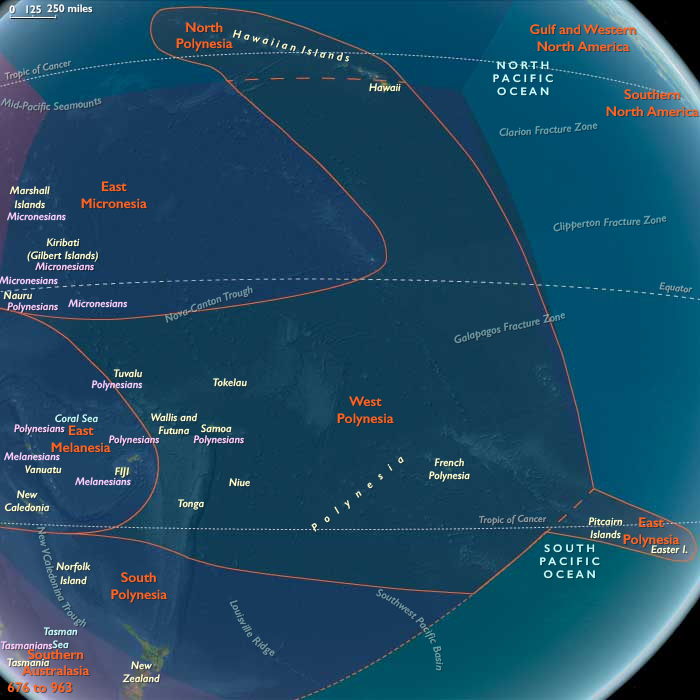
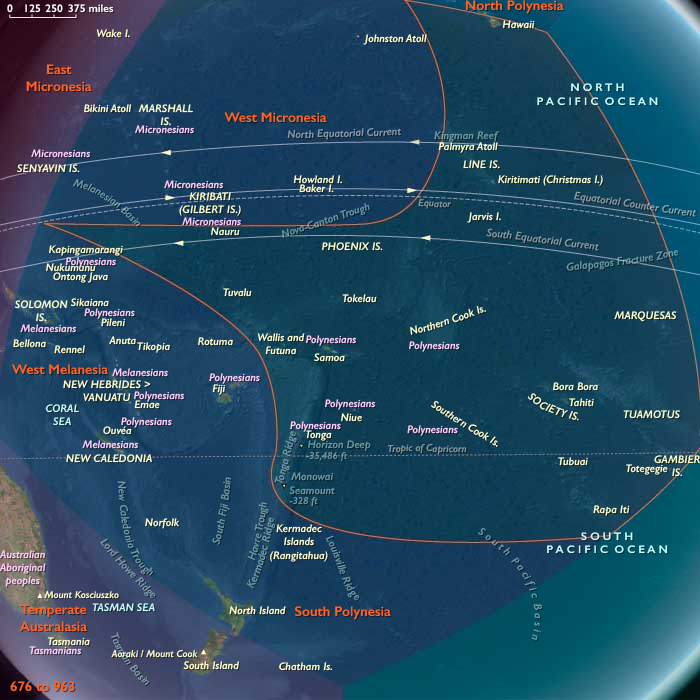
During the Upper Late Medieval Age, Polynesia spanned an immense oceanic triangle reaching from Hawaiʻi in the north, through Tonga and Samoa in the west, to Rapa Nui and the Pitcairn Islands in the east.
This was an age of settlement expansion and inter-island consolidation, when distinct regional systems—North, West, and East Polynesia—flourished or emerged, yet all remained bound by shared traditions of voyaging, agriculture, and divine chieftainship.
-
North Polynesia (Oʻahu, Maui, Kauaʻi, Molokaʻi, Lānaʻi, Niʻihau, and Midway Atoll): fertile high islands of wet valleys and dry leeward plains, sustained by irrigation and reef fisheries.
-
West Polynesia (Tonga, Samoa, the Cook Islands, Tuvalu, Tokelau, Society Islands, Marquesas, and the Big Island of Hawaiʻi): the political and cultural heartland, dominated by hierarchical chiefdoms and intensive agriculture.
-
East Polynesia (Pitcairn–Henderson and Rapa Nui): newly reached frontiers, marking the final phase of the great Polynesian expansion.
Climate and Environmental Shifts
The Medieval Warm Period (c. 950–1250) ushered in steady conditions across Polynesia:
-
Stable trade winds and predictable orographic rainfall ensured reliable agriculture.
-
Cyclone cycles occasionally struck the low atolls but left the high volcanic islands resilient through diversified subsistence.
-
Sea levels and temperatures remained favorable for long-distance voyaging, encouraging settlement into the far eastern Pacific.
Overall, Polynesia experienced an age of equilibrium—environmentally stable, agriculturally abundant, and culturally expansive.
Societies and Political Developments
North Polynesia: Valley Irrigation and Chiefly Households
On Oʻahu, Maui, and Kauaʻi, aliʻi (chiefly lineages) organized communities around irrigated valleys and leeward coasts.
-
Proto-district systems emerged, coordinating water distribution and fishing rights.
-
Populations clustered near loʻi kalo terraces (wet taro fields) and coastal fishponds (loko iʻa).
-
Social rank hardened around kinship and control of land and water.
Smaller islands such as Molokaʻi and Niʻihau sustained kin-based settlements tied into canoe exchange networks, while Midway Atoll remained only a seasonal resource outpost.
West Polynesia: The Heart of Political and Cultural Innovation
Tonga and Samoa consolidated into regional powers that would radiate influence across Oceania.
-
The Tuʻi Tonga dynasty took form, coordinating monumental earthworks and the first regional labor mobilizations.
-
Samoa’s matai councils maintained equilibrium among kin-groups, embedding ritual authority in oratory and lineage.
-
The Society Islands developed marae temple complexes, early centers of fertility and divine sanction.
-
The Marquesas built meʻae ceremonial platforms, fostering distinctive carving and tattooing traditions.
-
Cook Islands, Tokelau, and Tuvalu balanced fragile atoll resources through arboriculture and long-range exchange.
On the Big Island of Hawaiʻi, chiefly households strengthened; Kona and Hilo districts saw agricultural intensification, though Hawaiian political organization remained decentralized compared to Tonga or Samoa.
East Polynesia: Voyaging Horizons and First Landfalls
The farthest archipelagos—Pitcairn, Henderson, Ducie, Oeno, and Rapa Nui—lay at the outermost reach of Polynesian navigation.
-
By the 9th–10th centuries, voyagers from the west—likely through Mangareva and the Tuamotus—had reached and briefly occupied these islands.
-
Small settlements on Pitcairn and Henderson left stone tools, hearths, and altered vegetation.
-
Rapa Nui remained unpeopled or transiently visited, poised for later permanent colonization.
Economy and Trade
Across Polynesia, prosperity rested on integrated agro–marine systems and exchange.
-
Agriculture: irrigated taro and yam gardens, supplemented by dryland sweet potato (ʻuala), breadfruit, banana, and coconut.
-
Fishing: nearshore reefs and offshore trolling provided protein and trade goods; eulachon-like oilfish and shark oil were stored as ceremonial foods.
-
Arboriculture: coconuts, pandanus, and breadfruit trees buffered cyclone loss and famine.
-
Exchange networks:
-
In West Polynesia, the Tonga–Samoa–Fiji triangle was the nucleus of the Polynesian exchange sphere.
-
In North Polynesia, canoes regularly linked Oʻahu, Maui, and Kauaʻi through circuits of salt, basalt, and preserved fish.
-
East Polynesia’s exploratory voyages extended connections to Mangareva and beyond.
-
-
Craft production: Samoan fine mats, Tongan barkcloth, Marquesan carvings, and Hawaiian basalt adzes circulated as prestige goods binding distant communities into shared ritual economies.
Subsistence and Technology
-
Irrigation and Terracing: loʻi kalo (Hawaiʻi) and pondfield taro systems (Samoa, Tonga) perfected water management.
-
Fishponds and Reef Management: early loko iʻa and stone weirs balanced freshwater and marine productivity.
-
Canoe Technology: double-hulled canoes (waʻa kaulua) and outriggers equipped with star-compass navigation connected the triangle’s farthest corners.
-
Architecture: raised stone marae (Societies), earthworks (Tonga), and timber-framed meeting houses (Samoa) expressed political hierarchy and religious centrality.
Movement and Interaction Corridors
-
The Tonga–Samoa–Fiji nexus was the political and ritual hub of the Pacific, sustaining voyages of alliance and marriage.
-
West-to-East migration continued through Tuamotu and Mangareva, eventually reaching Pitcairn–Henderson and the threshold of Rapa Nui.
-
North Polynesian circuits (Oʻahu–Maui–Molokaʻi–Kauaʻi) kept food, tools, and ritual objects circulating between valleys.
-
Voyaging between Hawaiʻi and central Polynesia may have occurred intermittently, maintaining faint cultural memory of ancestral homelands.
Belief and Symbolism
Polynesian belief unified social, ecological, and cosmic orders.
-
Heiau, marae, and meʻae temple forms embodied the reciprocal relationship between chiefs and gods.
-
The kapu system and sacred voyaging rites regulated human conduct and resource use.
-
Divine chieftainship emerged as a theological foundation of governance—visible in Tuʻi Tonga’s sacred status and Hawaiian aliʻi ritual observances.
-
Ancestral veneration, navigation chants, and fertility rituals sustained a cosmology where sea, land, and sky were continuous realms of spirit.
Adaptation and Resilience
-
Diversified food portfolios (root crops, arboriculture, reef fish) stabilized nutrition against climate shocks.
-
Interisland reciprocity ensured redistribution of surplus and protection from localized disaster.
-
Cyclone response systems relied on stored food, alliance networks, and canoe mobility.
-
Lineage labor coordination in irrigation, fishpond upkeep, and communal ceremonies reinforced cohesion.
Long-Term Significance
By 963 CE, Polynesia had entered a period of consolidation and expansive voyaging:
-
North Polynesia established intensive irrigation and fishpond systems and stratified chiefly households.
-
West Polynesia achieved its first inter-island political integration, with Tonga’s Tuʻi dynasty and Samoan oratory governance radiating influence across the Pacific.
-
East Polynesia stood on the brink of permanent colonization, its discovery completing the human map of the Pacific.
Together, these island societies forged an oceanic commonwealth of agriculture, navigation, and divine order—the cultural foundation upon which the monumental Polynesian world of the next age would rise.
Groups
Commodities
Subjects
Regions