
Northeast Asia (820 – 963 CE): Taiga–Tundra …
Years: 820 - 963
Northeast Asia (820 – 963 CE): Taiga–Tundra Lifeways, Amur River Worlds, and Ainu–Okhotsk Frontiers
Geographic and Environmental Context
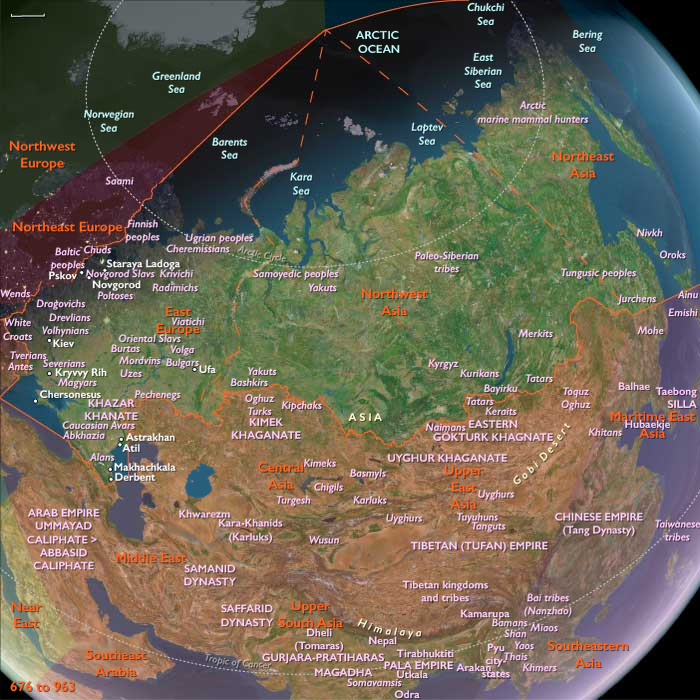
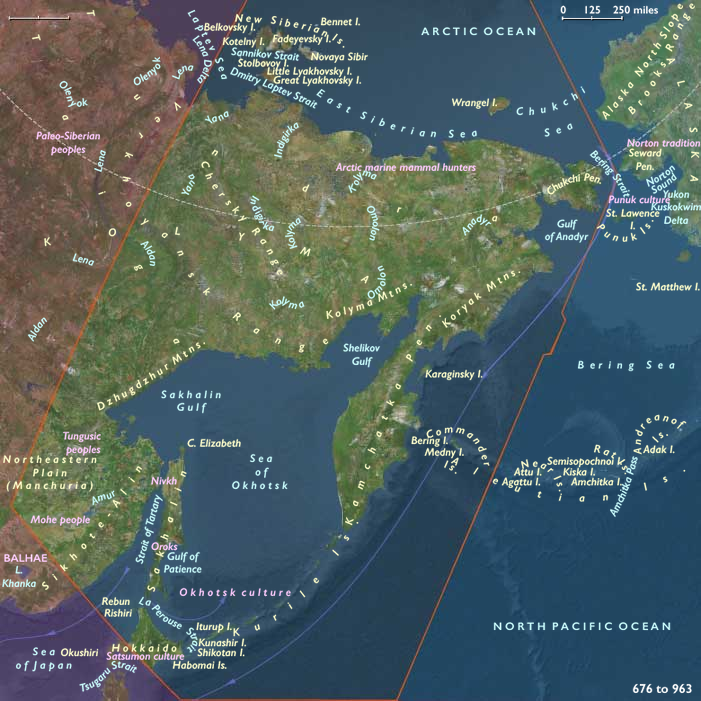
Northeast Asia includes Siberia east of the Lena River basin to the Pacific Ocean, the Russian Far East (excluding southern Primorsky Krai/Vladivostok), Hokkaidō (above its southwestern peninsula), and China’s extreme northeastern Heilongjiang.
-
A vast mosaic of taiga, tundra, and maritime coasts framed the Amur–Ussuri lowlands, Sea of Okhotsk shores, Sakhalin and straits, Kamchatka promontories, and the northern half of Hokkaidō.
-
Populations clustered along salmon rivers, coastal rookeries, and reindeer pastures, with sparse, mobile settlement inland.
Climate and Environmental Shifts
-
Cool-temperate to subarctic regimes prevailed: long, snowy winters; short, productive summers.
-
Monsoon spillover reached the Amur basin, supporting mixed forests and rich fisheries; the Sea of Okhotsk iced seasonally, shaping seal and whale migrations.
-
Interannual variability in salmon runs and reindeer forage drove flexible subsistence scheduling.
Societies and Political Developments
-
Lower Amur–Sakhalin littoral: Nivkh (Gilyak), Ulch, and Nanai (Hezhe) organized in riverine clans, centered on salmon, seal, and forest hunting. They maintained frontier trade with southern states (via Balhae/Liao intermediaries), exchanging sable and ginseng for iron tools and cloth.
-
Amur–Heilongjiang uplands: Evenki, Even, and related Tungusic groups combined reindeer herding, trapping, and long-distance hunting. Seasonal camps and clan councils coordinated migration, marriage, and dispute settlement.
-
Northern maritime arc: Koryak, Itelmen, and Chukchi communities along Kamchatka and the Chukchi Peninsula specialized in sea-mammal hunting (walrus, seal, whale), complemented by caribou hunting inland; leadership rested with accomplished hunters and ritual experts.
-
Upper Amur forest–field frontier: Mohe (Malgal) groups—ancestors of later Jurchen—practiced mixed slash-and-burn millet farming, pig raising, hunting, and boating, forming loose confederations that traded furs southward.
-
Hokkaidō (Ezo) north of the southwestern peninsula: the Satsumon culture (Ainu ancestors) farmed millet and barley at the margins, but relied chiefly on salmon, deer, and trade. Along the coasts, Okhotsk sea-hunting communities (5th–10th c.) overlapped with Satsumon; their interaction—intermarriage, exchange, conflict—catalyzed Ainu ethnogenesis.
Economy and Trade
-
Fur circuits (sable, marten, fox), fish oils, seal skins, walrus ivory, antler, and ginseng moved down the Amur and along the Okhotsk coast to southern brokers linked (indirectly) to Balhae and the rising Khitan.
-
Hokkaidō exchanged dried salmon, deer hides, eagle feathers, and amber for imported iron knives, steel spearheads, lacquerware, and textiles via cross-strait trade with Wajin (Honshū) merchants.
-
Inland Evenki caravans carried pelts between river basins; coastal camps hosted seasonal trade fairs timed to salmon and seal migrations.
Subsistence and Technology
-
Riverine fisheries used basket traps, weirs, and net drives; salmon were filleted, dried, and cached for winter.
-
Maritime hunting employed composite harpoons with toggling heads, skin boats, and coastal drive techniques; sea ice enabled winter seal hunts.
-
Taiga mobility depended on skis, snowshoes, dog sleds, birch-bark canoes, and light hide tents; reindeer provided transport, meat, and hides in interior zones.
-
Iron was scarce and prized—acquired via trade and refitted locally; bone/antler points, stone adzes, and wood–bark implements remained ubiquitous.
-
Pottery traditions persisted for cooking and storage; storage pits and wooden caches extended food security.
Movement and Interaction Corridors
-
The Amur River functioned as a continental artery, knitting together Heilongjiang forests, Sakhalin straits, and Okhotsk bays.
-
Sea of Okhotsk coastal routes linked Kamchatka, Sakhalin, and northern Hokkaidō; La Pérouse Strait (Sakhalin–Hokkaidō) served as a key exchange channel.
-
Winter over-ice travel opened seasonal corridors across bays and estuaries; summer portages bridged river headwaters (Amgun–Uda, Kolyma tributaries).
Belief and Symbolism
-
Animism and shamanism anchored cosmology: river, sea, mountain, and forest spirits governed luck and health.
-
Among Ainu communities, the bear-sending rite (iyomante)—the ceremonious dispatch of a revered bear spirit—embodied reciprocity with the natural world.
-
Nivkh rites honored salmon and sea mammals; Evenki shamans used drums and antlered headdresses to mediate between human and spirit realms.
-
Mortuary customs ranged from tree-platform or surface burials (taiga) to coastal interments with hunting gear, reflecting continued bonds with prey spirits.
Adaptation and Resilience
-
Multi-resource scheduling—tightly choreographed calendars for salmon runs, ungulate migrations, and sea-mammal seasons—spread risk across ecosystems.
-
Preservation technologies (drying, smoking, oil rendering) created dependable stores; communal drives for salmon and seals leveraged cooperative labor.
-
Exchange flexibility—substituting furs, oil, or crafted bone tools as currencies—absorbed shocks when iron or grain imports faltered.
-
Territorial fluidity—shared fishing stations, negotiated hunting grounds, marriage ties—reduced conflict and stabilized access to key sites.
Long-Term Significance
By 963 CE, Northeast Asia’s forest–coastal societies had forged durable lifeways keyed to salmon rivers, sea ice, and reindeer ranges. Their fur and ginseng trades were already pulling the region into wider East Asian circuits—via Balhae’s twilight networks and the Khitan rise—while Ainu–Okhotsk interactions on Hokkaidō consolidated a distinctive culture that would shape northern Japan for centuries. These northern polities entered the next age with proven ecological resilience, sophisticated maritime and taiga technologies, and expanding exchange links that presaged deeper engagement with Liao/Jin and, much later, Russian frontiers.
Groups
- Chukchi
- Koryaks
- Ulch people
- Nivkh people
- Evens, or Eveny
- Ainu people
- Mohe people
- Khitan people
- Okhotsk culture
- Balhae (Bohai, or Pohai), Kingdom of
- Satsumon culture
- Japan, Heian Period
- Itelmens
- Nanai people
- Evenki
- Liao Dynasty, or Khitan Empire
Commodoties
- Fish and game
- Weapons
- Hides and feathers
- Gem materials
- Domestic animals
- Grains and produce
- Ceramics
- Strategic metals
- Manufactured goods
- Spices
Subjects
Regions
Subregions
Related Events
Showing 10 events out of 54673 total
Years: 820 - 963
Groups
- Chukchi
- Koryaks
- Ulch people
- Nivkh people
- Evens, or Eveny
- Ainu people
- Mohe people
- Khitan people
- Okhotsk culture
- Balhae (Bohai, or Pohai), Kingdom of
- Satsumon culture
- Japan, Heian Period
- Itelmens
- Nanai people
- Evenki
- Liao Dynasty, or Khitan Empire
Commodoties
- Fish and game
- Weapons
- Hides and feathers
- Gem materials
- Domestic animals
- Grains and produce
- Ceramics
- Strategic metals
- Manufactured goods
- Spices
Subjects
Regions
Subregions